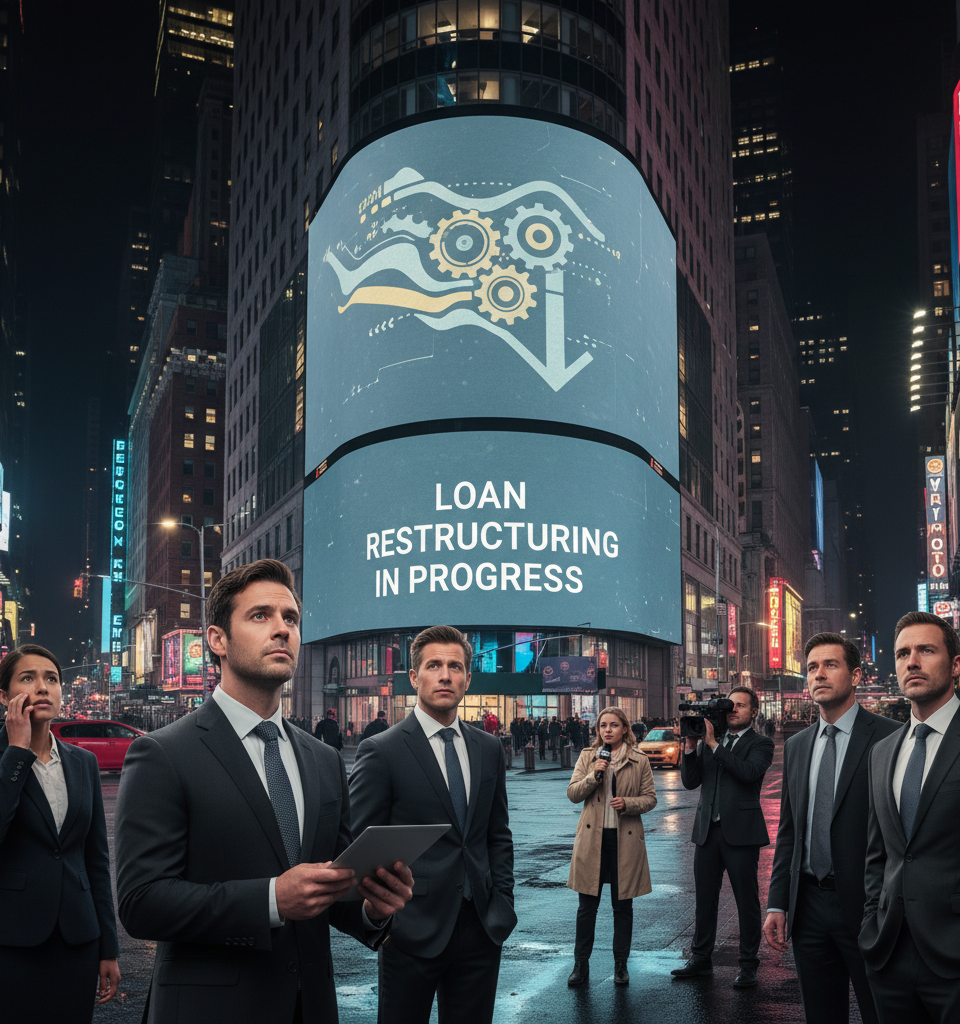
The commercial mortgage-backed securities (CMBS) loan associated with the high-profile 20 Times Square development has re-entered special servicing, according to a recent alert from Morningstar Credit. This significant move affects the $647.5 million in outstanding CMBS debt originating from the Times Square Trust 2018-20TS single-borrower deal, which was secured in 2018 by Natixis. The decision to transfer the loan to special servicing underscores ongoing financial difficulties for the property, characterized by its reliance on a long-term ground lease rather than fee simple ownership.
Context and Background of the Asset
This is not the first time the loan for 20 Times Square, a property known for its prominent digital signage and retail space, has faced such challenges. The asset, located at one of the world's most iconic intersections, has been a bellwether for the broader retail and hospitality sectors in New York City. Its prior stint in special servicing, particularly during the height of the pandemic, showcased the vulnerability of properties heavily dependent on tourist traffic and experiential retail. The property's ground lease structure, held by Maefield Development, adds a layer of complexity, obliging the developer to make ground lease payments irrespective of the property's income performance.
Key Financial Details and Specifics
Morningstar Credit's alert confirmed the transfer to special servicing, initiating a process typically involving intense negotiation and potential restructuring between the borrower and the special servicer. The outstanding CMBS debt of $647.5 million represents a substantial financial burden. The loan was initially underwritten with expectations of robust retail performance and high foot traffic, projections that have been significantly challenged by shifting consumer habits and the lingering effects of economic volatility. Specific details regarding the current nature of default or the servicer's immediate plans were not immediately disclosed, but such transfers often indicate imminent payment issues or breaches of loan covenants.
Broader Industry and Market Impact
The recurrence of special servicing for such a high-profile loan sends ripples through the CMBS market, particularly for assets underpinned by ground leases or located in traditionally high-traffic, tourist-dependent areas. It serves as a stark reminder of the persistent challenges faced by certain segments of the commercial real estate market, even in prime locations. Investors in CMBS deals often scrutinize the performance of these large, single-borrower transactions for indicators of wider market health. A prolonged period in special servicing could lead to a discounted sale of the loan or even foreclosure, impacting investor confidence in similar structured debt.
Expert Perspectives on Future Outcomes
Commercial real estate analysts suggest that the return to special servicing reflects the ongoing difficulty in stabilizing cash flows for properties like 20 Times Square, especially those with significant operating costs and complex lease agreements. "The ground lease structure can be a double-edged sword," noted one industry expert, who preferred to remain anonymous due to ongoing client relations in the CMBS sector. "While it can reduce upfront capital expenditure for developers, it introduces fixed, non-negotiable costs that can become crippling during revenue downturns." Analysts will be closely watching for any signs of a workout strategy that minimizes losses for bondholders and potentially stabilizes the asset through new tenancy or capitalization.
What Comes Next for 20 Times Square
Looking ahead, the special servicer, typically an entity specializing in distressed debt, will work to resolve the loan's issues. This could involve modifying loan terms, extending repayment schedules, or, in more severe scenarios, pursuing foreclosure to recover value for the bondholders. The future of 20 Times Square hinges on its ability to attract and retain high-quality tenants for both its retail spaces and its prominent advertising signage, which are crucial revenue generators. Market participants will also be keen to observe if this situation precipitates any broader re-evaluation of ground lease financing structures in prime urban commercial real estate development.
Ultimately, the effective resolution of the 20 Times Square CMBS loan will set a precedent for how similar distressed assets are handled in a post-pandemic environment. The coming months will reveal the strategic direction taken by the special servicer and the extent of the impact on the property's long-term commercial viability in one of the world's most competitive real estate markets.