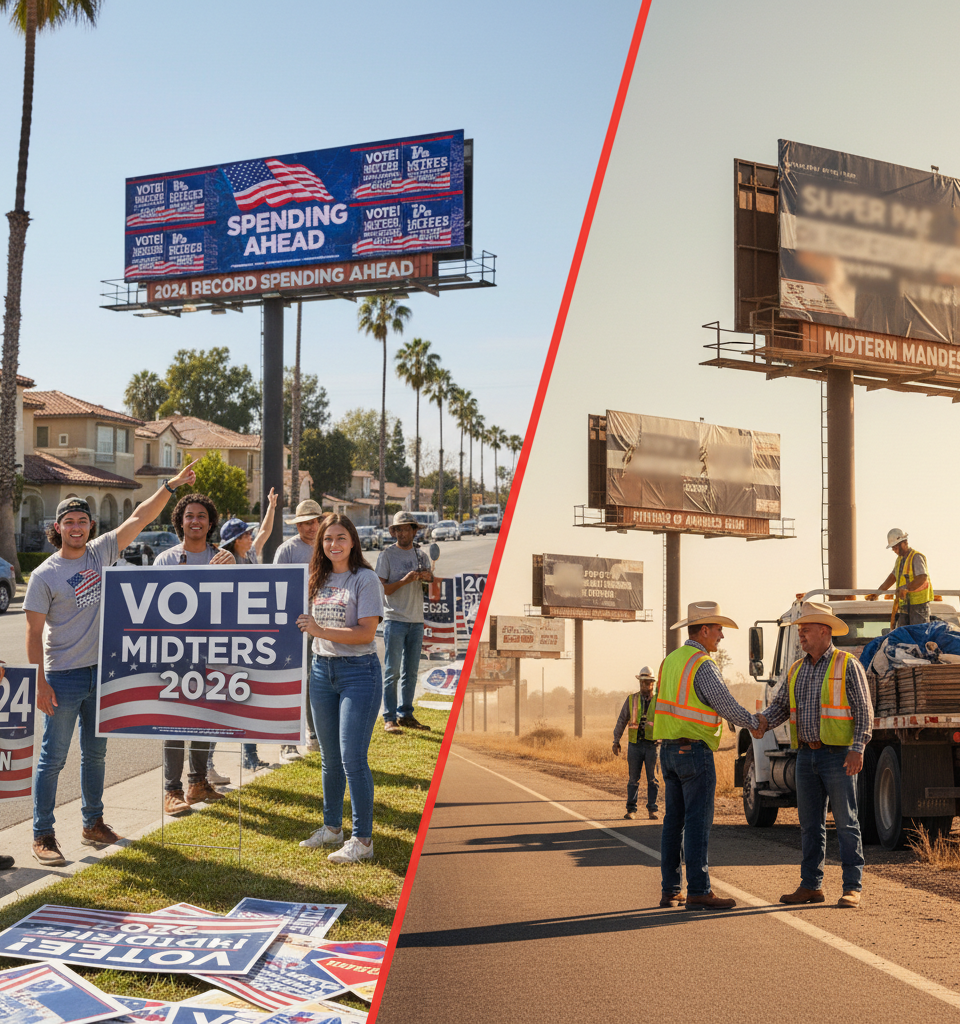
Advertising spending for the 2026 midterm elections is expected to set a new record, potentially surpassing the financial outlays typically observed in presidential election years. This significant surge in political ad investment is being driven largely by early, intensive campaigning in high-profile 2026 races, particularly within electorally crucial states like California and Texas, according to an analysis by AdImpact.
This projection marks a pivotal shift in the landscape of American political campaigning. Historically, midterm elections, while important, have generally seen lower advertising expenditures compared to the quadrennial presidential contests. The anticipated record-breaking spend for 2026 underscores an escalating trend of financial commitment in races that were once considered secondary to the presidential spotlight.
The Catalysts Behind the Surge
AdImpact's findings indicate that strategic planning and media buys are commencing earlier in the cycle than seen in previous midterms. The competitive nature of races in large, diverse states with significant media markets, such as California and Texas, is a primary factor. These states, often viewed as bellwethers or battlegrounds, feature contests that are attracting substantial pre-election investment from various political groups, parties, and candidate campaigns. The early engagement suggests a more prolonged and intense advertising period, which naturally leads to higher overall spending.
Beyond these marquee states, other key states are also contributing to the upward trajectory. While specific races or figures were not detailed in the initial analysis, the implication is that a broader range of competitive House, Senate, and gubernatorial races across the country are drawing increased advertising dollars well ahead of the election date.
Historical Context and Market Impact
The expected outperformance of presidential year spending represents a notable deviation from historical patterns. In past cycles, the presidential election served as the engine for nationwide political advertising, with midterm spending typically reaching between 60-75% of presidential year totals. The forecast for 2026 indicates a paradigm shift where midterm elections are becoming financially competitive with, if not surpassing, presidential cycles. This has profound implications for media markets, particularly local television and digital platforms, which are the primary beneficiaries of political ad buys. Media outlets can anticipate a robust influx of revenue well in advance of the election, potentially impacting their financial forecasts and programming strategies.
Projections and Future Implications
AdImpact's analysis, while not providing granular figures, points to an expectation of sustained high levels of spending throughout the 2026 election cycle. This suggests that the early intensity observed in states like California and Texas is not an anomaly but rather an indicator of a campaigning trend that will persist and likely escalate as the election approaches. The increased expenditure could also reflect a growing reliance on sophisticated data analytics and targeted advertising, which often commands higher prices for precision reach.
Looking ahead, if this trend holds, it could fundamentally alter how political campaigns are funded and executed. Campaigns may need to prioritize early fundraising efforts more acutely to remain competitive. Furthermore, the elevated spending could necessitate adjustments in media buying strategies, with a greater emphasis on securing prime advertising slots and digital real estate earlier in the cycle. The landscape of political advertising is clearly evolving, with the 2026 midterms poised to redefine the financial benchmarks for non-presidential election years.
Expert Insights into Campaign Dynamics
While specific expert quotes were not provided in the analysis, the implications of AdImpact's findings suggest that political strategists and media consultants are already adapting to this accelerated spending environment. The consensus among those observing political finance is likely that earlier engagement provides opportunities for defining narratives, shaping public opinion, and establishing candidate recognition long before traditional campaign cycles would begin in earnest. This early investment can also serve as a deterrent to potential challengers or as a mechanism to solidify a candidate's position within their party. The heightened financial stakes reflect a broader strategic shift towards sustained campaigning rather than episodic bursts of activity closer to election day.
In conclusion, the 2026 midterm elections are shaping up to be an unprecedented event in terms of advertising expenditure. The interplay of high-stakes races, earlier campaign cycles, and an ever-evolving media landscape is creating a new normal for political finance, with significant ramifications for candidates, parties, and the media industry alike.