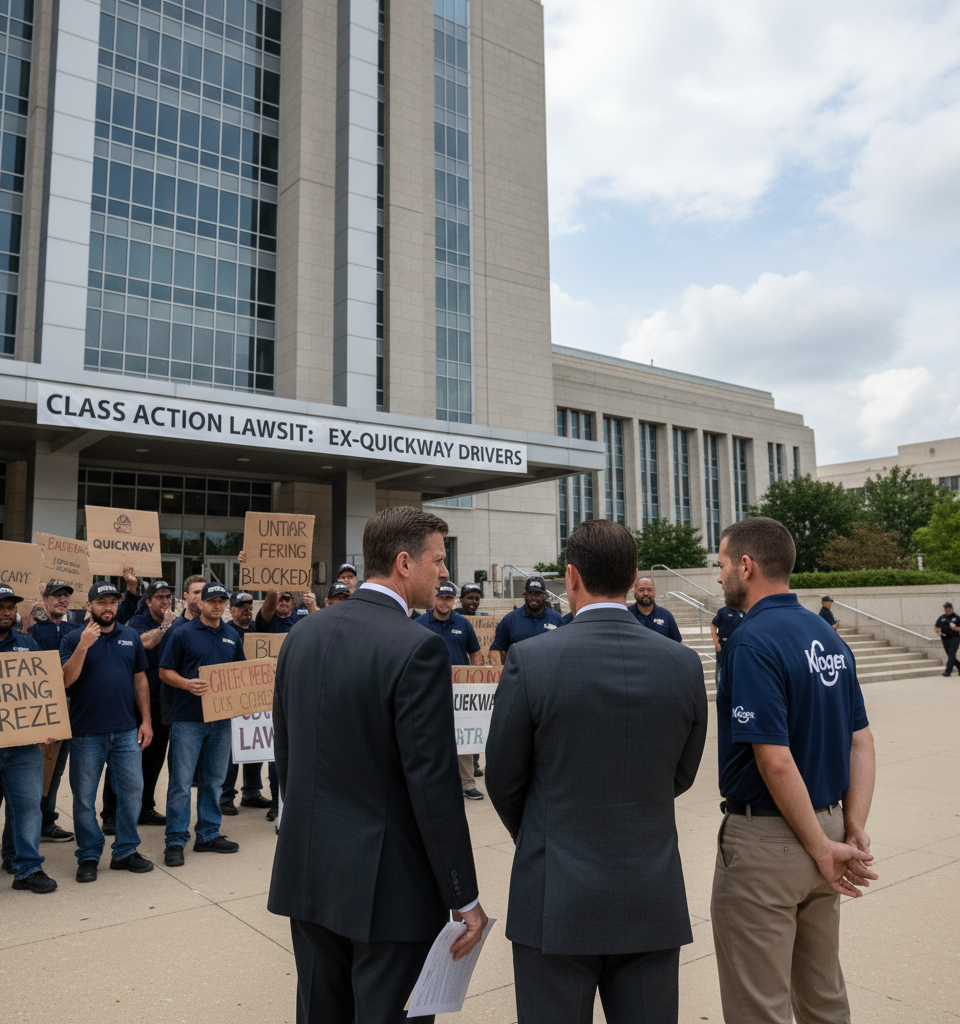
A class-action lawsuit has been filed by three former drivers of Quickway Transportation, alleging that grocery giant Kroger, in conjunction with three unidentifed trucking carriers, unlawfully blocked their employment following Quickway's operational cessation. The suit postulates that these actions constituted a concerted effort to restrict the employment opportunities of former Quickway drivers, potentially violating antitrust regulations and labor laws.
The core of the complaint focuses on what the plaintiffs describe as a systemic refusal by the defendant carriers to hire individuals previously employed by Quickway, purportedly under direct or indirect instruction from Kroger. This alleged blocking mechanism would have effectively created a blacklist, severely limiting the career prospects of a specific group of experienced heavy vehicle operators within the freight industry. The lawsuit aims to expand its scope to include all former Quickway drivers who faced similar hiring obstacles from these specific carriers.
Allegations of Collusion and Restricted Employment
According to the legal filing, the alleged scheme traces back to Quickway Transportation's ceasing of operations, a move that left numerous experienced drivers seeking new employment. The plaintiffs contend that the three unnamed carriers, despite often being in need of qualified drivers, systematically declined to hire former Quickway employees. This pattern, the lawsuit claims, was not coincidental but rather the result of an agreement or understanding with Kroger, a major client in the logistics supply chain.
The precise nature of Kroger's alleged involvement remains a central point of the litigation. The plaintiffs suggest that Kroger, potentially leveraging its significant purchasing power and contractual relationships, influenced the hiring decisions of these carriers. Such an arrangement, if proven, could constitute an illegal restraint of trade, aiming to control labor costs or maintain specific operational advantages at the expense of individual workers' employment rights and market mobility.
Broader Implications for the Freight and Grocery Sectors
This lawsuit carries significant implications beyond the immediate parties involved. If the allegations of collusion are substantiated, it could expose systemic issues within the competitive landscape of the freight industry, particularly concerning the contractual relationships between large retailers and their transport partners. The practice of companies influencing hiring decisions across multiple firms in a supply chain could face intense scrutiny from regulatory bodies if this case gains traction.
For the grocery sector, which relies heavily on efficient and cost-effective logistics, any proven involvement in such practices could lead to reputational damage and potential regulatory sanctions. The freight industry, already grappling with driver shortages and intense competition, would also face renewed calls for transparency and fair labor practices. The case highlights the vulnerability of contract workers in arrangements where their employment fate can allegedly be dictated by entities far removed from their direct employer.
Legal Ramifications and Next Steps
The plaintiffs are seeking class-action status, which, if granted, would allow a much larger group of affected drivers to join the lawsuit and pursue damages collectively. The legal process is expected to involve extensive discovery, as attorneys seek to uncover communications, contracts, and other evidence that could substantiate the claims of a concerted effort to block hiring. This could shed light on internal corporate policies and inter-company agreements that are typically not public.
The outcome of this litigation could set a precedent for how large retailers interact with their logistics providers, potentially leading to stricter guidelines regarding non-compete clauses, hiring practices, and antitrust compliance within complex supply chains. As the legal proceedings unfold, the focus will remain on proving the alleged coordinated actions between Kroger and the unnamed carriers and the specific impact these actions had on the former Quickway drivers' ability to secure employment.