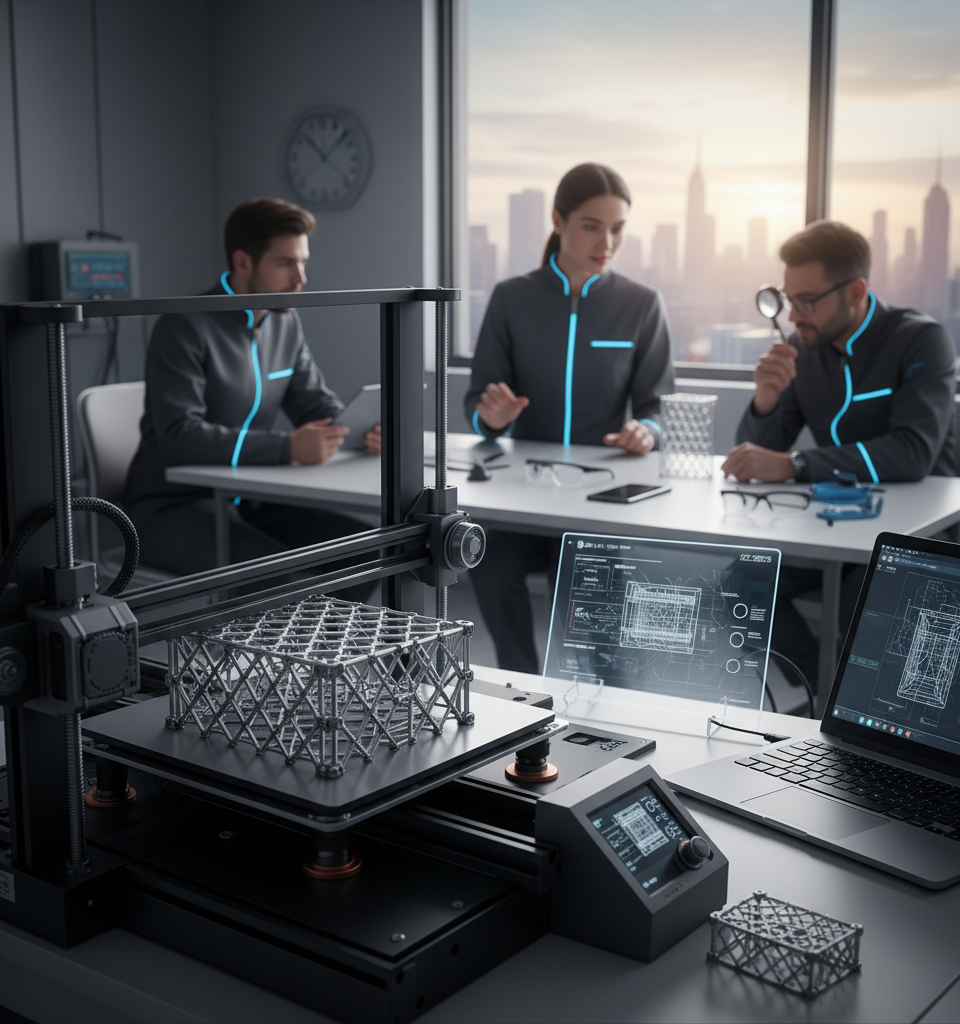
The perennial problem of 'battery anxiety' – the fear of a device running out of power – may soon become a relic of the past, thanks to a burgeoning trend in advanced manufacturing. A new generation of startups is actively deploying 3D printing techniques to fabricate batteries that can conform to almost any design specification, heralding a potential paradigm shift in energy storage. This breakthrough technology holds the promise of seamlessly integrating power sources into previously unworkable spaces within a myriad of devices.
The Promise of Shape-Shifting Power
For decades, battery design has largely dictated device form factors, with bulky, rigid power cells limiting engineers' creativity. Traditional battery manufacturing typically involves layering flat, two-dimensional components, resulting in rectangular or cylindrical shapes. This inherent inflexibility often leads to compromises in product design, necessitating larger enclosures or suboptimal internal layouts to accommodate the power source.
The advent of 3D printing, however, could fundamentally alter this dynamic. By building batteries layer-by-layer, these startups are developing power cells that can be customized to fit irregular spaces, curves, and intricate geometries, turning previously wasted internal volume into functional energy storage. This capability is expected to unlock unprecedented design freedom, allowing for more compact, ergonomically efficient, and aesthetically pleasing devices across various industries.
Impact Across Key Sectors
The implications of this technology are far-reaching, with potential to disrupt multiple high-growth markets. In the drone industry, where flight time is directly correlated with battery capacity and weight, custom-shaped 3D-printed batteries could enable longer operational periods and more aerodynamic designs. For wearable technology, the ability to mold batteries to the contours of the human body or specific device geometries could lead to more comfortable, discreet, and powerful smartwatches, health monitors, and augmented reality glasses.
The electric vehicle (EV) sector also stands to benefit significantly. While current EV batteries are predominantly large, modular packs, 3D printing could allow for distributed, structural battery configurations, potentially improving vehicle performance, safety, and interior space utilization. Furthermore, the generic category of 'future gadgets'– encompassing everything from smart implants to highly specialized industrial sensors – could see radical redesigns when power constraints are no longer primary limiting factors.
Overcoming Current Limitations
Historically, the challenges in 3D-printed batteries centered on achieving comparable energy density, power output, and lifecycle stability to traditionally manufactured counterparts. Early attempts often struggled with material science limitations, printing resolution, and scalable production methods. However, recent advancements in materials science, particularly in developing printable electrolytes, electrodes, and separators, have mitigated many of these hurdles. Startups are reportedly focusing on innovative combinations of polymers, ceramics, and metal composites to create robust and efficient electrochemical cells via additive manufacturing.
The Road Ahead: From Prototype to Mass Production
While the technology shows immense promise, significant challenges remain on the path to widespread commercialization. Scaling production from laboratory prototypes to industrial volumes, ensuring consistent performance and safety standards, and reducing manufacturing costs are critical next steps. Regulatory approvals, particularly in high-stakes applications like medical devices or aerospace, will also be a key determinant of market penetration. Nevertheless, the trajectory of innovation in this space suggests that 3D-printed batteries are not merely a niche technology but a serious contender to redefine mobile power solutions within the next decade.
The advent of these versatile power sources could effectively put an end to the frustrating cycle of battery degradation and the constant search for charging points. As startups continue to refine their processes and materials, the vision of devices that are not just powered, but truly integrated with their energy source, moves closer to reality, promising a future where 'battery anxiety' is a distant memory.