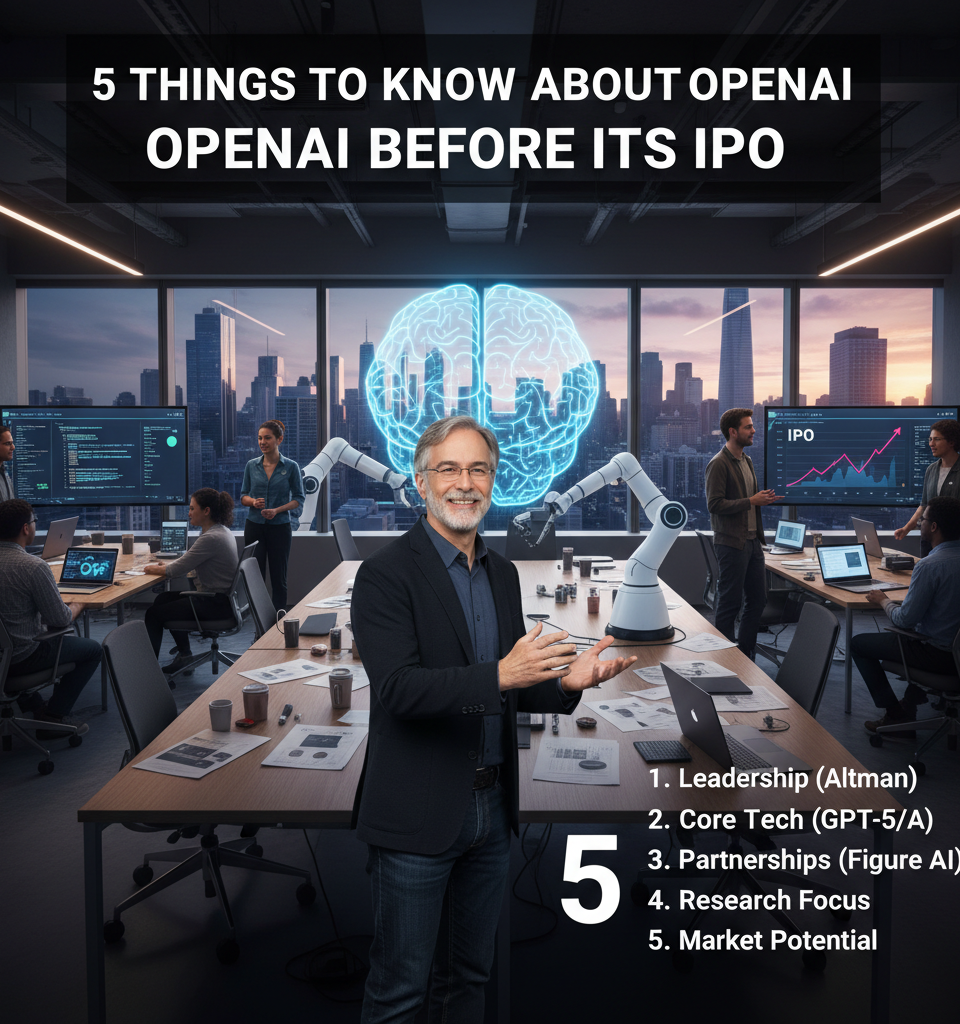
As the tech world buzzes with anticipation, many observers are keen to understand the intricate landscape surrounding OpenAI, particularly as the prospect of an Initial Public Offering (IPO) continues to gain traction. Evaluating the company's trajectory and potential market impact necessitates a comprehensive look at several core facets that define its current standing and future prospects. These include its groundbreaking technological advancements, the strategic implications of its distinctive organizational structure, the competitive pressures within the burgeoning AI sector, its financial underpinnings and revenue models, and the regulatory scrutiny that inevitably accompanies a leader in transformative technology.
The AI Revolution and OpenAI's Pivotal Role
OpenAI has firmly established itself at the vanguard of the artificial intelligence revolution, consistently pushing the boundaries of what is technologically feasible. Its development of large language models (LLMs) like GPT and advanced image generation capabilities has not only captivated the public imagination but also laid foundational groundwork for numerous applications across diverse industries. The impact of these innovations extends far beyond mere technological novelty, influencing enterprise operations, content creation, research, and even the very nature of human-computer interaction. This technological leadership is arguably its most compelling asset, yet it also presents significant challenges, including the rapid pace of innovation and the inherent difficulty in maintaining a sustained competitive edge in a field characterized by relentless advancement. The company's ability to continue producing cutting-edge AI, while also scaling its offerings, will be critical to its long-term valuation and market success.
Navigating a Unique Organizational Structure
One of the most distinctive and often-discussed aspects of OpenAI is its unconventional organizational structure. Operating initially as a non-profit, it subsequently established a "capped profit" subsidiary to attract significant investment, notably from Microsoft. This hybrid model aims to balance its foundational mission of developing beneficial artificial general intelligence (AGI) for all with the commercial imperative of funding costly research and development. Investors contemplating an IPO will undoubtedly scrutinize this dual nature. Questions regarding governance, profit distribution, and the potential for mission-driven decisions to impact commercial viability are anticipated to be central. The clarity and stability of this structure, particularly how it affects shareholder value and operational independence, will be a significant factor in investor confidence.
Competitive Landscape and Market Dominance
The artificial intelligence market is both rapidly expanding and intensely competitive. While OpenAI holds a prominent position, it operates within an ecosystem populated by well-funded tech giants like Google, Amazon, and Meta, all heavily investing in their own AI research and product development. Additionally, a plethora of specialized AI startups are emerging, each vying for market share in niche areas. OpenAI's continued success will hinge on its ability to not only innovate but also to effectively commercialize its technologies, differentiate its products, and forge strategic partnerships. The ability to translate its research breakthroughs into tangible, revenue-generating products and services that resonate with a broad user base will be paramount in maintaining and expanding its market dominance in the face of such robust competition.
Financial Health and Revenue Generation Models
For any company eyeing an IPO, a robust financial profile and a clear path to profitability are non-negotiable. OpenAI, despite its significant technological achievements, has been engaged in a substantial investment phase, characterized by immense R&D costs associated with training advanced AI models. While its partnerships and enterprise-level subscriptions contribute to its revenue stream, the scalability and sustained growth of these models will be key. Financial analysts will be looking closely at its current revenue streams, its projections for future earnings, and the efficiency of its operational expenditures. Understanding how OpenAI plans to convert its innovative capacity into consistent, substantial revenue generation will be crucial for potential investors assessing its market valuation and long-term financial viability.
The Regulatory Environment and Ethical Considerations
As a leader in AI, OpenAI is invariably at the forefront of regulatory discussions and ethical debates surrounding the technology. Issues such as data privacy, algorithmic bias, job displacement, and the safe development of powerful AI systems are increasingly scrutinized by governments and civil society organizations worldwide. Any company bringing advanced AI to the public market faces the dual challenge of adhering to evolving regulations while also proactively addressing ethical concerns. The regulatory landscape is still maturing, and potential legislative changes could significantly impact OpenAI’s operations, product development, and market access. Demonstrating a clear strategy for compliance and responsible AI development will be essential in mitigating risks and building trust with both regulators and the public. These five critical areas collectively present a complex picture for OpenAI as it potentially moves towards an IPO, demanding careful consideration from all stakeholders.