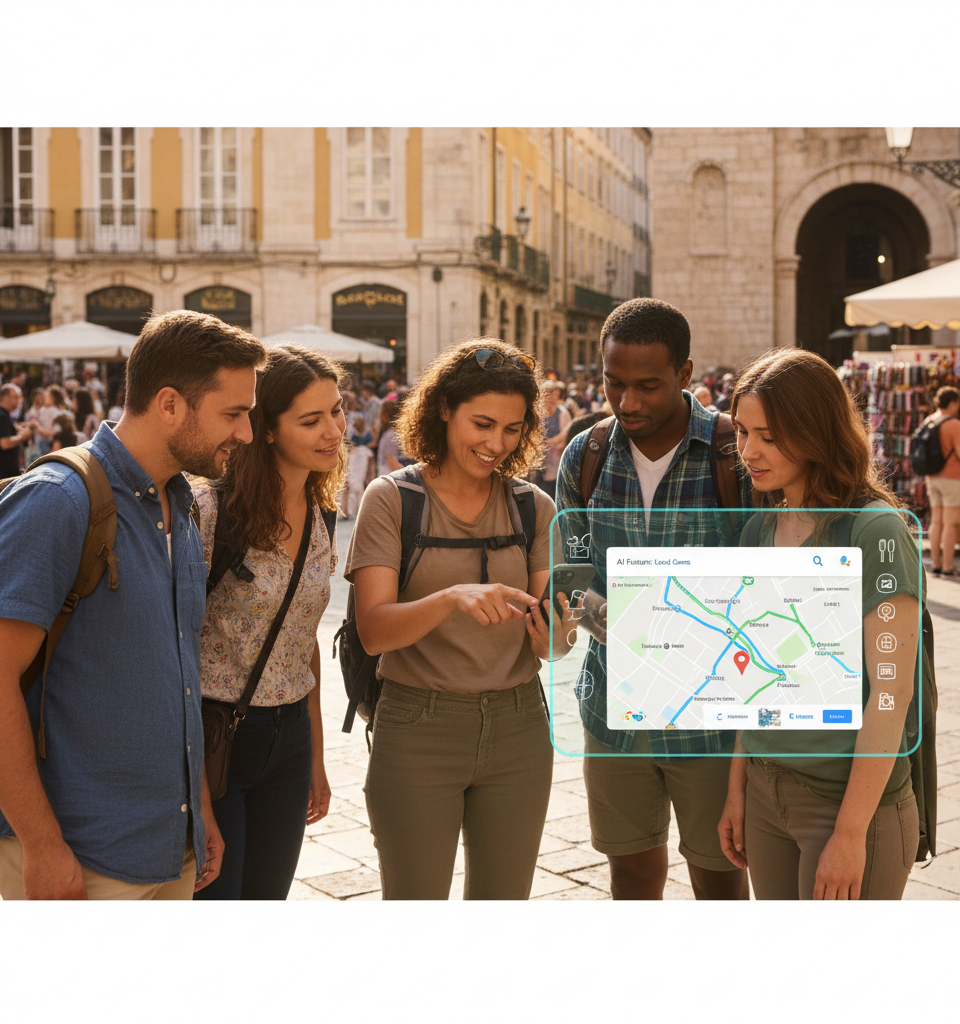
In a significant advancement for travel technology, Google Maps is introducing an artificial intelligence-powered feature dubbed "Ask Maps," poised to revolutionize how users plan their travel itineraries and uncover local attractions. This new functionality aims to empower travelers to move beyond traditional tourist traps, fostering a more authentic and personalized exploration of destinations.
The "Ask Maps" feature is designed to shift the user experience from a laborious search process to an intuitive question-and-answer interaction. Instead of sifting through countless reviews and listings, users will be able to pose natural language questions directly to Google Maps, receiving curated recommendations that align with their specific interests and preferences. This marks a strategic move by Google to enhance the utility and intelligence of its widely used navigation platform, adapting to the growing demand for bespoke travel experiences.
The Mechanics of Personalized Discovery
At its core, "Ask Maps" leverages advanced AI algorithms to understand complex queries and provide relevant suggestions. For instance, a user might ask, "Where can I find a quiet coffee shop in Paris with outdoor seating perfect for reading?" The AI is then expected to process this nuanced request, analyzing data points such as location, user reviews mentioning 'quiet' or 'reading,' and amenity listings for 'outdoor seating,' to present suitable options. This capability aims to significantly reduce the time and effort traditionally associated with discovering lesser-known, high-quality local establishments that often remain hidden from typical tourist guides.
The feature's potential to avoid 'tourist traps' lies in its ability to filter recommendations based on qualitative attributes inferred from vast datasets, including user contributions and expert local knowledge embedded within Google's ecosystem. By prioritizing relevance over mere popularity or commercial visibility, "Ask Maps" could guide users toward establishments favored by locals, offering a more genuine cultural immersion.
Broader Market Implications
The introduction of "Ask Maps" carries substantial implications for the travel and hospitality sectors. For small businesses and unique local proprietors, this could provide a new avenue for discovery, leveling the playing field against larger, more commercially dominant attractions. Conversely, established tourist-centric businesses might need to adapt their strategies to remain competitive in an environment where authenticity and niche appeal are increasingly prioritized by discerning travelers.
Furthermore, the feature could influence urban planning and local economies. As travelers are steered towards a wider array of establishments, visitor flow may become more distributed, potentially alleviating congestion in heavily trafficked areas and fostering economic growth in previously overlooked neighborhoods. This decentralized exploration could lead to a more sustainable form of tourism, where the benefits are spread more evenly across a destination.
The Shift from Searching to Asking
The fundamental premise of "Ask Maps" is a paradigm shift: from actively searching for information to passively asking for guidance. This change reflects a broader trend in technology towards more conversational and intuitive user interfaces, driven by advancements in natural language processing and machine learning. Google's move here solidifies its position at the forefront of this evolution, positioning Google Maps not just as a navigational tool but as a highly intelligent, personalized travel concierge.
The impact on competitive mapping services is also noteworthy. Rivals will likely face pressure to develop similar AI-driven features to keep pace with Google's enhanced offerings. The ability to provide highly customized and contextually aware recommendations could become a critical differentiator in the fiercely competitive digital mapping landscape.
Looking ahead, the success of "Ask Maps" will hinge on the accuracy and depth of its AI's understanding, as well as the continuous refinement of its recommendation engine. As the feature rolls out and gathers user data, its capabilities are expected to evolve, becoming even more adept at predicting and fulfilling nuanced user preferences. This marks a crucial step in Google's ambition to make its tools not just helpful, but genuinely anticipatory, transforming the entire travel planning experience from a chore into an effortless conversation.