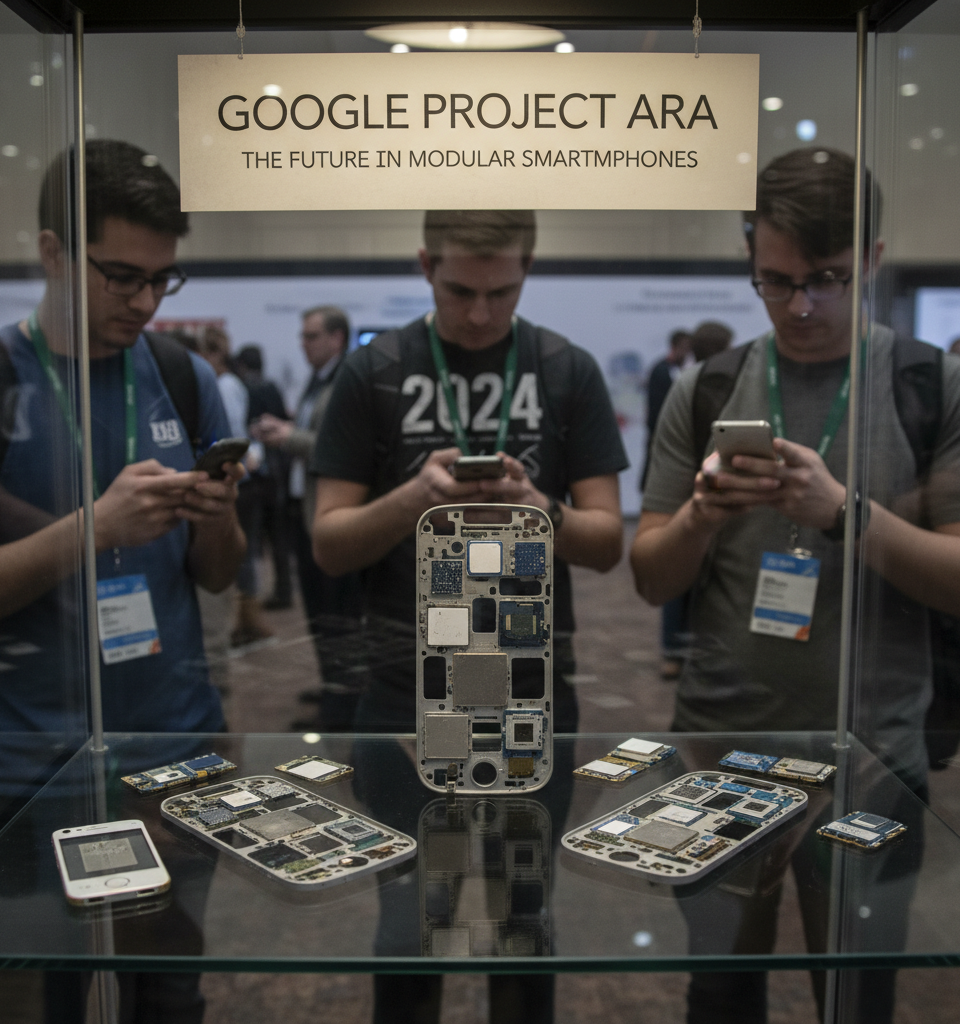
Ten years ago, Google's Advanced Technology and Projects (ATAP) division unveiled Project Ara, an audacious vision for a modular smartphone that promised consumers unprecedented customization and longevity. The initiative, revealed in late 2013 and showcased publicly in 2014, aimed to allow users to upgrade individual components like cameras, batteries, and processors, thereby reducing electronic waste and democratizing smartphone technology. However, a decade later, the modular smartphone revolution predicted by Google has failed to materialize, leaving a significant void in a market dominated by monolithic, incrementally improved devices.
The Unfulfilled Vision: A Revolutionary Concept Ignored
Project Ara's significance lay in its direct challenge to the prevailing smartphone design philosophy. At a time when planned obsolescence was becoming an increasingly contentious issue, Ara offered a compelling alternative: a device that could evolve with its owner's needs and technological advancements, rather than being discarded every two years. This resonated deeply with environmental concerns and a growing desire for more sustainable consumption. The concept promised not just an upgrade path, but a truly personalized device, allowing users to prioritize processing power, camera quality, or battery life based on their individual requirements, a level of control largely absent from today's market.
The Anatomy of an Ambition: Key Details and Prototypes
The initial prototypes of Project Ara were a marvel of engineering ambition. They featured an endoskeleton onto which various modules – screens, cameras, batteries, and even specialized sensors – could be snapped into place using electropermanent magnets. Google envisioned an open ecosystem, fostering third-party development for a wide array of modules. Early demonstrations showcased functionalities like high-end camera modules, extended battery packs, and even specialized medical sensors. The target retail price for a basic Project Ara device was estimated to be around $50, making cutting-edge smartphone technology potentially accessible to a much broader global audience. This accessibility aspect was a core humanitarian driver for the project, aiming to bridge the digital divide.
Industry Impact: Missed Opportunities and Closed Ecosystems
The failure of Project Ara to launch has had a profound impact on the smartphone industry. Instead of an open, modular future, the market has doubled down on integrated designs, driven by Apple and Samsung's dominance. This has led to accelerated upgrade cycles, increased electronic waste, and a homogenization of device features. While companies like LG (with its G5) and Motorola (with Moto Mods) briefly dabbled in modularity, these attempts were ultimately short-lived and lacked the comprehensive ecosystem vision of Ara. The industry largely prioritized aesthetics, slimness, and sealed designs over repairability and upgradability, cementing a consumption model that financially benefits manufacturers but environmentally burdens the planet.
Expert Perspectives: Technical Hurdles and Market Realities
Analysts attributed Project Ara's demise to a complex interplay of technical challenges and market realities. "The engineering complexity of ensuring seamless module integration, especially across varying third-party suppliers, was immense," notes industry analyst Jessica Chen of TechInsights. "Maintaining performance, battery efficiency, and software consistency across a constantly changing hardware configuration proved to be a significant hurdle." There were also concerns about consumer adoption; whether the average user would embrace the concept of self-assembling a phone, or if the perceived inconvenience outweighed the benefits. Furthermore, the economic incentives for phone manufacturers to embrace such a model were inherently low, as it would disrupt their profitable two-year upgrade cycle.
The Lingering Question: What Could Have Been?
The cancellation of Project Ara in 2016, reportedly due to commercialization challenges and a simplification strategy within Google, marked a significant setback for innovation in consumer electronics. While the project didn't deliver a product, its legacy continues to spark debate around sustainability and consumer rights in technology. The "right to repair" movement, gaining traction globally with legislation in various states and countries, directly addresses some of the issues Project Ara sought to resolve. Although no direct successor to Ara has emerged, the underlying principles of modularity and longevity remain relevant, especially as consumers become more environmentally conscious and demand greater value from their devices.
Future Implications: A Glimmer of Hope?
While a fully modular smartphone ecosystem reminiscent of Ara seems distant, the concept's spirit lives on in niche markets and intellectual property. The "framework laptop" offers a successful example of modularity in another computing segment, demonstrating consumer appetite for repairable and upgradeable electronics. The ongoing evolution of component standardization and improved manufacturing techniques could theoretically pave the way for a more simplified modular phone in the distant future. Until then, Project Ara serves as a poignant reminder of an ambitious technological dream that, for various reasons, never quite found its footing, leaving users to ponder 'what if?' in an ever-evolving, yet fundamentally unchanged, smartphone landscape.