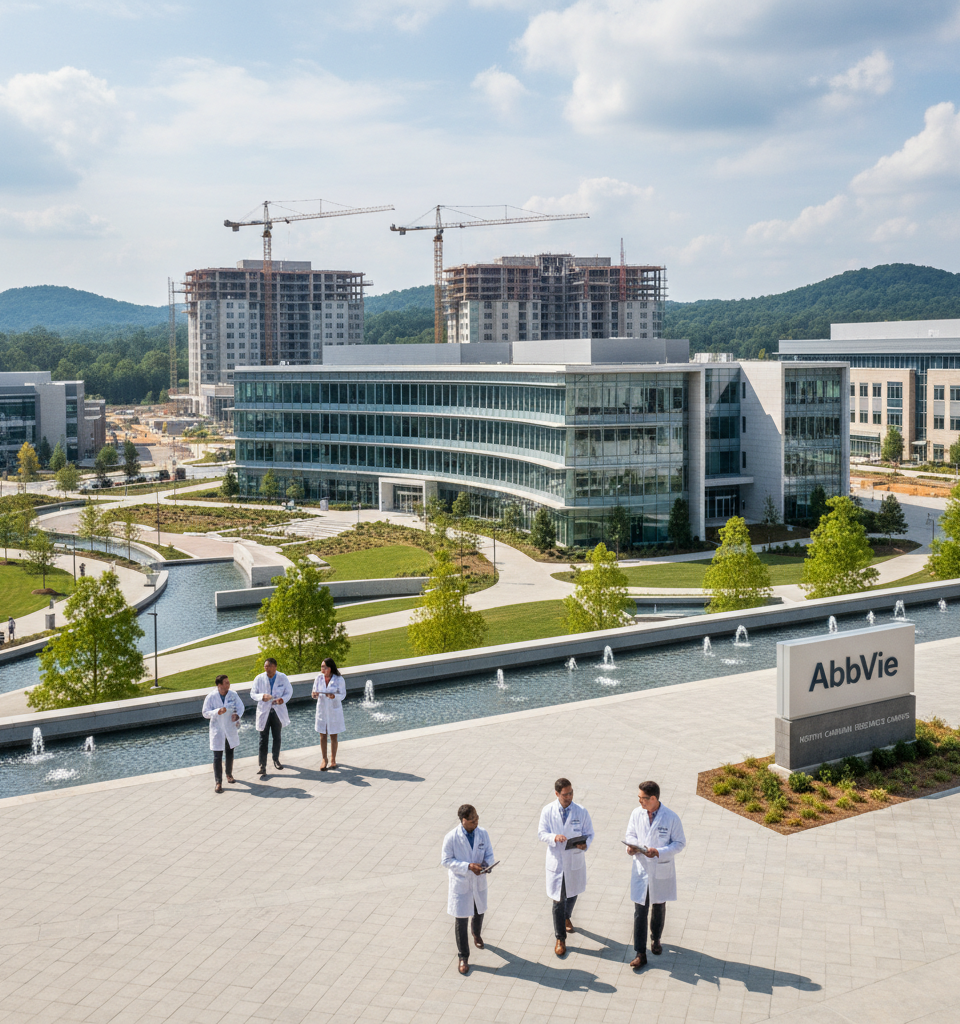
Global biopharmaceutical firm AbbVie has unveiled plans for a substantial $1.4 billion investment to establish a state-of-the-art pharmaceutical manufacturing and research campus within North Carolina's renowned Research Triangle. This ambitious project, encompassing a 185-acre site, signals a robust vote of confidence in the region's life sciences ecosystem and is expected to create over 500 new jobs, bolstering the local economy and further enhancing the area's reputation as a hub for biotech innovation. The announcement, made last week, comes amidst a period of rapid expansion and increased investor interest in the North Carolina biotech landscape.
Context and Significance
This investment arrives at a pivotal time for North Carolina's life sciences industry, which has been experiencing consistent growth and attracting significant capital. The Research Triangle area, anchored by universities like Duke, UNC, and NC State, has long been a fertile ground for pharmaceutical and biotechnology companies. However, this particular commitment by AbbVie – one of the world's leading biopharmaceutical companies – represents one of the largest single corporate investments in the region's biotech infrastructure in recent memory. It underscores a shift from earlier concerns about market saturation or funding lulls, indicating a validated and improved outlook for the sector's long-term sustainability.
Key Details and Scope
The planned facility will be a cutting-edge pharmaceutical manufacturing campus, focusing on various aspects of drug development and production. While specific therapeutic areas for manufacturing were not immediately detailed, AbbVie's diverse portfolio, which includes prominent drugs for immunology, oncology, neuroscience, and virology, suggests a broad scope for the new site. The company's intention to allocate $1.4 billion over an unspecified development timeline underscores the magnitude of the project, signaling a long-term strategic commitment to the region. The creation of over 500 high-skilled jobs will span manufacturing, research and development, quality control, and administrative roles, offering significant economic opportunities for the local workforce.
Industry and Market Impact
AbbVie's considerable investment is expected to generate a significant ripple effect across the broader life sciences landscape in North Carolina. It will likely attract further ancillary businesses, from specialized suppliers and contractors to research institutions and talent development programs. The sheer scale of the operation could also incentivize other major pharmaceutical players to consider or expand their presence in the Research Triangle, intensifying competition for talent but also fostering a more dynamic and innovative environment. This move solidifies North Carolina's standing as a formidable competitor to traditional biotech hubs in Massachusetts and California.
Expert Perspective Industry analysts and economic development experts have largely lauded
AbbVie's decision. Dr. Emily Chen, a senior biotech analyst at BioTrends Research Group, observed, "This is more than just a new facility; it's a testament to North Carolina's robust talent pipeline and supportive regulatory environment. AbbVie's commitment suggests they see not just immediate gains, but sustained growth potential and a highly skilled workforce ready to innovate." Local economic development officials have emphasized the meticulous planning and competitive incentives that likely contributed to AbbVie's selection of the Research Triangle, further cementing the state's proactive approach to attracting high-value industries.
What's Next: Future Implications
The immediate next steps involve detailed planning, regulatory approvals, and the commencement of site preparation and construction, which is anticipated to span several years. Beyond the physical construction, the focus will shift to talent acquisition and integration within the existing biotech ecosystem. This development positions the Research Triangle for continued robust expansion in biopharmaceutical manufacturing and R&D for the next decade, with the potential to draw even more significant investments and solidify its global standing as a critical life sciences hub. The long-term implications include enhanced innovation, increased domestic pharmaceutical production capacity, and sustained economic prosperity for the region.