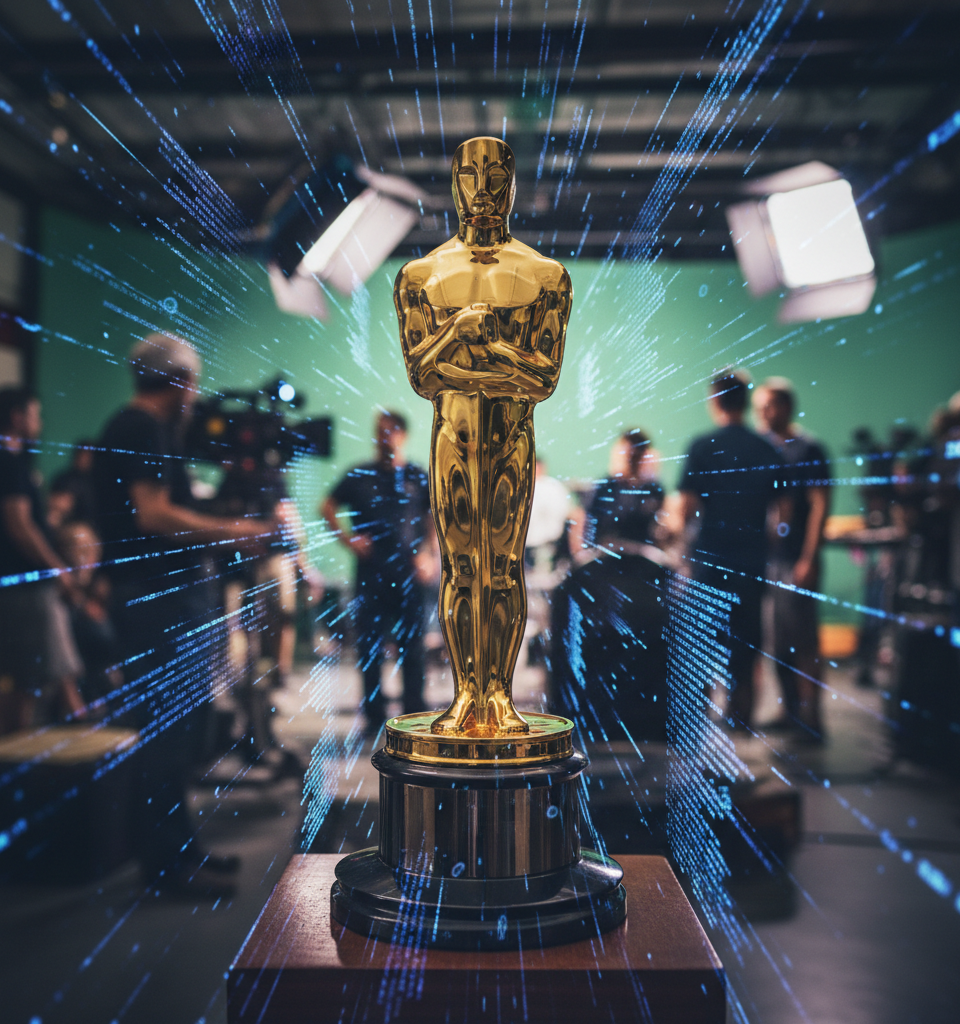
The Academy of Motion Picture Arts and Sciences (AMPAS) recently announced a decisive stance on artificial intelligence, stating that fully AI-generated performances and screenplays will be ineligible for consideration in major Oscar categories. This clarification, communicated to members and the broader industry, underscores the Academy's commitment to recognizing human artistry amidst the rapid integration of AI technologies into film production pipelines. The move follows months of industry speculation and debate concerning the escalating capabilities of AI in content creation and its potential impact on creative credits and awards.
Context and Background
This decision arrives at a pivotal moment for Hollywood, which has been intensely debating the proper integration and regulation of AI. The 2023 WGA and SAG-AFTRA strikes prominently featured AI as a central point of contention, with writers and actors seeking robust protections against its unchecked use, particularly in areas like script generation and synthetic performances. The Academy's ruling reflects a broader sentiment within the creative community that human intent and authorship remain paramount for cinematic recognition. Historically, film awards have celebrated individual genius and collaborative human effort, a tradition the Academy appears keen to uphold in the face of disruptive technological advancements.
Key Details and Policy Specifics
Under the newly articulated guidelines, for a performance to be eligible, it must be delivered by a human actor. Similarly, screenplays must be original works conceived and written by human writers. While AI tools may be used in the development process – such as for research, brainstorming, or technical assistance – the core creative genesis and execution must demonstrably originate from human talent. This nuance acknowledges AI's utility as a complementary tool without allowing it to usurp the primary creative credit. The Academy's committees and the Board of Governors will retain the ultimate authority to interpret and enforce these rules, potentially leading to further clarifications as AI technology evolves.
Industry and Market Impact
The Academy's clear stance is expected to send ripples across the entertainment industry, influencing how studios, producers, and filmmakers approach AI integration. While some tech-forward production companies have enthusiastically explored AI for cost reduction and efficiency gains, this ruling may temper the speed at which fully AI-driven projects are pursued for awards consideration. It could also bolster the value of human creative talent, reinforcing the message that while AI can assist, it cannot yet replace the nuanced, emotional, and interpretive capacities essential for award-winning cinema. The global film market, estimated at over $50 billion annually, will inevitably adapt its production strategies to balance technological innovation with established creative benchmarks.
Expert Perspectives
Industry experts and legal analysts generally view the Academy's decision as a pragmatic first step, albeit one that will require continuous refinement. Dr. Evelyn Reed, a leading media ethics professor at UCL, notes, "This is a necessary initial boundary-setting. The Academy is preserving the integrity of the 'art' in artificial intelligence, emphasizing human agency." Others, like technology journalist Alex Chen, point out the difficulty in policing the line between AI-assisted and AI-generated: "The grey areas will remain challenging. How much AI assistance is too much before a work loses its human core?" These discussions are likely to intensify as AI tools become more sophisticated and harder to detect.
What's Next: Future Implications
The Academy's initial declaration is unlikely to be its final word on AI. As AI capabilities rapidly advance – from sophisticated deepfakes to highly convincing script generation algorithms – the lines between human and machine creativity will blur even further. Future discussions will inevitably address questions regarding sound mixing, visual effects, and original scores, where AI is already making significant inroads.
Furthermore, the Academy may need to establish clearer certification processes or advisory panels to evaluate the human authorship of nominated works. This move sets a precedent, signaling that while technology progresses, the gold standard for artistic achievement in film will, for the foreseeable future, remain firmly rooted in human ingenuity and emotional depth. The ongoing dialogue between creators, technologists, and institutions like AMPAS will shape the cinematic landscape for decades to come.