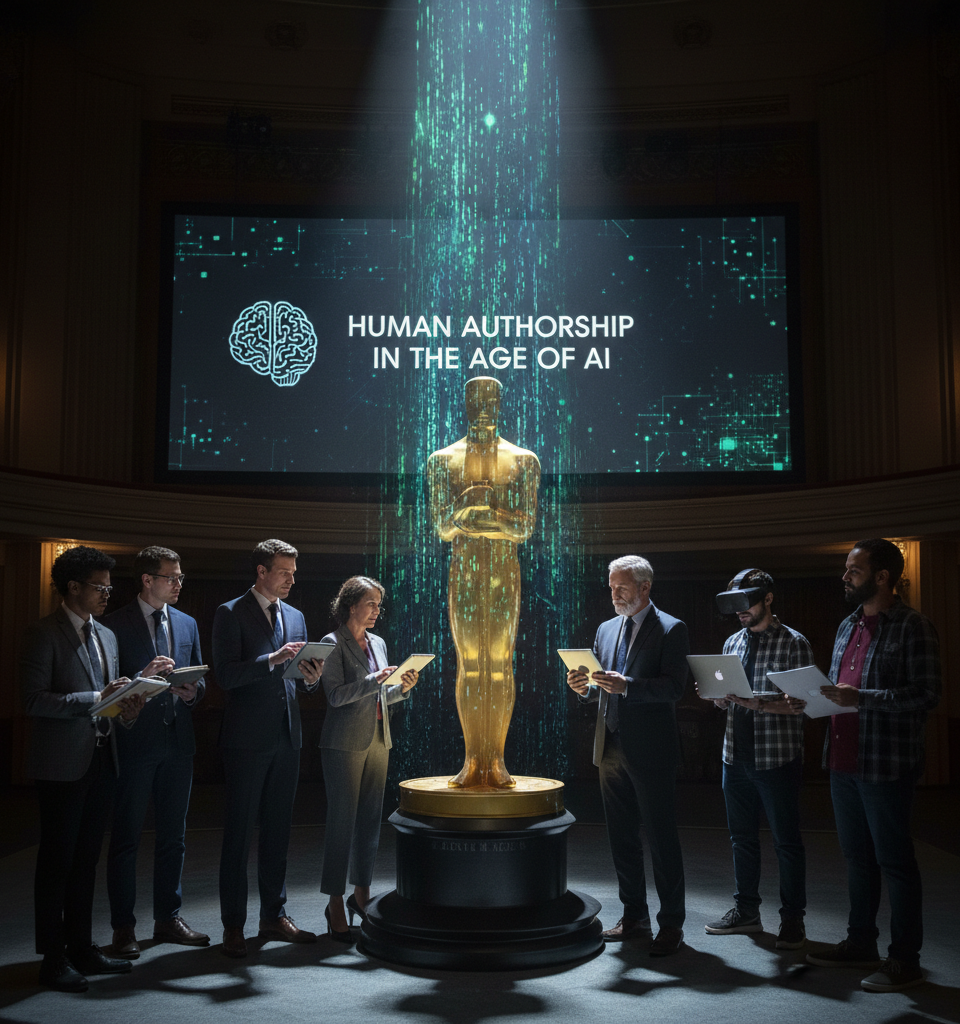
The Academy of Motion Picture Arts and Sciences announced pivotal new eligibility rules on May 2, fundamentally redefining "author" within cinematic creation for the 99th Academy Awards. The core of these revisions centers on two key stipulations: acting nominations will now be restricted to roles "demonstrably performed by humans with their consent," while screenplays must be "human-authored." Producers will also be required to formally attest to these human contributions, signaling a clear stance on AI's role in the prestigious awards. These decisions reflect Hollywood's ongoing internal discourse about the integration of artificial intelligence and its impact on the art form.
These new guidelines arrive at a crucial juncture for the film industry, battling the dual forces of technological innovation and existential concerns. The conversation around AI in film has intensified over the past year, becoming a central point of contention during the 2023 WGA and SAG-AFTRA strikes. Writers and actors voiced significant apprehensions regarding AI's potential to diminish their creative control, intellectual property, and earning capacity through automated script generation or digital replication of performances. The Academy's move can be seen as a direct response to these industry-wide anxieties, aiming to preserve the integrity of human artistry at the pinnacle of cinematic recognition.
The specific wording of the new rules leaves little room for ambiguity. For acting, the phrase "demonstrably performed by humans with their consent" directly addresses the burgeoning capabilities of AI to generate or significantly alter digital performances. This implies a rigorous verification process, potentially requiring detailed documentation of an actor's input and explicit permission for any digital enhancements that might blur the line of human performance. Similarly, the "human-authored" requirement for screenplays is aimed at precluding any entirely AI-generated scripts from consideration, ensuring that the fundamental storytelling originates from human intellect and emotion.
This proactive stance by the Academy will likely have substantial ripple effects across the film industry. Studios and independent filmmakers alike will need to meticulously document the human elements in their creative processes, particularly as AI tools become more sophisticated and integrated into production workflows. It may also spur the development of new industry standards and ethical frameworks for AI usage, pushing for transparency and collaboration rather than full automation. The implications extend beyond eligibility; it reinforces the perceived value of human input in a world increasingly capable of synthetic creation.
Industry analysts widely view the Academy's decision as a necessary step to maintain the awards' credibility and artistic relevance. "This isn't about outright banning AI, but about defining the sacred space of human creativity within the awards framework," commented Dr. Eleanor Vance, a professor of media studies at the University of Southern California. "It offers a clearer demarcation between tool and author, which is vital for an institution built on recognizing individual achievement. The 'consent' clause for actors is particularly significant, empowering performers against potential exploitation of their likeness or voice by AI."
Looking ahead, these rules could evolve as AI technology progresses. The current definitions might need further refinement as generative AI becomes more seamlessly integrated into various stages of film production, from concept generation to post-production effects. The Academy's initial move lays down a foundational principle, but the ongoing dialogue about AI's role is far from over. Future discussions may involve categories for AI-assisted works or distinct awards that recognize the blend of human and artificial intelligence, echoing discussions already underway in fields like visual effects and animation. For now, the spotlight remains firmly on human ingenuity and performance.
Producers and industry stakeholders are now tasked with understanding the detailed enforcement mechanisms for these rules. Questions remain about how "demonstrably performed" will be verified and what level of human input constitutes "authored" versus AI-generated content that merely assists a human writer. The Academy's move sets a vital precedent for Hollywood and potentially other creative industries wrestling with the ethical and artistic implications of AI, reasserting the enduring value of human touch in the digital age.