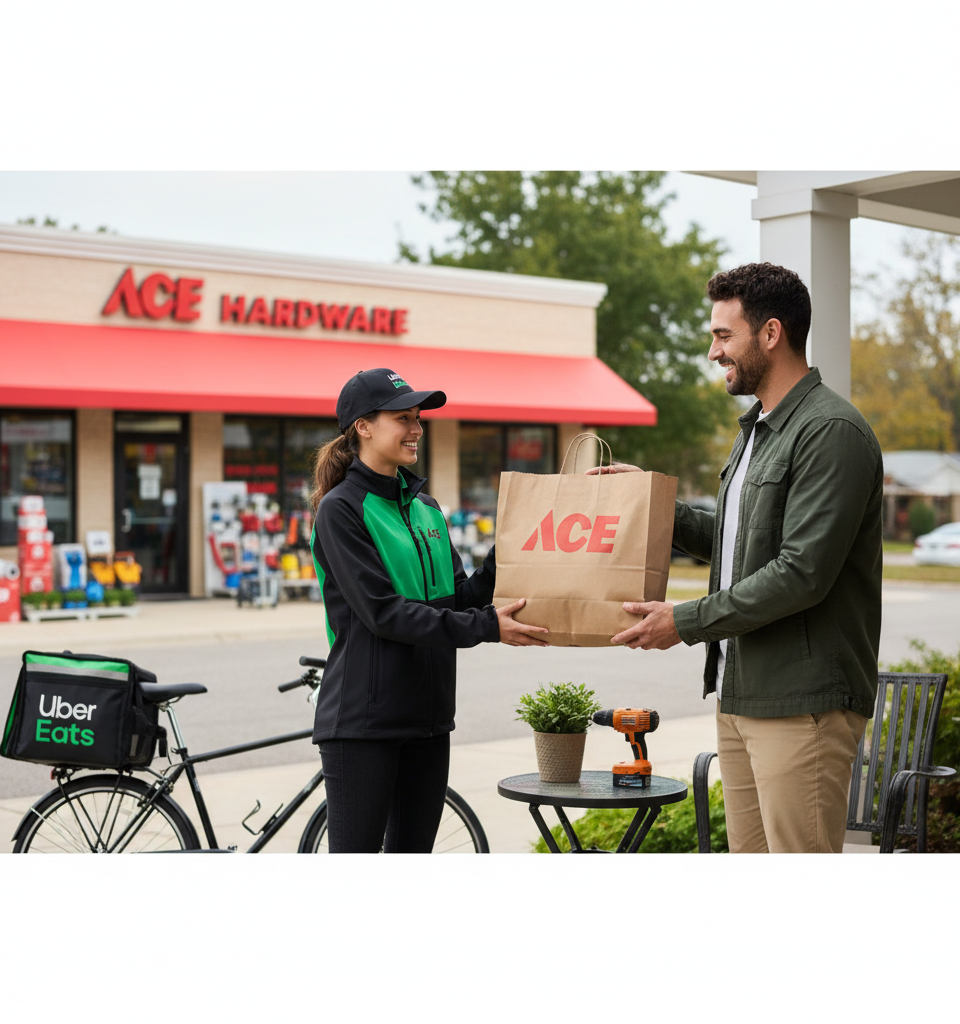
Ace Hardware has announced a strategic partnership with Uber Eats, enabling customers to access fast in-store delivery for their hardware needs directly through the Uber Eats application. This development signals Ace Hardware's commitment to enhancing its customer service offerings and adapting to the growing demand for convenient, on-demand retail solutions.
The collaboration positions Ace Hardware to tap into Uber Eats' well-established last-mile delivery infrastructure, which has traditionally been associated with food service. For Ace Hardware, this means expanding its reach and providing a competitive edge in a market increasingly defined by speed and accessibility. Customers can now browse and order essential hardware items — from tools to home repair supplies — and have them delivered from their local Ace store with a speed previously uncommon in the hardware retail sector.
Shifting Retail Landscape and Consumer Expectations
This move by Ace Hardware is indicative of a broader transformation within the retail industry, where consumers increasingly expect rapid delivery across a diverse range of products. The success of quick commerce models in groceries and prepared foods has set a new benchmark for other retail categories. By partnering with Uber Eats, Ace Hardware is directly addressing these evolving consumer expectations, ensuring that urgent household needs can be met without a trip to the physical store.
The integration with a major delivery platform like Uber Eats also highlights the ongoing convergence of various retail sectors. What began as a food delivery service has evolved into a comprehensive logistics provider, capable of handling a variety of inventory for different types of retailers. This diversification allows platforms like Uber Eats to maximize their delivery network efficiency, while offering retailers like Ace Hardware an external solution to complex and costly last-mile logistics without significant capital investment.
Operational Synergies and Market Implications
For Ace Hardware, the operational benefits are substantial. The partnership allows individual stores to leverage Uber Eats’ network of couriers, effectively transforming each Ace location into a mini-distribution hub for local deliveries. This bypasses the need for Ace to build or significantly expand its own dedicated delivery fleet, which can be a capital-intensive undertaking. Instead, Ace can focus on inventory management and customer service within its stores, while relying on a proven third-party for transit.
Market analysts suggest this collaboration could set a precedent for other traditional retailers looking to enhance their e-commerce capabilities without overhauling existing operational structures. The ability to offer 'fast in-store delivery' could become a crucial differentiator in competitive markets, especially for products that consumers often need urgently, such as plumbing repairs or accidental home damage supplies. The partnership also signifies Uber Eats' continued expansion beyond its core food delivery business, positioning itself as a versatile logistics partner for an array of retail categories.
The Future of On-Demand Hardware
Looking ahead, the success of this partnership could influence future strategies for both Ace Hardware and Uber Eats. If customer adoption rates are high and delivery efficiencies are robust, Ace might look to expand the scope and scale of its offerings through the platform. This could include a wider range of products available for delivery or even specialized delivery options for larger, bulkier items, presuming Uber Eats adapts its logistics capabilities accordingly.
Conversely, a successful integration with a hardware giant like Ace Hardware further validates Uber Eats' strategy of diversifying its service portfolio. This could encourage more traditional brick-and-mortar businesses, particularly those with a strong local presence and immediate product needs, to explore similar partnerships. The convergence of physical retail and on-demand delivery services is rapidly reshaping consumer habits and business models, and this Ace Hardware-Uber Eats alliance stands as a notable example of this evolving landscape.