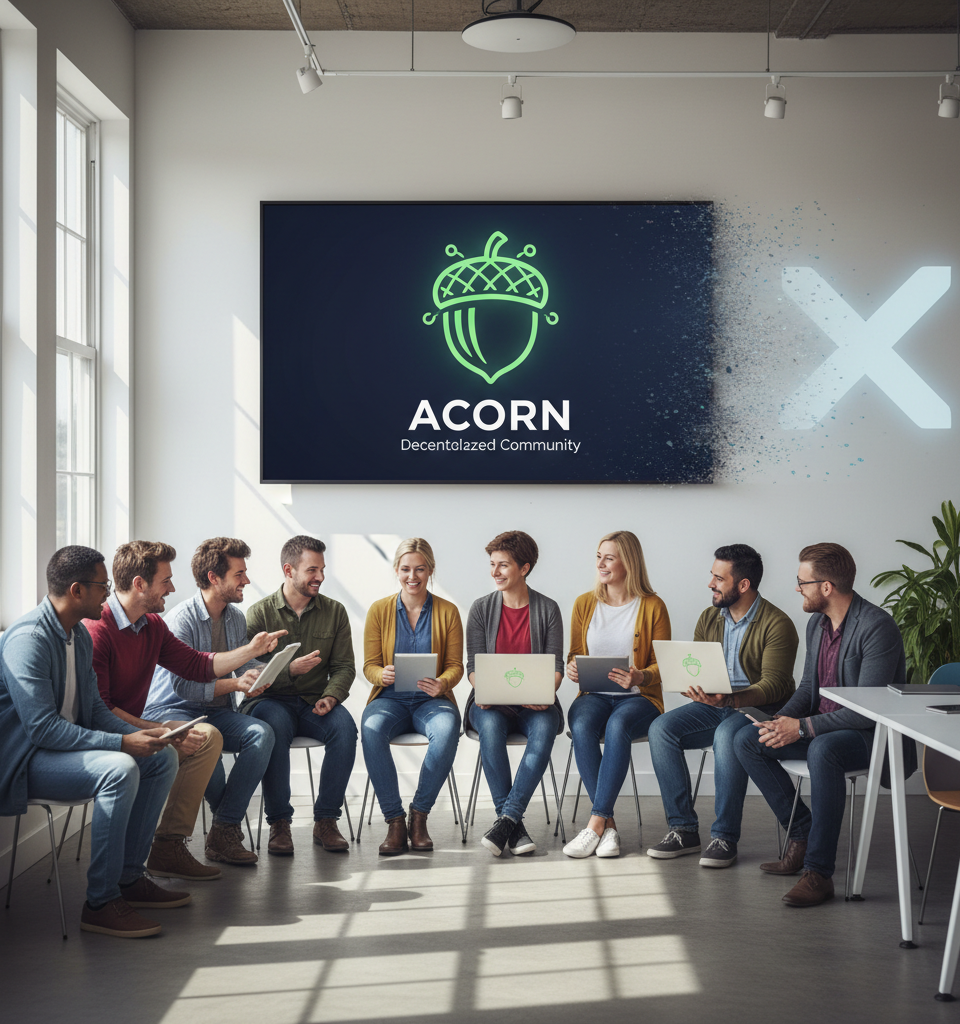
In a significant shift within the social media landscape, X (formerly Twitter) has ceased operations of its 'Communities' feature, leaving numerous groups without a dedicated platform. This strategic pivot by X has paved the way for the timely emergence of Acorn, a decentralized alternative designed to empower organizations and creators. Acorn officially debuted this week, offering a comprehensive suite of tools that enable the establishment and oversight of online communities, differentiating itself through a focus on creator control and decentralized technology.
The Shifting Sands of Online Community Platforms
For years, centralized social media platforms have served as de facto homes for diverse niche communities. However, these spaces have often been subject to the whims of platform policy changes, content moderation inconsistencies, and the overarching commercial interests of the parent company. X's decision to sunset its Communities feature, which allowed users to create and join interest-based groups, underscores the inherent fragility of relying on third-party platforms for community infrastructure. Many users and organizations leveraging X Communities are now scrambling to find new digital homes, highlighting a persistent demand for stable, controllable, and customizable online gathering places. This situation mirrors past instances where platforms like Reddit or Facebook Groups have faced user exodus due to policy shifts or perceived overreach.
Acorn's Decentralized Proposition
Acorn positions itself as a direct response to these challenges by leveraging decentralized technology. This architecture aims to distribute power away from a central authority, giving community administrators greater autonomy and resilience against sudden platform changes. Key features of the Acorn platform include highly customizable content feeds, allowing communities to tailor the user experience precisely to their needs.
Furthermore, it offers sophisticated moderation tools that can be configured by the community itself, moving beyond the often-criticized one-size-fits-all approach of larger platforms. Detailed analytics dashboards provide administrators with insights into engagement, growth, and member behavior, enabling data-driven decisions for community development. The platform emphasizes ownership; communities built on Acorn are designed to be truly owned and operated by their creators, rather than being mere extensions of a larger social media entity.
Industry Repercussions and Market Dynamics
The cessation of X Communities and the rise of alternatives like Acorn signal a broader trend towards fragmentation and specialization in the online social sphere. Businesses, content creators, and advocacy groups are increasingly seeking environments where they can nurture loyal audiences without constant algorithm changes or arbitrary content restrictions. This shift creates a burgeoning market for dedicated community management platforms. While established players like Discord and Circle.so cater to parts of this demand, Acorn's decentralized approach offers a distinct value proposition, particularly for those wary of centralized control and seeking enhanced data privacy and sovereignty. The market is becoming increasingly competitive, driven by a desire for authenticity and direct engagement, moving away from the broad public square model of legacy social networks.
Expert Perspectives on Decentralization
Industry analysts view Acorn's debut as a timely and strategically sound move. "The demand for truly owned digital spaces is at an all-time high," states Dr. Evelyn Reed, a digital sociology expert at the University of California. "Centralized platforms, despite their reach, inherently limit community self-determination. Decentralized alternatives like Acorn offer a compelling antidote, providing the infrastructure for communities to thrive on their own terms, free from the often-unpredictable interventions of a corporate entity." She adds that the success of such platforms will hinge on their user-friendliness and ability to scale without compromising their core decentralized principles. The emphasis on custom moderation and analytics is seen as critical for attracting serious organizations.
The Road Ahead for Acorn and Decentralized Communities
Looking forward, Acorn faces the dual challenge of user adoption and continued development in a rapidly evolving tech landscape. Its success will depend not only on the robustness of its technology but also on its ability to attract and retain communities facing dislocation from mainstream platforms. Plans include further enhancements to its decentralization protocols, exploring integrations with other Web3 technologies, and potentially introducing tokenization or other economic models that further reward community participation and ownership.
The company aims to cultivate partnerships with leading organizations seeking to migrate or establish new digital homes. As the reliance on a single, dominant social media platform wanes, platforms like Acorn are poised to play a crucial role in shaping the next generation of online interaction, offering a more resilient and community-centric vision for the digital future. The coming months will be critical in demonstrating its long-term viability and impact.