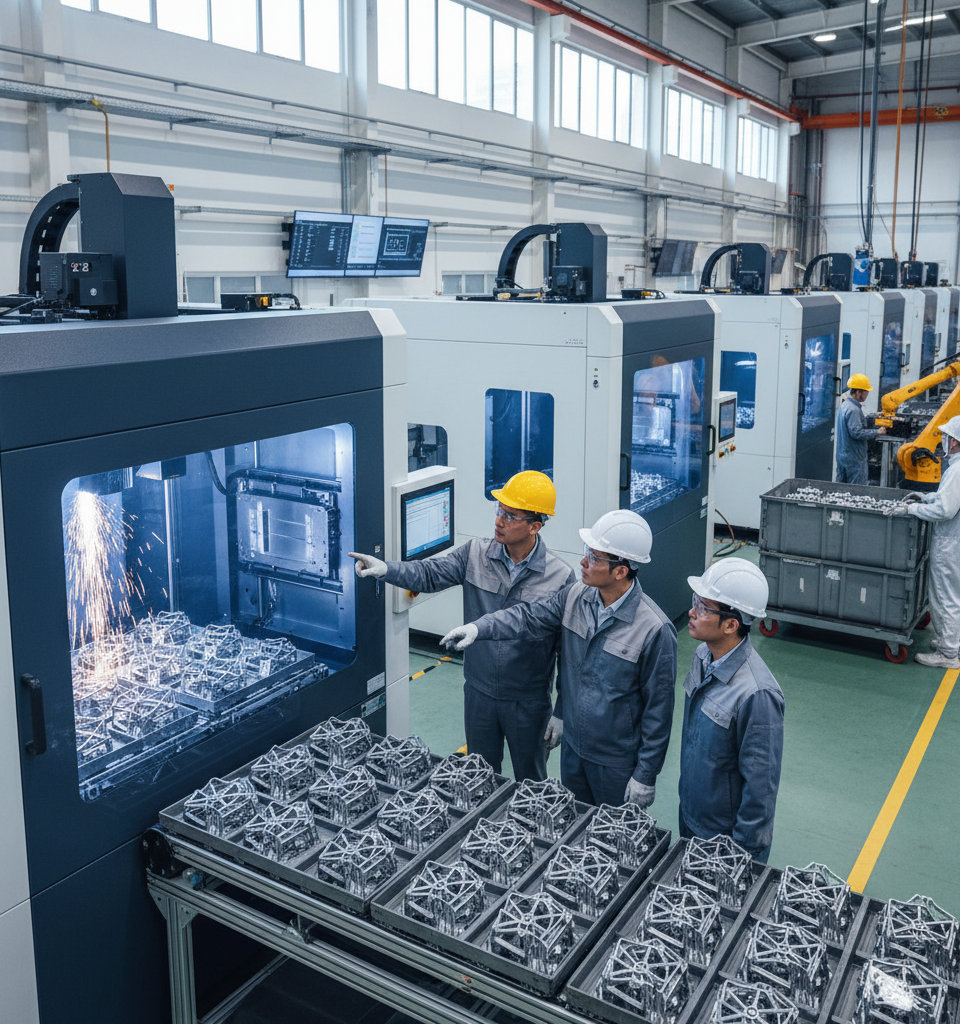
3D Printing Enters the Production Era
Additive manufacturing, commonly known as 3D printing, is achieving a long-anticipated milestone: the ability to produce metal parts at scale with quality and cost competitiveness comparable to traditional manufacturing methods. This breakthrough is reshaping industries from aerospace to medical devices.
Technological Advances
Recent innovations in binder jetting and directed energy deposition have dramatically increased production speeds while maintaining the precision required for critical applications. Print speeds have improved by 500% over the past three years, while material costs have decreased by approximately 40%.
Applications Expanding Rapidly
The range of applications for production-scale additive manufacturing continues to grow:
- Aerospace Components: Lightweight, complex geometries that are impossible to produce with traditional methods are reducing aircraft weight and fuel consumption
- Medical Implants: Patient-specific implants and surgical instruments are being produced on demand at hospital-adjacent facilities
- Automotive Parts: High-performance components for both production vehicles and aftermarket applications
- Industrial Tooling: Custom jigs, fixtures, and molds produced in hours rather than weeks
Economic Implications
The shift to additive manufacturing for production is creating new economic dynamics. Traditional supply chains built around high-volume, low-mix production are being challenged by distributed manufacturing networks capable of producing diverse parts on demand. This shift reduces inventory costs and enables unprecedented customization.
Workforce Transformation
The transition requires new skill sets, blending traditional metallurgical knowledge with digital design and data analytics capabilities. Educational institutions and manufacturers are collaborating to develop training programs that prepare workers for this hybrid manufacturing environment.
Market Outlook
The global additive manufacturing market for production applications is projected to reach $35 billion by 2028, growing at a compound annual rate of 25%. As the technology matures and standardization efforts progress, adoption is expected to accelerate across all manufacturing sectors.