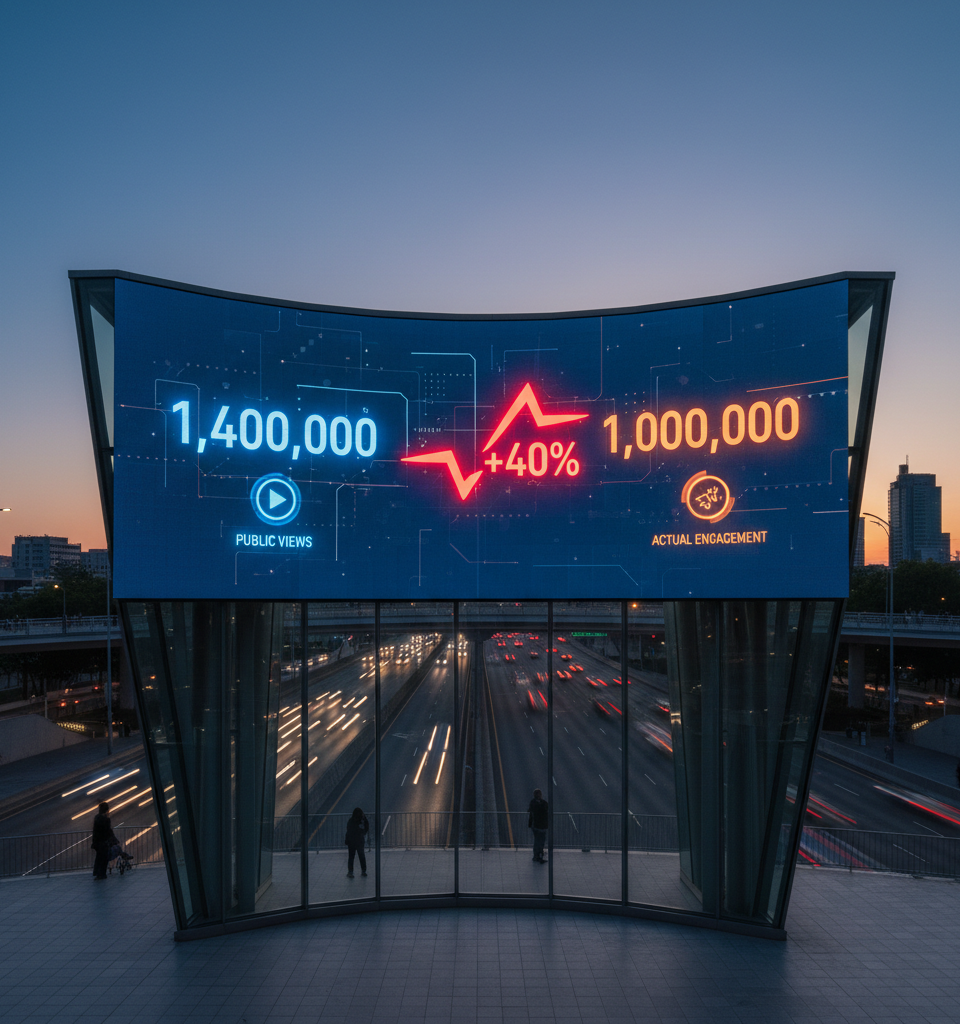
Digital advertisers and content creators face immediate challenges in assessing true audience reach, impacting media buying strategies and performance evaluations. Understanding the actual engagement discrepancy will be crucial for accurate ROI calculations and future platform investments.
New data released by analytics firm Agentio reveals that YouTube's recently implemented system for public view counts on long-form content is overstating actual viewer engagement by a substantial 40%. This finding, announced today, September 6, 2026, casts doubt on the accuracy of metrics presented by the video-sharing giant, which modified its view-counting methodology last month.
The Shift in View Counting
YouTube introduced a significant alteration to its view-counting mechanism for longer videos during the previous month. Historically, the platform designated a 'viewer' only after content had been watched for an unspecified minimum duration. This threshold aimed to filter out fleeting interactions or accidental clicks, theoretically providing a more robust measure of genuine engagement.
The specific duration required to register a view under the old system was never publicly disclosed by YouTube. However, the implicit understanding was that a certain level of commitment from the viewer was necessary for a view to be counted. The shift moves away from this time-based qualification.
Agentio's Findings
Agentio's analysis indicates that the new system significantly inflates the reported number of views. Their research suggests that the publicly displayed view counts are approximately 40% higher than what would be considered actual engagement under more stringent, time-based definitions. This disparity implies that a considerable portion of reported views may not represent meaningful consumption of content.
The firm's data highlights a potential disconnect between what is presented to the public and what content creators and advertisers might interpret as genuine audience interest. The 40% over-reporting figure is a critical metric for stakeholders relying on these numbers.
Implications for Creators and Advertisers
For content creators, inflated view counts could create a misleading impression of their content's performance and reach. This might impact their ability to accurately assess audience retention, content strategy effectiveness, and ultimately, their revenue potential from ad placements or brand partnerships. Creators may need to adjust their internal metrics and expectations based on Agentio's findings.
Advertisers, who often base their media spending and campaign performance evaluations on reported view figures, face a particular challenge. An over-reported view count could lead to an overestimation of campaign reach and engagement, potentially resulting in inefficient ad spend and miscalculated return on investment. The accuracy of audience metrics is fundamental to the digital advertising ecosystem, and a 40% discrepancy is significant.
Industry Context and Future Outlook
This development comes at a time when digital platforms are under increasing scrutiny regarding data transparency and metric accuracy. The integrity of reported engagement figures is paramount for maintaining trust within the creator economy and the broader advertising industry. Platforms like YouTube are constantly evolving their algorithms and metrics to optimize user experience and advertiser value, but such changes require clear communication and verifiable accuracy.
Industry observers will be closely watching for YouTube's response to Agentio's report and whether the platform will offer further clarification or adjustments to its view-counting methodology. Content creators and advertising agencies are likely to seek greater transparency and potentially adjust their analytical tools to account for the reported over-reporting. The long-term implications could include a re-evaluation of how digital content engagement is measured and monetized across the industry.