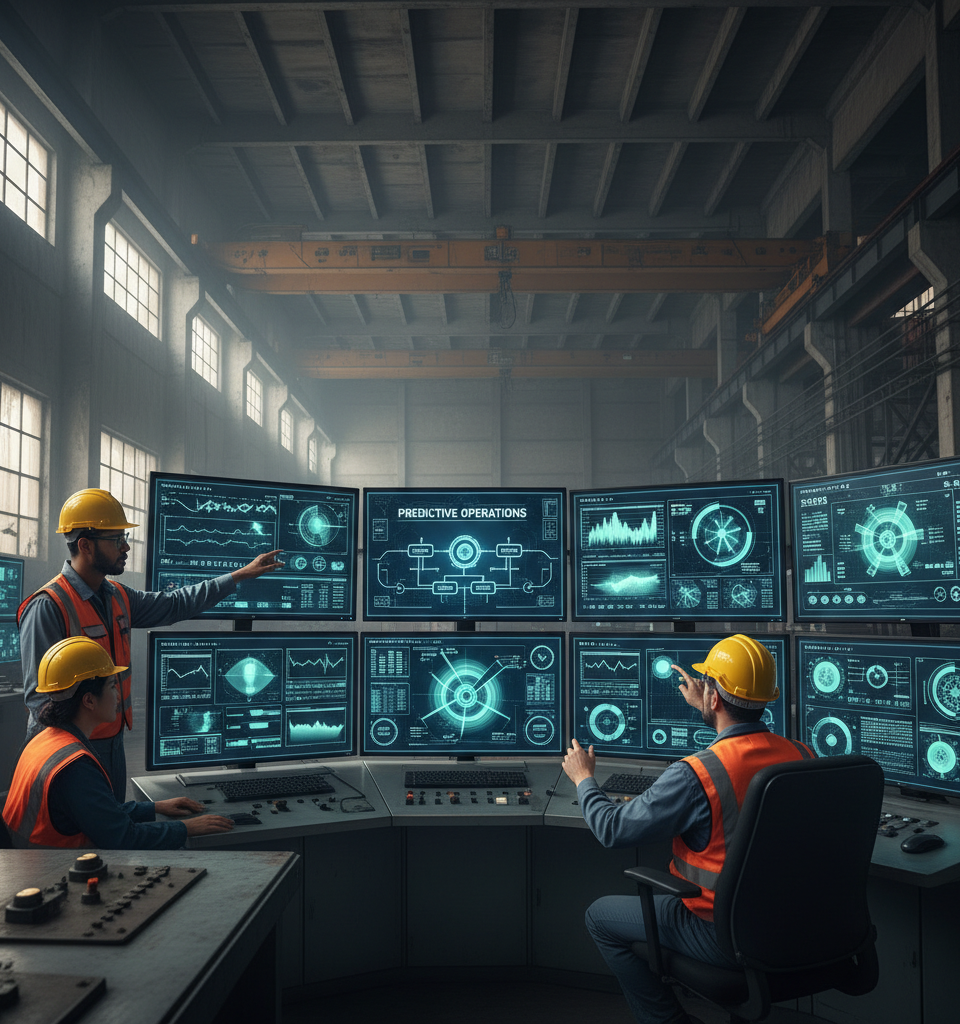
The heavy asset industry, encompassing sectors such as power generation, chemical processing, refining, and advanced manufacturing, is undergoing a profound technological transformation with the increasing integration of artificial intelligence (AI) and machine learning (ML). This strategic adoption is fundamentally redefining operational paradigms, moving engineers and operators beyond traditional reactive and time-based maintenance practices towards a sophisticated era of predictive, prescriptive, and ultimately autonomous decision-making. The shift promises enhanced operational efficiency, reduced downtime, and significant cost optimization across capital-intensive facilities.
The Urgent Need for Intelligent Operations
Historically, heavy asset industries have relied on scheduled maintenance or reacting to equipment failures, both of which are inherently inefficient and costly. Preventative maintenance, though an improvement, often leads to unnecessary downtime and premature parts replacement, while reactive maintenance can result in catastrophic failures, extensive production losses, and safety hazards. The sheer scale and complexity of operations, coupled with aging infrastructure and intense competitive pressures, necessitate a more intelligent approach. AI and ML address these challenges by enabling real-time data analysis, prognostics, and automated insights derived from vast datasets generated by industrial Internet of Things (IIoT) sensors, supervisory control and data acquisition (SCADA) systems, and other operational technologies.
Key Applications and Impact
The applications of AI and ML in these sectors are diverse and impactful. Predictive maintenance, for instance, leverages machine learning algorithms to analyze sensor data from critical machinery – such as turbines, pumps, and reactors – to forecast potential failures before they occur. This allows for just-in-time maintenance, minimizing unexpected stoppages and extending asset lifespan.
Beyond prediction, AI facilitates prescriptive analytics, recommending optimal actions to pre-empt issues or improve performance. In refining, ML models can optimize process parameters for higher yields and reduced energy consumption, potentially leading to efficiency gains of 5-15%. For power generation, AI can predict demand fluctuations with greater accuracy, optimizing grid stability and energy distribution, and even integrate intermittent renewable energy sources more effectively.
Early adopters are reporting up to a 20% reduction in unplanned downtime and maintenance costs dropping by 10-15% within the first year of implementation.
Industry-Wide Ripple Effects
The widespread adoption of AI and ML is poised to create significant ripple effects across the entire industrial landscape. Manufacturers of industrial equipment are increasingly embedding AI capabilities directly into their products, offering 'smart' machinery with self-diagnostic features. Service providers are developing AI-driven platforms for asset management, offering sophisticated analytics as a service.
The demand for data scientists, AI engineers, and professionals skilled in operational technology (OT) and information technology (IT) convergence is skyrocketing. Moreover, as operational efficiency improves, there's a potential for companies to reallocate resources from maintenance to innovation, fostering a more agile and competitive industrial ecosystem globally. The global market for AI in manufacturing alone is projected to reach over $16 billion by 2027, growing at a compound annual growth rate (CAGR) of approximately 25%.
Expert Insights and Challenges
Industry analysts and experts are cautiously optimistic about the transformative potential, yet highlight critical challenges. "The biggest hurdle isn't the technology itself, but the organizational shift required," states Dr. Elena Petrov, Head of Industrial AI Research at a leading tech consultancy. "Companies need robust data governance, skilled personnel, and a culture that embraces data-driven decision-making." Data security, integration with legacy systems, and the initial investment costs are also considerable concerns. However, the rapidly decreasing cost of computing power and increasing availability of specialized AI tools are making these solutions more accessible, even for small and medium-sized enterprises. Experts agree that companies failing to incorporate these technologies risk falling behind competitors in efficiency, safety, and profitability.
The Road Ahead: Autonomy and Advanced Analytics
The future of AI and ML in heavy asset industries points towards increasingly autonomous operations. Imagine refining plants that can adjust processing parameters in real-time based on fluctuating feedstock quality and market demand, with minimal human intervention. Or power grids that self-heal after disruptions through AI-controlled re-routing.
The next phase will likely involve more sophisticated cognitive AI systems capable of learning from multivariate data streams, understanding complex causal relationships, and even performing self-optimization. Further developments include the integration of digital twins – virtual replicas of physical assets – with AI, enabling advanced scenario planning, predictive modeling, and even training for operators in a risk-free virtual environment. Regulatory frameworks and ethical considerations surrounding autonomous decision-making will also evolve, shaping the intelligent industrial landscape of tomorrow.