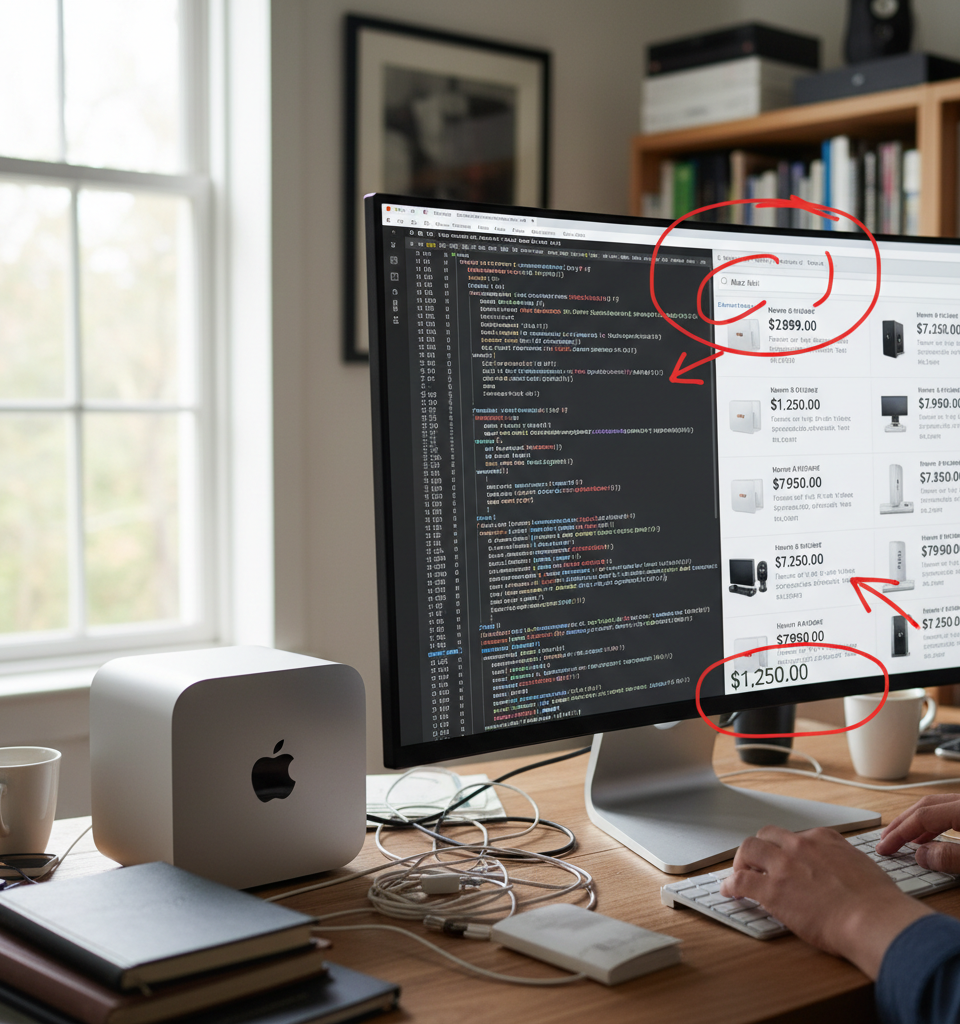
Apple's Mac Mini, a compact desktop computer, is experiencing unprecedented demand, primarily fueled by its unexpected emergence as a preferred platform for developing and running local artificial intelligence (AI) models and tools. This surge in interest has led to the diminutive device being largely sold out across official retail channels, triggering a vibrant and lucrative secondary market on platforms such as eBay, where anxious buyers are paying premium prices to secure the elusive hardware. This phenomenon underscores a broader trend where accessible, powerful, and relatively affordable computing solutions are becoming critical enablers for the fast-evolving AI landscape.
Historically, the Mac Mini has been a niche product, favored by developers, home theater enthusiasts, or those requiring a compact workstation. However, its combination of Apple's M-series chips, known for their efficient performance and unified memory architecture – highly beneficial for AI inference – has dramatically elevated its profile within the AI community. This unforeseen application has quickly transformed a steady seller into a high-demand commodity, highlighting how technological shifts can rapidly redefine product utility and market value.
Reports from various online retailers and Apple's own store indicate significant backorders and 'unavailable' statuses for popular configurations, particularly those featuring the M2 and M2 Pro chips with higher RAM options (16GB or 32GB). On eBay, listings for new or sparingly used Mac Minis are frequently appearing at prices 20% to 50% above their original retail value. For instance, a Mac Mini M2 Pro with 16GB RAM, which retails for approximately $1,299, has been observed selling for upwards of $1,800 to $2,000.
Some power users and small development teams are even resorting to purchasing multiple units as a stopgap solution for distributed AI workloads, further exacerbating the supply crunch. The scramble for Mac Minis reflects a growing democratization of AI development. While enterprise-level AI applications still rely on powerful servers and cloud infrastructure, the ability to run more sophisticated AI models locally on consumer-grade hardware is a game-changer for individuals, startups, and researchers.
This localized processing reduces reliance on costly cloud services, enhances data privacy, and lowers latency, making tools like large language models (LLMs) and stable diffusion more accessible for personal projects and smaller-scale innovation. The Mac Mini's energy efficiency compared to high-end gaming PCs, another alternative for local AI, also contributes to its appeal. Industry analysts are closely monitoring this trend as it could signal a shift in consumer computing priorities.
"The Mac Mini's breakout success in the AI space highlights Apple's unintended competitive advantage with its M-series silicon," states Dr. Evelyn Reed, a tech market analyst at Quantum Insights. "While not designed as an AI workstation, its architecture is proving surprisingly adept at handling on-device AI tasks, particularly inference. " She suggests that Apple might strategically lean into this newfound market, potentially even marketing future Mac Mini iterations with AI capabilities more explicitly.
Looking ahead, the longevity of these inflated prices and the supply shortages depend heavily on Apple's production capacity and market response. Should demand continue its aggressive trajectory, Apple may accelerate production or introduce new models specifically tailored to local AI workloads. Competitors, seeing the strong market signal, are also likely to respond with their own compact, AI-optimized desktop solutions, potentially featuring chips from Intel, AMD, or Qualcomm.
The Mac Mini's current dominance in this niche could be a temporary window before the broader PC market adapts. Meanwhile, those keen to experiment with the cutting edge of local AI will continue to navigate the inflated secondary market, hoping for an eventual stabilization of supply and pricing. The current situation serves as a stark reminder of how quickly technological innovation can reshape market forces and product desirability.
The Rise of Local AI
The increasing sophistication of AI models, combined with growing concerns about data privacy and the cost of cloud computing, has led to a significant interest in running AI tasks directly on local hardware. The Mac Mini's M-series chips, with their integrated Neural Engine and unified memory architecture, are particularly well-suited for these tasks, offering excellent performance per watt.
Market Dynamics and Pricing
Secondary market analysis reveals that the most sought-after Mac Mini configurations are those with the M2 Pro chip and higher RAM capacities, often selling for a 20-50% premium over retail. For example, some M2 Pro 16GB RAM models, which retail for $1299, have been observed selling for $1800-$2000 on eBay, reflecting desperate demand.
Apple's Strategic Positioning While
Apple has not explicitly positioned the Mac Mini as an AI device, its technical specifications have inadvertently made it a leader in the accessible local AI hardware market. This unexpected demand offers Apple a strategic opportunity to further optimize future hardware and software for AI development.
Competitive Landscape The current market phenomenon is likely to stimulate innovation from competitors.
Companies like Intel, AMD, and Qualcomm are investing heavily in AI-optimized processors, and the success of the Mac Mini could spur them to develop similar compact, powerful, and efficient desktop solutions targeting the burgeoning local AI market.
Future Implications The sustained demand for Mac Minis for
AI signifies a robust future for on-device AI. This trend could accelerate the development of more personalized and privacy-focused AI applications, reducing reliance on centralized cloud services and shifting the paradigm of how individuals and small teams interact with advanced AI technologies.