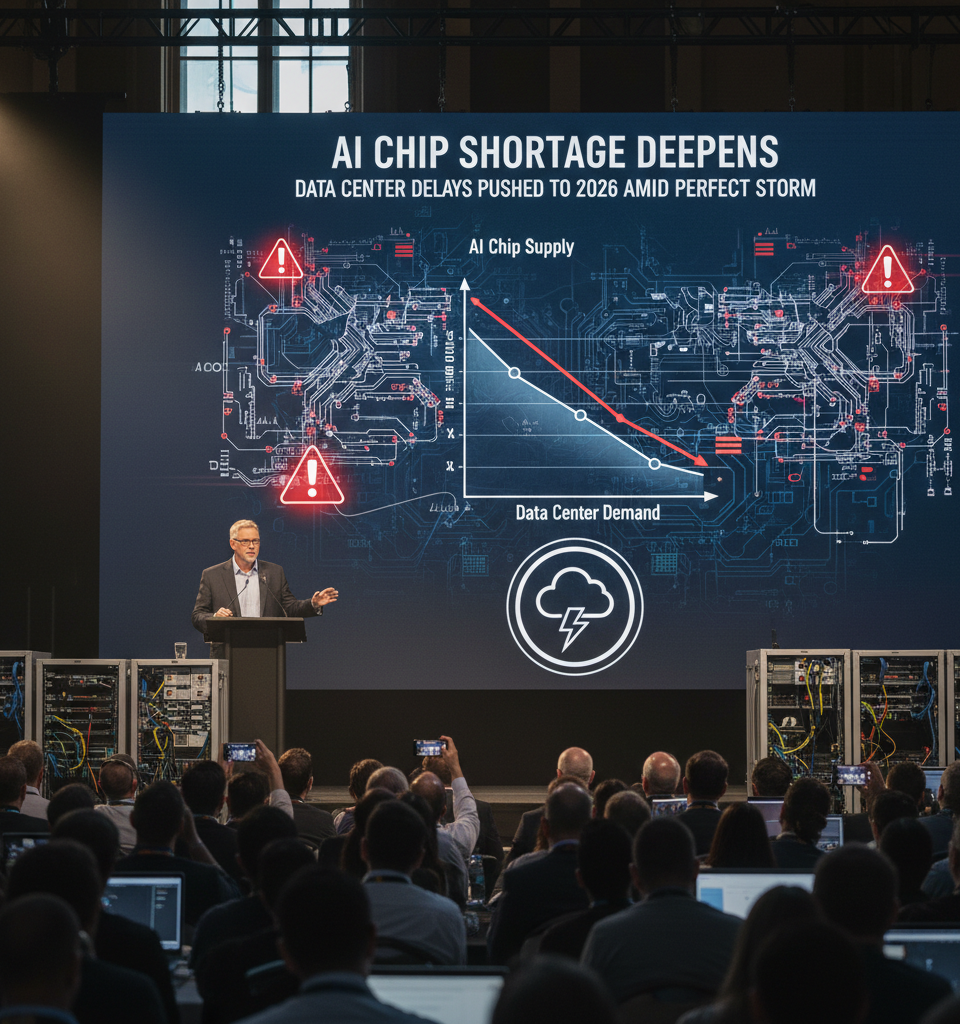
The Looming Crisis for AI Advancement
The current predicament stems from a perfect storm brewing within the global semiconductor supply chain, impacting everything from cutting-edge GPUs to foundational memory components. As demand for AI-driven applications – from large language models to autonomous systems – skyrockets, the underlying infrastructure required to support this growth is buckling. This isn't merely a temporary hiccup; it represents a systemic challenge with long-term implications for technological progress and economic competitiveness. The historical context shows that while chip shortages have occurred before, the current confluence of factors – including a pandemic-induced supply shock and heightened international trade tensions – makes this situation particularly acute, unlike the more localized or single-point failures of the past.
Key Factors Driving the Delay Bruce Bateman, a chief analyst at
Omdia, has been vocal in outlining the multifaceted nature of this crisis. He points to several critical factors. Firstly, the sheer physical constraints in manufacturing advanced semiconductors are enormous. Building a new fabrication plant (fab) can cost upwards of $20 billion and take 3-5 years to become operational. There's also a significant shortage of specialized equipment, such as Extreme Ultraviolet (EUV) lithography machines, monopolized by a few key players like ASML. Secondly, geopolitical tensions, particularly between the U.S. and China, are heavily influencing trade policies, export controls, and investment flows, creating uncertainty and fragmenting the global supply chain. For example, recent U.S. restrictions on exporting advanced AI chips to certain regions have forced companies to re-evaluate their production and distribution strategies, adding layers of complexity and delay.
Profound Impact on Industry and Markets
The repercussions of these delays are already being felt across the tech ecosystem. Companies heavily invested in AI development, from tech giants like Google and Microsoft to agile AI startups, face higher costs, extended development cycles, and potential market share losses. The scarcity of high-performance AI chips is driving up prices, with some specialized GPUs seeing price increases of 30-50% in secondary markets. This directly impacts the profitability and scalability of AI-driven services. Venture capital firms are scrutinizing investments in AI companies more closely, factoring in the increased time-to-market due to hardware availability. The global data center market, projected to grow to over $300 billion by 2028, is now facing significant CapEx planning challenges and potential revenue shortfalls for operators.
Expert Analysis and Outlook
Experts like Bateman emphasize that there's no quick fix. "This isn't just about ramping up production in existing fabs; it's about a fundamental restructuring of how these highly complex and globally interdependent supply chains operate," Bateman stated in a recent industry brief. Other analysts concur, highlighting the increased push for 'reshoring' or 'friend-shoring' semiconductor manufacturing, which, while reducing geopolitical risk, adds to the initial capital expenditure and timeframes. Forecasts suggest that while some relief may begin to appear in late 2025, significant normalization of the AI chip supply chain and data center build-outs is unlikely before the latter half of 2026.
Navigating the Future of AI Development
Looking ahead, several strategies are being deployed to mitigate the impact. Companies are actively diversifying their supply chains, investing in custom silicon development ( Application-Specific Integrated Circuits - ASICs), and exploring partnerships to secure future capacity. Governments are also stepping in with significant subsidies, such as the U.S. CHIPS Act, allocating over $50 billion to boost domestic semiconductor manufacturing and reduce reliance on foreign production. The long-term implications point towards a more decentralized and resilient, albeit potentially more expensive, global semiconductor ecosystem. While these measures offer a beacon of hope, the immediate future for AI development will undoubtedly be shaped by prudence, strategic resource allocation, and a deeper understanding of the geopolitical chessboard.