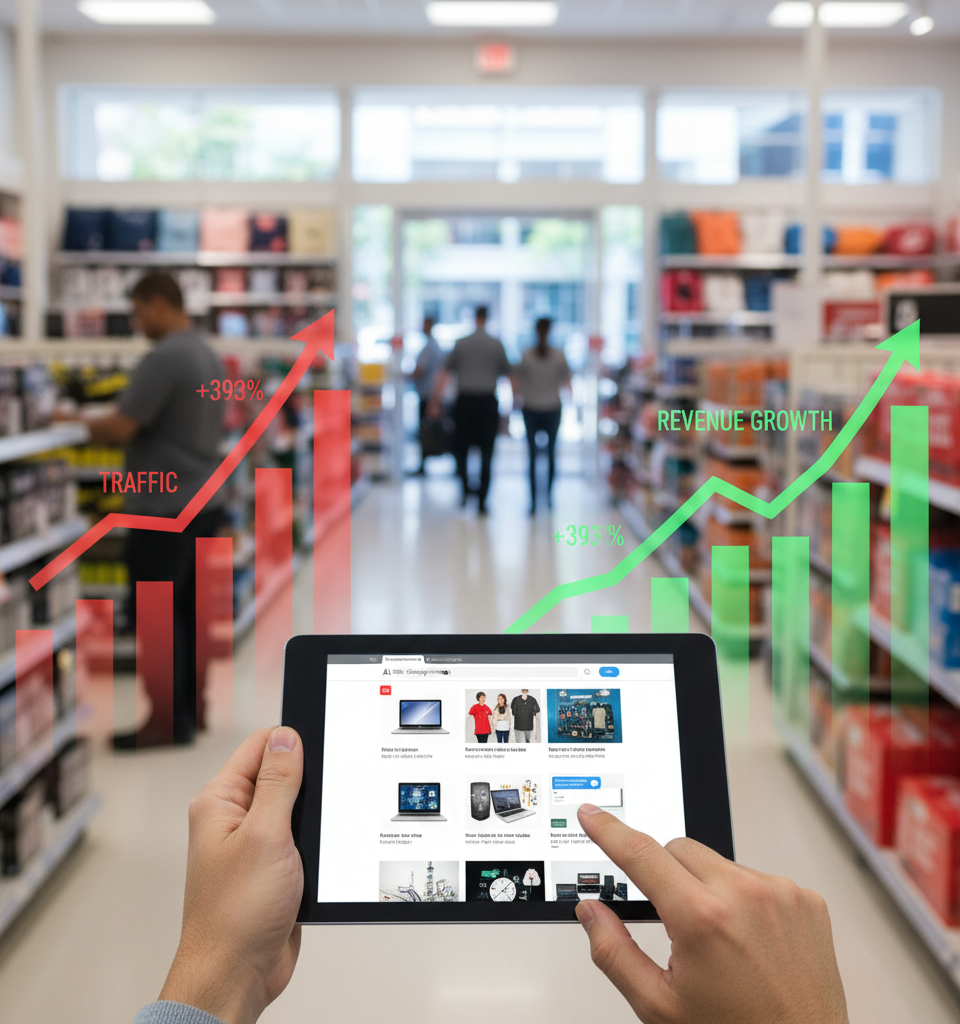
San Jose, CA – April 18, 2024 – Artificial intelligence (AI) has emerged as a transformative force in the U.S. retail sector, with new data from Adobe revealing an astounding 393% year-over-year increase in AI-driven traffic to American retail websites during the first quarter of 2024. This significant surge, highlighted by a 269% jump in March alone, indicates a burgeoning impact of AI technologies on consumer engagement and, crucially, a direct boost to retailers' bottom lines. The figures suggest that shoppers interacting with AI tools are not only more numerous but also more valuable, converting at higher rates and generating greater revenue per visit compared to their non-AI counterparts.
This dramatic acceleration in AI's influence marks a pivotal moment for online retail. For years, e-commerce platforms have strived for personalization and efficiency, and AI is now providing the critical leverage to achieve these goals at an unprecedented scale. The data underscores the tangible benefits for retailers who have embraced AI-powered tools, ranging from personalized recommendations and dynamic pricing to advanced search functionalities and AI-driven customer service chatbots. This trend is not merely about novelty; it represents a fundamental shift in how consumers discover, interact with, and ultimately purchase products online.
The specifics of Adobe's report are compelling. Beyond the headline figures, the analysis indicates that the effectiveness of AI extends beyond mere traffic generation. AI-influenced visitors are demonstrating higher intent and better engagement, leading to superior conversion metrics. While specific revenue figures were not disclosed, the direct correlation between AI traffic, improved conversion, and increased revenue signals a strong return on investment for retailers integrating sophisticated AI solutions. This effectively separates AI-driven traffic from general web traffic, establishing it as a premium segment of online consumer activity.
The ripple effects of this AI adoption are profound across the broader retail landscape. Smaller and mid-sized retailers who have historically struggled to compete with omnichannel giants now have accessible AI tools that can level the playing field, offering hyper-personalized experiences typically associated with larger enterprises. Conversely, major retailers are further refining their AI strategies, using advanced algorithms to optimize supply chains, predict demand, and enhance the customer journey from initial browse to post-purchase support. This widespread integration is fostering an environment where AI is no longer a competitive advantage but rapidly becoming a baseline expectation for effective online commerce.
Industry experts are watching these developments closely. "The Q1 data from Adobe is a stark reminder that AI is no longer a futuristic concept but a present-day revenue driver for retail," comments Sarah Chen, a senior analyst at E-commerce Insights Group. "Retailers who are strategically deploying AI for personalized recommendations, intelligent search, and predictive analytics are seeing measurable gains. This isn't just about efficiency; it's about creating a more intuitive and satisfying shopping experience that directly translates to higher conversions and greater customer lifetime value." Chen further emphasizes the importance of data quality in maximizing AI's impact, noting that robust data infrastructure is critical for these systems to learn and optimize effectively.
Looking ahead, the integration of AI into retail is expected to deepen and broaden. Upcoming developments are likely to include more sophisticated AI-powered virtual try-on experiences, advanced predictive analytics for hyper-localized inventory management, and even generative AI creating dynamic product descriptions and marketing content tailored to individual consumer preferences. The focus will shift from general AI implementation to highly specialized applications that address specific pain points and opportunities within the retail value chain. Furthermore, ethical considerations surrounding AI, such as data privacy and algorithmic bias, will become increasingly central to ensuring sustainable growth and consumer trust.
The trajectory for AI in retail points towards an increasingly intelligent and responsive shopping environment. Retailers are expected to further invest in AI infrastructure, talent, and strategic partnerships to maintain competitiveness. The success seen in Q1 serves as a powerful testament to AI's capability to not only attract but also effectively monetize consumer attention in the digital realm. As AI technologies continue to evolve, their role in shaping the future of retail will only become more pronounced, fundamentally redefining how businesses connect with their customers and drive economic value.
This sustained growth underscores a critical paradigm shift: rather than a mere technological novelty, AI has solidified its position as an indispensable engine for commercial prosperity in the digital age. The retail sector, traditionally a bellwether for consumer trends, is vividly demonstrating AI’s profound commercial utility and its capacity to unlock unprecedented levels of customer engagement and revenue generation. The Q1 results are not an anomaly but merely the beginning of a new era in retail driven by intelligent automation and hyper-personalization.