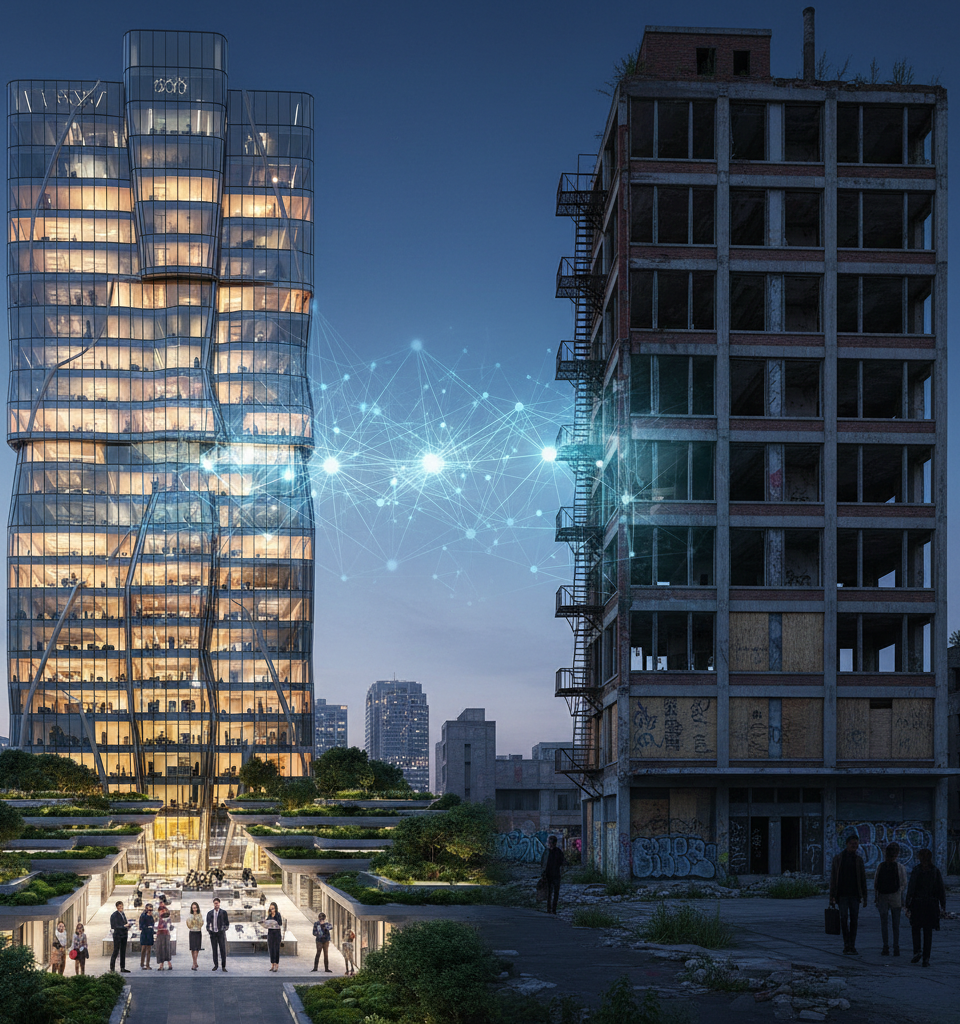
Six years following the onset of the global pandemic and three years after the lifting of most restrictions, the commercial office sector has fractured into two distinct segments: thriving innovation hubs and struggling legacy spaces. This dichotomy is significantly influenced by the accelerating adoption of artificial intelligence, which is reshaping workspace requirements and intensifying the appeal of state-of-the-art facilities in key markets. The trend highlights a fundamental shift in corporate real estate strategies, prioritizing technologically advanced environments that foster collaboration and innovation over traditional, less flexible office setups.
The initial mass exodus from offices during the pandemic instigated a dramatic reevaluation of workplace necessity and design. Even as companies encouraged returns to physical spaces, the ingrained flexibility of hybrid work models persisted, fundamentally altering the calculus for commercial landlords and tenants. The subsequent surge of AI integration has only amplified these changes, creating a 'flight to quality.'
Companies leveraging AI need sophisticated infrastructure, dynamic collaborative zones, and environments conducive to a highly skilled, tech-focused workforce. This preference is starkly evident in major innovation centers, directly contrasting with the vacancy rates plaguing older or geographically less desirable office buildings. Key metropolises like San Francisco, New York, and Austin are witnessing robust demand for premium AI-ready office spaces.
According to recent data from CBRE, Class A office vacancies in prime innovation districts are significantly lower, sometimes below 10%, compared to overall national averages closer to 18-20%. These in-demand properties frequently feature cutting-edge IT infrastructure, advanced security systems, and amenities designed to attract and retain top talent. Conversely, older Class B and C office buildings, often lacking modern amenities and technological readiness, are experiencing persistently high vacancy rates, with some struggling to attract any tenants at all. "
The AI boom isn't just about software; it's physically redefining where work gets done," states Sarah Chen, a senior analyst at JLL, highlighting the tangible impact on real estate. This evolving landscape has profound implications for the broader commercial real estate market and urban economies. Cities with diversified tech sectors and robust talent pools are poised for continued growth, while those reliant on older commercial inventory face significant challenges, including potential declines in property tax revenues and urban revitalization efforts.
The demand for specialized lab space and highly configurable offices is also surging, further driving investment into purpose-built facilities that can accommodate AI development and research. This shift necessitates substantial capital investment in existing properties to meet new tenant expectations or risk obsolescence. Real estate experts and financial analysts view this bifurcation as a long-term structural change, not a temporary market fluctuation. "
We're seeing a clear divergence where the top-tier assets, particularly those catering to tech and AI firms, are outperforming significantly, while the rest of the market faces headwinds not seen in decades," notes David Lee, head of commercial real estate research at Goldman Sachs. He predicts continued investment in smart building technology and sustainable design as key differentiators for winning properties. The consensus among financial institutions is that lenders will become increasingly selective, favoring projects that align with modern tech-driven demand and shunning those with outdated infrastructure or poor location.
Looking ahead, the trajectory of the commercial office market will be heavily influenced by technological advancements, corporate AI adoption rates, and evolving workforce preferences. Developers are increasingly focusing on mixed-use developments that integrate AI research facilities with residential and retail components, creating vibrant innovation ecosystems. Furthermore, the retrofitting of existing buildings to meet stringent sustainability standards and technological requirements will become paramount for landlords seeking to remain competitive.
The emphasis on flexibility, wellness, and advanced connectivity will define the successful office spaces of tomorrow, continuing to widen the chasm between the adaptable and the obsolete in the commercial property sector.