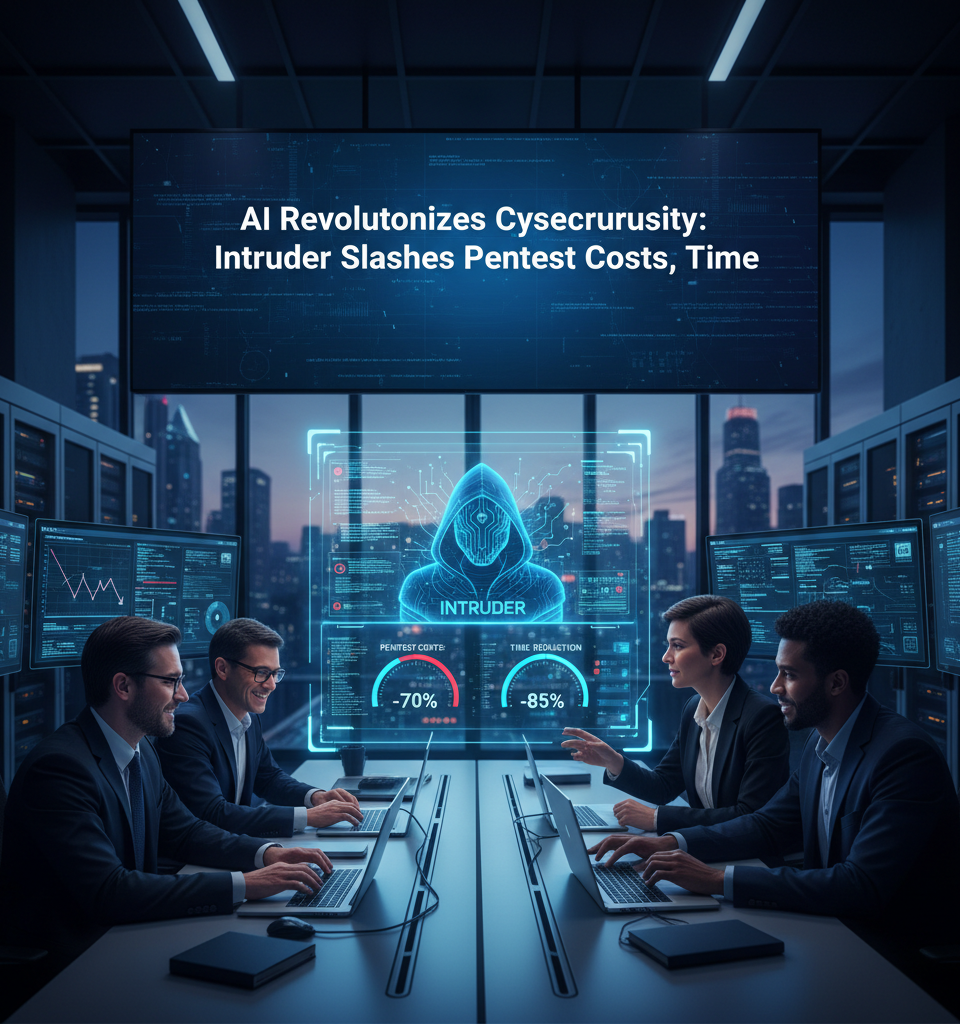
In a significant leap for enterprise cybersecurity, Intruder, a London-based firm originating from GCHQ’s prestigious Cyber Accelerator program, has publicly launched a groundbreaking suite of AI-powered penetration testing agents. This development promises to fundamentally reshape how organizations identify and mitigate vulnerabilities, moving from a process that historically cost between $10,000 and $50,000 and took weeks to complete, to one that can be executed in mere minutes with unprecedented accuracy.
The Mounting Pressure on Traditional Pentesting
For years, manual penetration testing has been the gold standard for security assurance. However, its inherent limitations—high cost, lengthy scheduling and execution times, and reports that often became outdated even before they were fully implemented—have created a significant bottleneck in rapid development cycles and agile IT environments. Companies have struggled to keep pace with the evolving threat landscape, often finding their security posture compromised by newly discovered vulnerabilities long before their scheduled pentests could even begin. The escalating volume of cyber threats, coupled with a persistent global shortage of skilled cybersecurity professionals, has only exacerbated these challenges.
Intruder's AI-Driven Solution
Intruder's new AI agents are designed to meticulously replicate the methodology of a highly skilled human penetration tester. Unlike automated vulnerability scanners that merely identify known weaknesses, these AI agents employ sophisticated reasoning and threat modeling techniques to chain together vulnerabilities, identify complex attack paths, and gauge actual business risk. This innovative approach ensures that the output is not just a list of flaws, but a contextualized understanding of potential exploitation, offering actionable intelligence faster and more affordably. While exact pricing was not disclosed, initial reports suggest a dramatic reduction from the tens of thousands of dollars typically associated with manual assessments.
Reshaping the Cybersecurity Landscape
The introduction of AI-powered pentesting is poised to have a profound impact across the cybersecurity industry. Small to medium-sized enterprises (SMEs), often priced out of regular manual pentests, can now access high-caliber security assessments, significantly raising the overall baseline of enterprise security. For larger organizations, it offers the potential for continuous, real-time security validation, moving beyond reactive, periodic checks. This shift could lead to a re-evaluation of staffing models within internal security teams and a greater emphasis on incident response and strategic threat intelligence, as routine testing becomes increasingly automated and efficient.
Expert Perspectives on Automation
Industry analysts are largely optimistic, though cautiously so, about the advent of AI in pentesting. Dr. Anya Sharma, a lead cybersecurity researcher at the Centre for Digital Trust, notes, "While AI cannot entirely replace the nuanced intuition of an elite human attacker in every possible scenario, it can cover an enormous amount of ground with incredible speed and consistency. The real power is in augmentation, allowing human experts to focus on the most complex, bespoke challenges, rather than laboring through repetitive or known vulnerabilities." Others highlight the importance of ethical AI development and rigorous validation to prevent unintended biases or new attack vectors from emerging through these automated systems.
The Future of Continuous Security Assurance
The future implications of this technology extend beyond just cost and time savings. We can anticipate a move towards continuous security assurance, where AI agents are constantly probing for weaknesses, integrated directly into development pipelines (DevSecOps). This proactive, always-on approach diminishes the window of opportunity for attackers and allows organizations to adapt their defenses dynamically. Furthermore, the data collected by these AI agents can feed into advanced threat intelligence platforms, improving predictive capabilities and strengthening collective defense against emerging cyber threats. As AI capabilities evolve, the line between automated scanning and true penetration testing will continue to blur, making robust, intelligent security accessible to an ever-wider array of organizations globally.