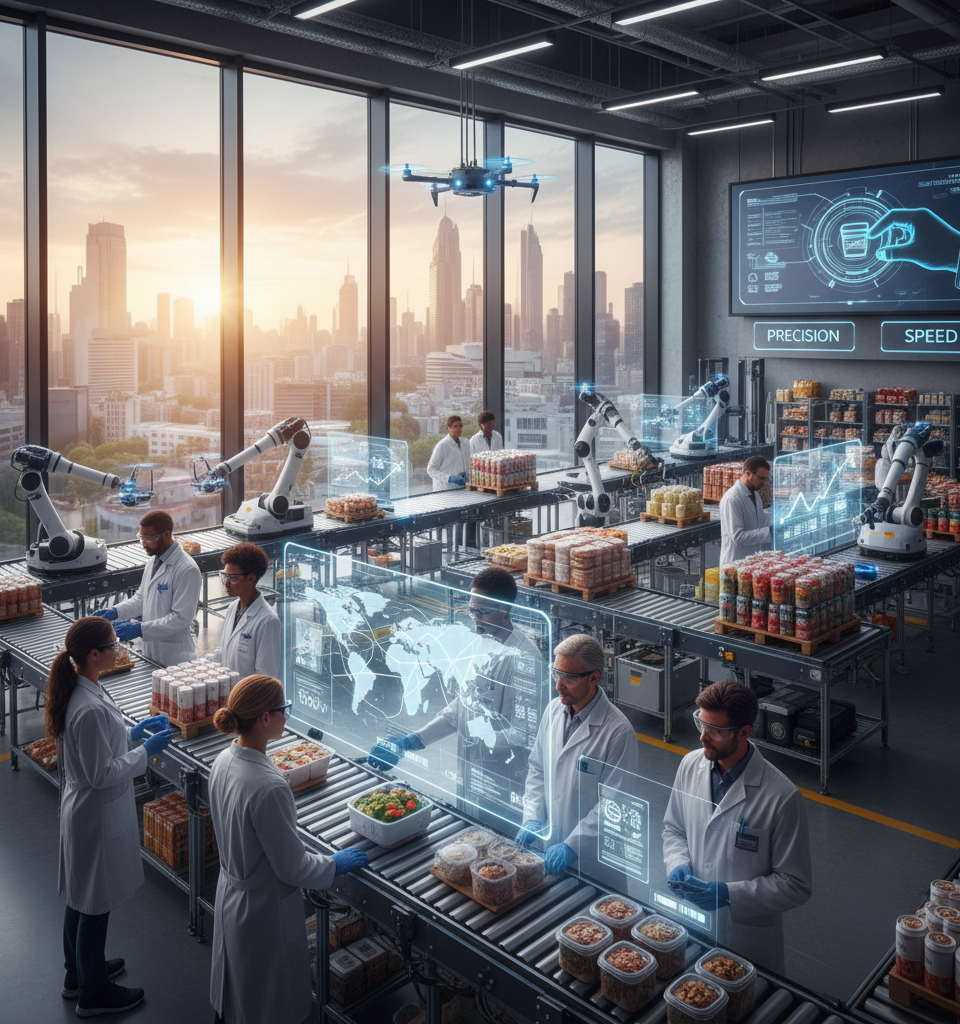
The AI-Driven Overhaul of Food Logistics
The global food supply chain is undergoing a significant transformation, driven by the increasing integration of Artificial Intelligence (AI) across its various stages. This technological shift is primarily fueled by a surge in consumer demand for accurate and on-time deliveries, a trend exacerbated by the rise of e-commerce and instant gratification culture. Experts concur that AI is no longer a futuristic concept but a vital operational tool, optimizing everything from inventory forecasting and warehousing to last-mile delivery, ultimately ensuring that products arrive fresh and precisely when expected. This paradigm shift targets reducing waste, enhancing efficiency, and bolstering resilience in a sector notoriously susceptible to disruptions.
A New Era of Supply Chain Management
The importance of this technological adoption cannot be overstated, especially when viewed against a backdrop of historical inefficiencies, perishable goods challenges, and the increasing complexity of global logistics. Traditionally, food supply chains have relied on manual processes and historical data, leading to suboptimal inventory levels, significant food waste, and delayed shipments. The COVID-19 pandemic further exposed the fragility of these systems, highlighting an urgent need for more agile and responsive solutions. AI's predictive capabilities, drawing on vast datasets including weather patterns, consumer behavior, and geopolitical events, offer a profound departure from these reactive approaches, enabling proactive decision-making and unprecedented levels of control.
Precision: The Core of AI's Impact
At the heart of AI's impact on food supply chains is its ability to introduce precision across multiple critical functions. Machine learning algorithms are now being deployed to accurately forecast demand, minimizing overstocking and understocking, which are major contributors to food waste and lost sales. For instance, companies are reporting up to a 15% reduction in inventory holding costs and a 10% decrease in spoilage through AI-powered predictive analytics. Furthermore, AI optimizes routing for delivery fleets, considering real-time traffic, weather, and delivery windows, cutting fuel costs by an estimated 5-10% and improving delivery punctuality by up to 20%. Robotic process automation (RPA) in warehouses is also streamlining picking and packing, reducing human error and accelerating throughput.
Reshaping the Global Food Market
AI's pervasive integration is reshaping the competitive landscape of the global food market. Retailers and food service providers that invest in these advanced technologies are gaining a significant edge, offering superior customer experiences and operational cost savings. Smaller businesses, conversely, face the challenge of keeping pace, potentially leading to market consolidation. The broader impact includes a more sustainable food ecosystem, as waste reduction translates into lower environmental footprints. The market for AI in supply chain management is projected to grow from an estimated $4.5 billion in 2023 to over $20 billion by 2028, indicating robust industry-wide adoption and investment.
Expert Insights on the AI Imperative
Supply chain experts and industry analysts are unanimous in their assessment: AI is an imperative, not an option, for modern food supply chains. "The ability of AI to analyze complex, unstructured data at speeds impossible for humans is fundamentally changing how we manage supply and demand," states Dr. Eleanor Vance, a lead analyst at Global Logistics Insights. "Companies failing to adopt these intelligent systems risk falling significantly behind in terms of efficiency, cost-effectiveness, and customer satisfaction." Another expert, Mark Jensen, CEO of TransTech Solutions, emphasized, "From farm to fork, AI offers a transparent and optimized pathway, ensuring food safety and reducing massive economic losses associated with spoilage and inefficiencies."
The Road Ahead: Challenges and Innovations
Looking ahead, the evolution of AI in food supply chains will involve addressing ongoing challenges such as data privacy, the need for robust cybersecurity measures, and the integration of diverse legacy systems. Future developments are likely to see even more sophisticated applications, including hyper-personalized delivery services, real-time quality control through AI-vision systems, and fully autonomous logistics networks. The convergence of AI with IoT (Internet of Things) devices will create highly intelligent and interconnected supply chains, capable of self-correction and continuous optimization. We can anticipate further investment in edge computing to process data closer to its source, enabling faster decision-making and enhancing the overall responsiveness of the food supply ecosystem.
Conclusion
The integration of AI into food supply chains represents a pivotal moment for the industry. It promises not only to meet the increasingly complex demands of modern consumers but also to establish a more resilient, efficient, and sustainable global food system. As technology continues to advance, the symbiotic relationship between AI and food logistics will only deepen, ushering in an era of unprecedented precision and reliability.