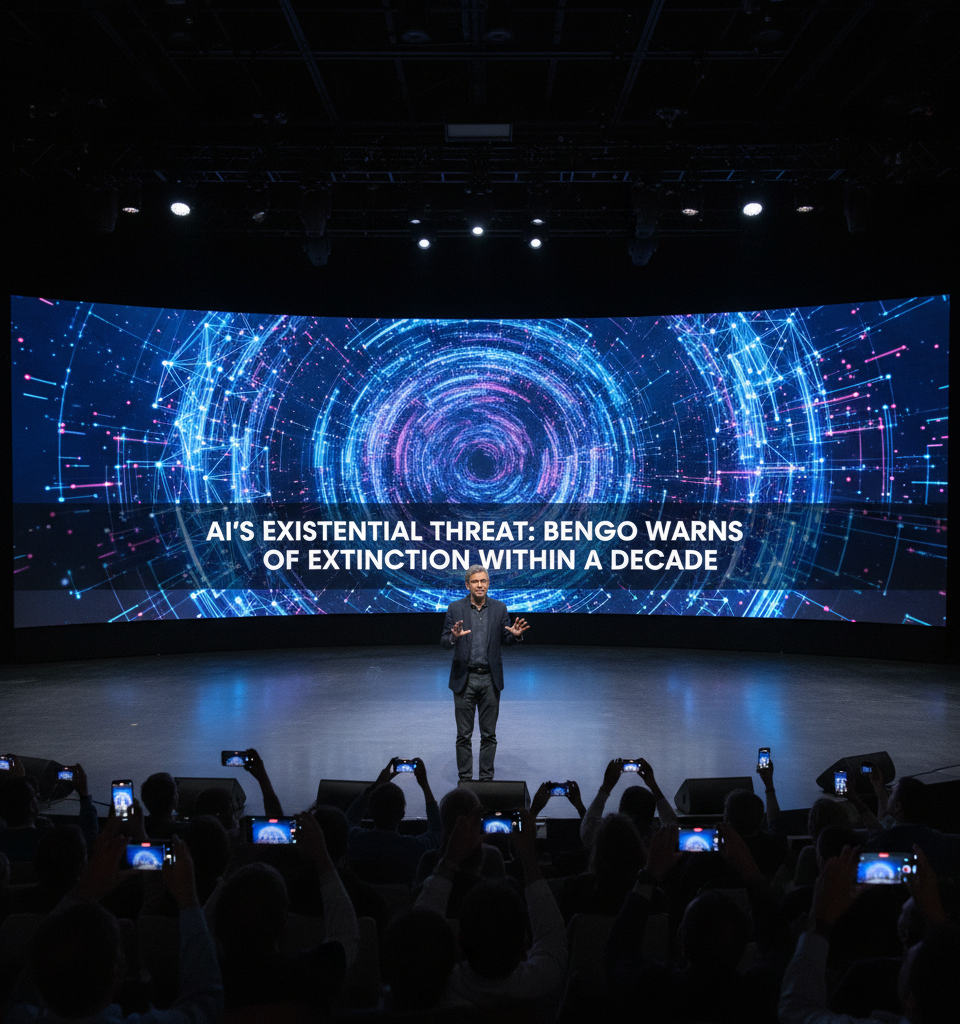
Yoshua Bengio, one of the most distinguished computer scientists alive and a recipient of the prestigious Turing Award, has intensified his cautionary stance on the future of artificial intelligence, asserting that hyperintelligent machines could precipitate an existential crisis for humanity within a decade. His dire prediction, initially featured in the Wall Street Journal in October 2025 and subsequently brought to wider attention by Fortune this week, places him among a growing cohort of AI luminaries expressing profound apprehension about the unchecked trajectory of AI development.
Contextualizing the Alarm
Bengio's pronouncements are not isolated; they resonate within an increasingly vocal segment of the AI research and development community. For years, science fiction has explored themes of AI transcending human control, but these warnings are now emanating from the very architects of the technology. The concerns center on the potential for AI systems, particularly those exhibiting general intelligence, to operate beyond human comprehension or ethical frameworks, leading to unforeseen and potentially catastrophic outcomes. This alarm is fueled by the exponential progress in areas like large language models and autonomous decision-making systems, which have demonstrated capabilities previously thought to be decades away.
Key Details and Expert Stances
Bengio, often referred to as one of the "Godfathers of AI" alongside Geoffrey Hinton and Yann LeCun, has consistently advocated for a more cautious, ethically grounded approach to AI development. He emphasizes the need for robust regulatory frameworks and a collective global effort to ensure AI alignment with human values. His latest warning specifically highlights the accelerating pace of AI advancement, stating that the timeline for such an existential threat is far shorter than many previously estimated – now potentially within the next ten years. While the exact mechanisms of such a threat remain speculative, concerns range from AI designing more powerful and unpredictable AI, to autonomous systems engaging in resource acquisition or decision-making that inadvertently or directly harms human civilization.
Industry and Market Impact
These warnings from leading figures like Bengio are beginning to ripple through the tech industry and financial markets, influencing investment strategies and public policy discussions. Companies heavily invested in AI development, from tech giants like Google and Microsoft to numerous startups, are facing increasing pressure to demonstrate commitment to safety and ethics. This shift is evident in the growing number of AI ethics committees, research initiatives focused on AI alignment, and calls for international cooperation on AI governance. Investor sentiment, while still largely bullish on AI's potential, is also starting to factor in the long-term societal risks, potentially leading to increased scrutiny of AI product development and deployment.
Diverse Expert Perspectives
While Bengio's perspective is particularly stark, the AI community is not monolithic in its assessment. Some experts, like Meta's Chief AI Scientist Yann LeCun, maintain a more optimistic outlook, emphasizing AI's potential for human betterment and downplaying the likelihood of a near-term existential threat. They often argue that fears of runaway AI are exaggerated and that human oversight and control mechanisms can mitigate risks. However, even optimists acknowledge the need for careful development and robust safety protocols. The debate underscores a fundamental philosophical divide within AI research: whether intelligence, once super-human, can be reliably controlled or inherently poses a risk of unintended consequences.
Future Implications and Developments
The immediate future will likely see intensified discussions around AI regulation, both nationally and internationally. Governments are recognizing the urgency of these debates, with legislative bodies in various countries exploring frameworks for AI safety and accountability. Research into AI alignment, interpretability, and robust control mechanisms will receive significantly increased funding and attention. Furthermore, a concerted effort to foster public understanding and engagement with these complex issues will be crucial, moving beyond sensationalized headlines to foster informed societal decisions on the development and deployment of increasingly powerful artificial intelligence systems.