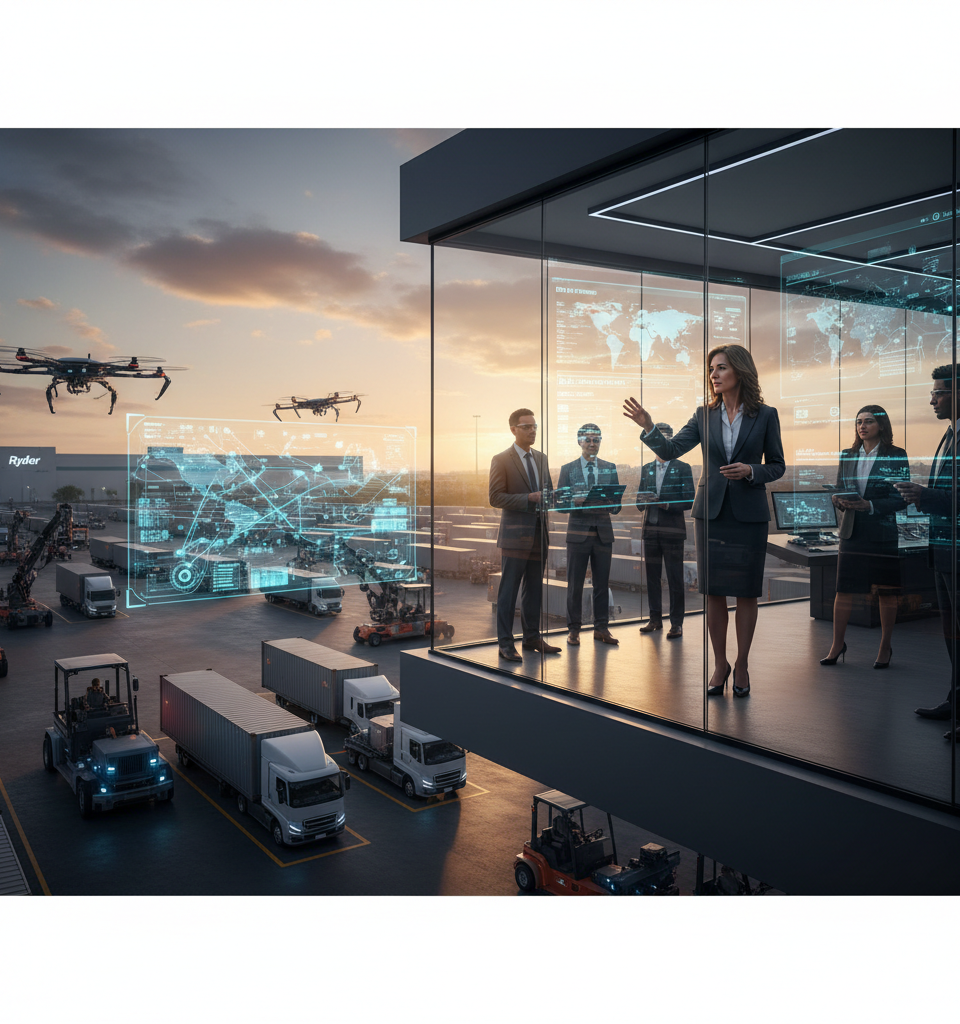
The freight and logistics sector is on the cusp of a profound technological shift, as articulated by Grant Goodale, Chief Product & Technology Officer (CPTO) at Ryder System. Goodale identifies the current advancements in artificial intelligence (AI) as the leading edge of a 'fourth wave' in logistics technology, poised to fundamentally reshape operations, efficiency, and competitive landscapes. This pivotal moment, discussed in detail by Goodale, underscores a critical evolution beyond mere digitization, moving towards autonomous and predictive capabilities that promise unprecedented optimization across supply chains.
The Evolution of Logistics Technology
To fully appreciate the impact of this fourth wave, it's essential to contextualize the prior technological revolutions in logistics. The first wave was characterized by basic automation and record-keeping, moving from manual ledgers to early computerized systems for inventory and shipping manifests. This laid the groundwork for enhanced data management but offered limited analytical power. The second wave brought about enterprise resource planning (ERP) systems and dedicated transportation management systems (TMS), integrating various operational facets and enabling more sophisticated route planning and resource allocation. While a significant leap, these systems often operated on rules-based logic and required substantial human input. The third wave, which we've been navigating for the past decade, saw the proliferation of cloud computing, real-time data analytics, and the Internet of Things (IoT), providing unprecedented visibility into supply chain operations and enabling more agile decision-making. However, even with these advances, the industry has struggled with persistent inefficiencies, capacity imbalances, and the complex orchestration of multimodal transport.
AI at Ryder's Baton Lab Central to
Ryder's strategy in harnessing this fourth wave is its dedicated innovation hub, Baton. Within this lab, Goodale and his teams are actively developing and deploying AI-driven solutions designed to tackle some of the freight industry's most entrenched challenges. These initiatives span various domains, including predictive maintenance for fleets, dynamic pricing models that adapt to real-time market conditions, and sophisticated load matching algorithms that minimize empty miles and optimize asset utilization. Goodale emphasizes that the goal is not merely automation, but rather intelligent automation – systems that learn, adapt, and make autonomous decisions, often without direct human intervention, leading to significant gains in efficiency and cost reduction. For example, Baton is exploring how generative AI can be used to rapidly generate optimal routing scenarios under fluctuating conditions, a task previously requiring extensive manual oversight or less nuanced algorithmic approaches.
Industry-Wide Implications and Market Impact
The advent of AI as the fourth wave is set to create ripple effects across the entire global supply chain. Smaller logistics providers, often operating with razor-thin margins, could leverage accessible AI tools to compete more effectively with larger entities, democratizing advanced operational capabilities. Conversely, established giants like Ryder are positioning themselves to lead this transformation, investing heavily in data infrastructure and talent. The market impact is expected to include a reduction in freight costs, improvements in delivery times, and a significant decrease in the environmental footprint of transportation through optimized routes and reduced fuel consumption. Initial estimates from industry analysts suggest that AI could unlock billions of dollars in annual savings for the freight sector by enhancing efficiency by 10-15% over the next five years, particularly in areas like fuel consumption and labor optimization through better resource allocation.
Expert Perspectives on AI in Logistics
Industry analysts widely concur with Goodale's assessment of AI's transformative potential. Dr. Evelyn Reed, a leading supply chain economist, notes, "The previous waves primarily focused on digitizing and connecting existing processes. The fourth wave, driven by AI, is about intelligent orchestration and autonomous decision-making, capable of handling the inherent complexities and uncertainties of global logistics at a scale previously unimaginable." She also highlights the critical need for robust data governance and cybersecurity as AI systems become more deeply embedded in operational infrastructure. Concerns also exist around the ethical implications of AI in labor displacement and the necessity for workforce retraining to adapt to new roles that involve managing and optimizing AI systems rather than performing repetitive manual tasks.
The Road Ahead: Future Developments
Looking forward, the developments emerging from labs like Ryder's Baton are only the beginning. Goodale anticipates a future where AI-powered systems will not only optimize individual freight movements but also orchestrate entire networks, potentially leading to fully autonomous logistics hubs and self-optimizing supply chains. This includes advancements in predictive analytics that can foresee disruptions before they occur, allowing for proactive adjustments, and the widespread integration of computer vision for more efficient cargo handling and damage detection. The next frontier will likely involve deeper integration with quantum computing for even more complex optimization problems and the seamless fusion of physical and digital logistics ecosystems, driving towards truly 'smart' supply chain management that is adaptive, resilient, and highly efficient. The journey through the first three waves has prepared the industry for this moment, but the fourth wave, powered by AI, represents a fundamental paradigm shift. Ryder's proactive engagement through its Baton lab signals a clear intent to be at the forefront of this revolution, shaping a future where freight operations are more intelligent, responsive, and sustainable than ever before. The successes and challenges faced by companies like Ryder in deploying these cutting-edge technologies will serve as crucial benchmarks for the broader industry as it navigates this transformative era.