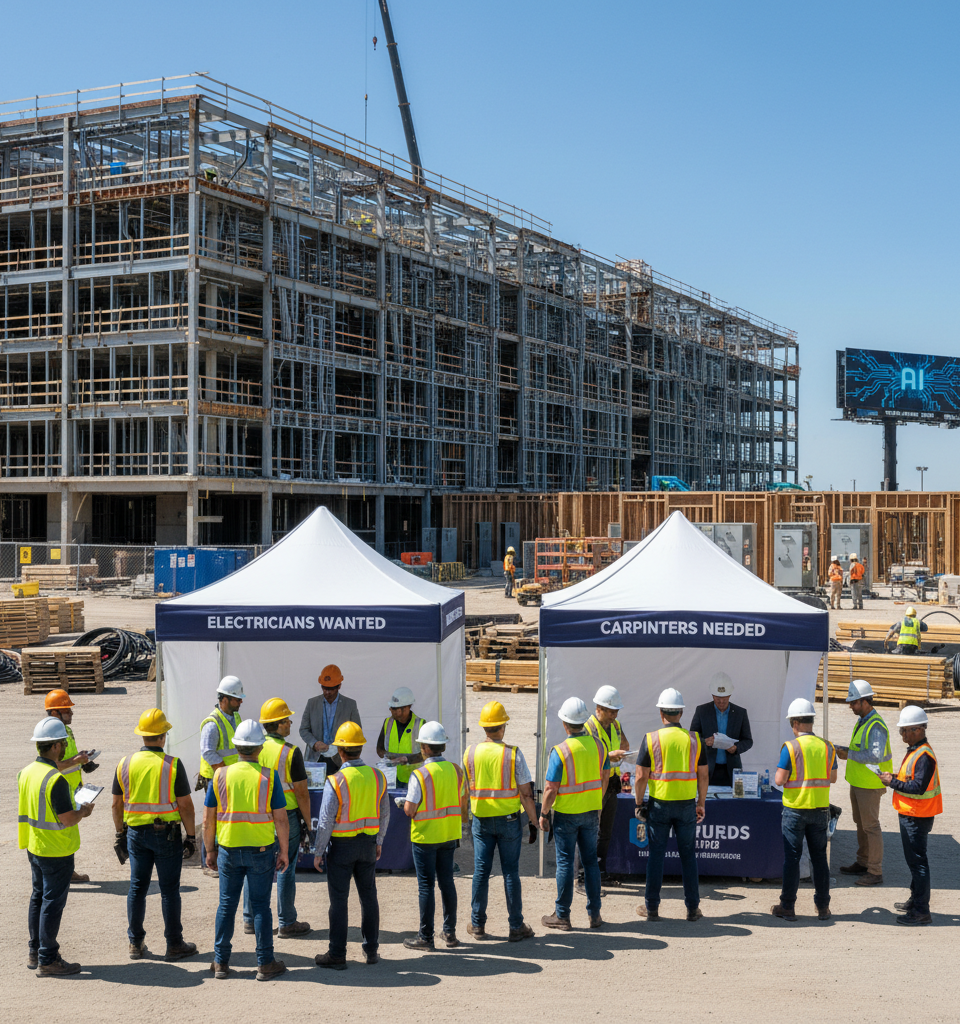
The rapid expansion of artificial intelligence technologies is creating an unprecedented recruitment boom for skilled tradespeople, with AI companies actively seeking thousands of electricians and carpenters. This unexpected demand underscores a crucial reality: the sophisticated algorithms and immense data processing capabilities of AI are entirely reliant on a robust, physical infrastructure that requires extensive human expertise to construct and maintain.
The Unseen Workforce Behind AI Advancement
For years, the narrative surrounding AI has focused on its potential to automate, innovate, and disrupt white-collar jobs. However, the reality on the ground is proving to be far more nuanced. AI's future growth isn't just about software developers and data scientists; it's intricately linked to the thousands of megawatts of electricity required to power massive data centers and the physical structures needed to house these colossal computing operations. This necessitates a substantial workforce of electricians to wire server racks, install complex cooling systems, and ensure an uninterrupted power supply, alongside carpenters who build and refine the physical spaces. The sheer scale of these projects means that the demand for these traditional trades is not just steady but escalating rapidly.
Historical Context and Economic Impact
Historically, technological revolutions have often been accompanied by shifts in labor demand. The industrial revolution, for instance, created new factory jobs while displacing others. Similarly, the dot-com boom of the late 1990s led to a surge in network engineers and IT professionals. The current AI revolution, however, presents a unique blend of high-tech and high-touch labor requirements. This burgeoning demand for tradespeople is not localized; it's a global phenomenon as companies like OpenAI, Google, Microsoft, and Amazon invest billions in expanding their AI infrastructure. The economic impact is significant, potentially revitalizing vocational training programs and offering lucrative career paths in fields that were once perceived as less glamorous than those in software development.
Specific Demands and Skill Sets
AI data centers are not merely large warehouses; they are highly specialized facilities requiring precision and expertise. Electricians are not just running wires; they are installing intricate high-voltage systems and fault-tolerant power redundancies that ensure continuous operation for systems that cannot afford downtime. They work with advanced power distribution units (PDUs), uninterruptible power supplies (UPS), and massive backup generators.
Carpenters, meanwhile, are involved in constructing specialized server housing, ensuring proper airflow and structural integrity for equipment that generates immense heat and vibration. They are also crucial in building out the often-complex environmental control systems needed to maintain optimal operating conditions for sensitive hardware. These roles demand not only traditional trade skills but also a keen understanding of modern industrial and data center environments.
Industry-Wide Recruitment Drives
Major technology companies, traditionally known for recruiting software engineers, are now actively launching large-scale recruitment campaigns targeting skilled trades. These companies are recognizing that bottlenecks in physical infrastructure can derail even the most innovative AI projects. This shift is leading to competitive compensation packages and benefits for electricians and carpenters with relevant experience, as the supply of these specialized skills struggles to keep pace with the exponential growth in AI infrastructure needs. The industry is effectively re-prioritizing the importance of foundational engineering, acknowledging that sophisticated algorithms are impotent without the physical power and housing they require.
Future Implications for Labor and Education
The long-term implications of this trend are substantial. It suggests a re-evaluation of the value placed on vocational skills in an increasingly digital world. Educational institutions may need to adapt, offering more specialized training programs that cater directly to the demands of the AI infrastructure sector. For individuals, this presents a significant opportunity, offering stable, high-paying jobs in a growth industry. It also highlights a potential challenge: ensuring there are enough skilled individuals to meet this rapidly accelerating demand. Governments and private sector companies may need to collaborate on initiatives to promote and fund vocational training, ensuring a healthy pipeline of talent for these critical roles. Without sufficient numbers of these skilled tradespeople, the ambitious visions for AI’s future may struggle to materialize beyond the digital realm.
Ultimately, the reliance on electricians and carpenters by the thousands serves as a stark reminder that even the most advanced technological frontiers remain firmly grounded in the physical world, built and sustained by human hands.