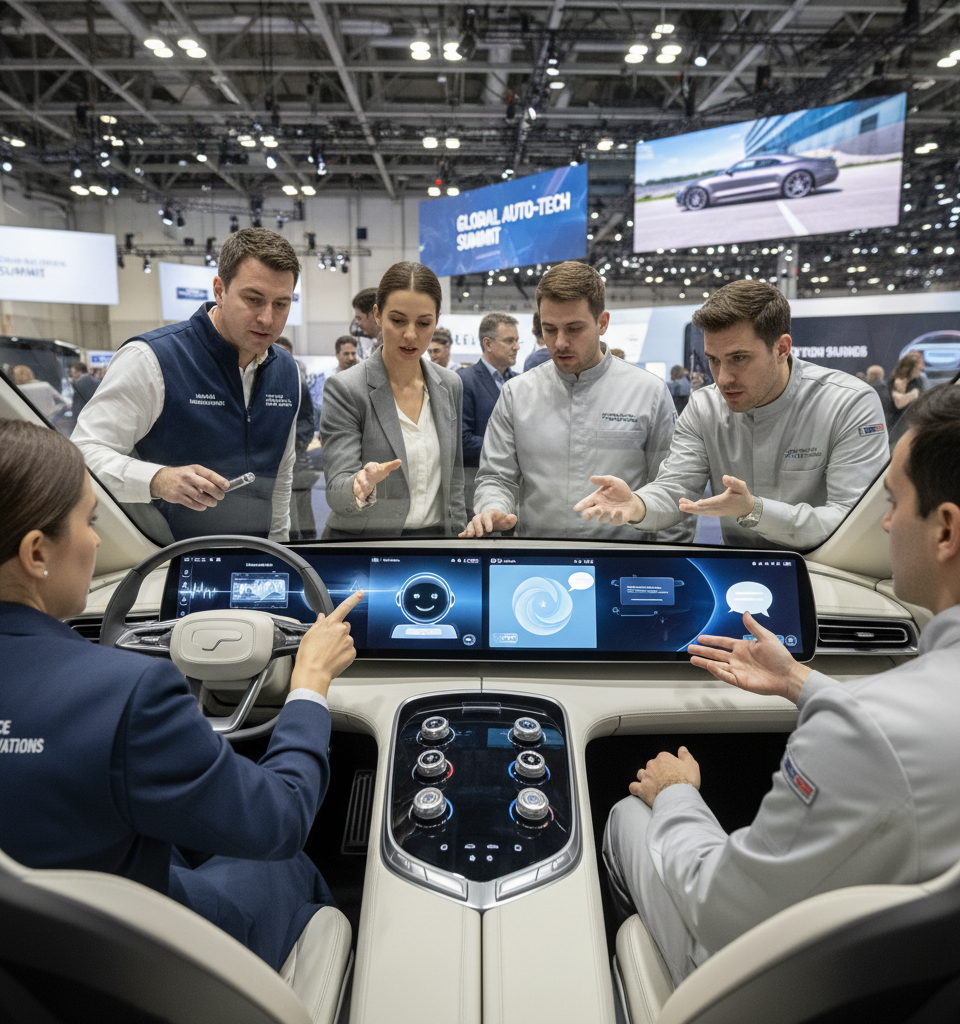
The automotive dashboard, long a mere display for speed and navigation, is quickly evolving into the next frontier for artificial intelligence integration. This week, the news broke that Elon Musk's Grok AI chatbot is poised to enter this competitive space, with the Grok iOS app revealing a placeholder: “Grok Voice mode coming soon to CarPlay.” This development places Grok directly alongside established AI players like OpenAI's ChatGPT and Perplexity, which have already begun their integration into Apple's CarPlay ecosystem. The strategic move underscores a growing consensus among tech giants: the car’s central display is fast becoming the definitive "last screen that matters" for pervasive AI interaction, marking a pivotal moment in the convergence of mobility and conversational AI.
The Strategic Importance of In-Car AI
This aggressive push into automotive infotainment systems is not merely an incremental technological upgrade; it represents a fundamental re-imagining of the in-car experience. For AI companies, securing a dominant position on the dashboard means capturing invaluable user data, establishing brand loyalty within a captive audience, and embedding their services into the daily routines of millions. The car environment offers a unique user interface challenge and opportunity: hands-free, voice-first interaction is paramount for safety and convenience, making it an ideal proving ground for sophisticated conversational AI. Historically, in-car technology has lagged behind personal devices, but the advent of robust AI is rapidly closing this gap, promising a future where the car is as intelligent and connected as one's smartphone or smart home system.
Key Players and Their Strategies
OpenAI's ChatGPT has already made inroads, demonstrating its capabilities for everything from making restaurant reservations to providing on-demand road trip information through voice commands. Perplexity AI, known for its conversational search engine, offers similar integration, bringing real-time data and knowledge retrieval to the driver and passengers. AI venture, adds another high-profile competitor to this burgeoning market.
While specific features for Grok's CarPlay integration are still emerging, it is anticipated to leverage its real-time data capabilities and potentially offer more opinionated or even humorous interactions, in line with its public persona. Critically, these integrations aim to move beyond basic voice assistants to provide truly helpful and proactive assistance, transforming travel from a passive activity into an interactive, information-rich experience.
Industry and Market Impact
The ripple effects of this technological arms race are profound. Automotive manufacturers, traditionally focused on hardware and safety, are now compelled to become software and AI-centric entities. Partnerships between carmakers and AI developers will become increasingly vital, with car brands potentially choosing to integrate specific AI platforms, or even developing their own proprietary solutions.
This intense competition is set to accelerate innovation in natural language processing, context awareness, and multimodal AI interfaces. The market for in-car AI is projected to reach tens of billions of dollars annually within the next five to seven years, driven by increasing consumer demand for connectivity, personalization, and convenience during transit. Furthermore, the implications extend to data privacy and cybersecurity, as these highly personalized AI systems will process sensitive user data in real-time within the vehicle.
Expert Perspectives on the Future of Automotive AI
Industry analysts are keenly watching this space. "The dashboard is the holy grail for AI companies right now," states Sarah Chen, a principal analyst at AutoTech Insights. "It’s a unique, largely untapped environment where users are receptive to assistance and entertainment, and crucially, they are often in a 'hands-off' state, making voice AI indispensable.
" Others point to the potential for new revenue streams, from in-car commerce to subscription-based premium AI functionalities, transforming cars into platforms for ongoing digital services, much like smartphones have become. The long-term vision includes AI coordinating with vehicle components, offering predictive maintenance, optimizing routes based on real-time traffic and driver preferences, and even enhancing autonomous driving capabilities.
What Lies Ahead: Challenges and Opportunities
Looking forward, the evolution of in-car AI faces both exhilarating opportunities and significant challenges. Technical hurdles include ensuring seamless integration across diverse vehicle models, managing latency for real-time interactions, and developing robust, context-aware AI that can handle complex commands in noisy environments. Ethical considerations, particularly around data privacy, user consent, and the potential for AI-driven distractions, will also require careful navigation.
Regulatory bodies will likely introduce new guidelines for in-car AI, particularly concerning safety and data governance. However, the trajectory is clear: the automotive dashboard is set to become a sophisticated, intelligent co-pilot, fundamentally altering our relationship with our vehicles and redefining the boundaries of personal artificial intelligence over the coming years. Further announcements regarding expanded functionality, new partnerships, and potentially even dedicated in-car AI hardware are anticipated throughout the next 12-24 months, signaling a dynamic and rapidly evolving landscape.