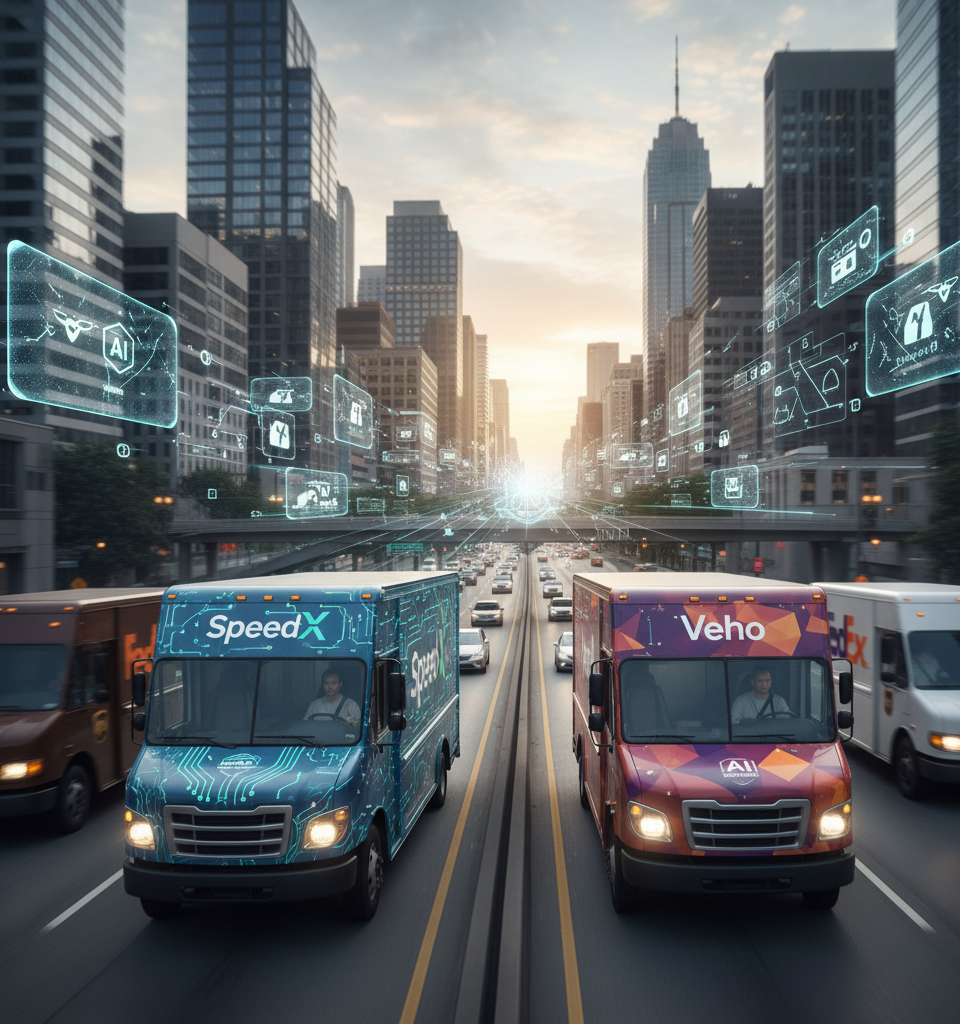
The burgeoning integration of artificial intelligence (AI) into the operational frameworks of alternative parcel delivery providers, such as SpeedX and Veho, is poised to reshape the competitive landscape of the logistics industry. Industry observers and experts suggest that these advanced technological deployments could furnish upstart carriers with a crucial advantage, potentially enabling them to more effectively contend with the long-standing titans, FedEx and UPS.
The AI Advantage for Upstarts
Historically, the parcel delivery sector has been characterized by high barriers to entry, primarily due to the immense capital investment required for extensive infrastructure networks and cutting-edge operational technology. However, the rapidly evolving capabilities of AI are offering a new pathway for agility and efficiency. By leveraging sophisticated algorithms for route optimization, predictive maintenance, demand forecasting, and automated sortation, smaller carriers can potentially achieve levels of operational efficiency that were once exclusive to larger, more established players. This technological pivot is not merely about incremental improvements but rather about fundamentally rethinking the mechanics of parcel movement and delivery.
Carriers like SpeedX and Veho are reportedly investing heavily in developing proprietary AI solutions tailored to their specific operational models. These in-house tools are designed to streamline complex logistical challenges, From optimizing driver routes in real-time to anticipating delivery bottlenecks and managing fluctuating parcel volumes more effectively. Such targeted applications could translate into reduced operational costs, faster delivery times, and improved customer satisfaction—all critical factors in gaining market share in a highly competitive industry.
Shifting Dynamics in Parcel Logistics
For decades, FedEx and UPS have commanded a significant majority of the parcel delivery market share, owing to their vast global networks, substantial fleets, and sophisticated logistical infrastructure. Their scale has often made it difficult for smaller entrants to compete on price or service level. However, the intelligent application of AI by alternative providers could introduce a more dynamic competitive environment. By allowing these companies to operate with greater precision and responsiveness, AI tools could enable them to offer more specialized services or competitive pricing strategies that appeal to specific market segments or shippers.
Experts analyzing the sector emphasize that while the established carriers also invest heavily in AI, the way upstarts deploy it could be different. Smaller companies, often unburdened by legacy systems, might be able to integrate AI more fluidly and achieve faster implementation cycles. This agility could allow them to innovate rapidly and adapt to market changes or customer demands with greater speed than their larger counterparts.
Expert Outlook on Future Competition
Industry experts articulate a strong belief that AI's transformative capacity is particularly advantageous for challengers. They highlight that the technology empowers smaller firms to make data-driven decisions at a granularity previously unattainable, optimizing every facet of the delivery chain from first mile to last mile. This focus on hyper-efficiency and adaptability could allow alternative providers to carve out significant niches, particularly in urban areas or for specific types of e-commerce businesses that prioritize speed and specialized handling.
While AI will not dismantle the foundational strengths of FedEx and UPS overnight, it is projected to foster a more level playing field. The ability of alternative carriers to harness AI to mitigate traditional disadvantages—such as network density and capital expenditure—is seen as a pivotal development. The ongoing advancements in machine learning and data analytics suggest that this trend is likely to accelerate, making the competitive landscape of parcel delivery increasingly dynamic and technology-driven in the years to come.
The Road Ahead for Delivery Services
The coming years are anticipated to feature a robust technological arms race within the parcel delivery industry, with AI at its core. As alternative providers continue to refine and deploy their AI capabilities, the pressure on all players, including the incumbents, to innovate will intensify. This shift is not merely about better software; it represents a strategic evolution in how logistics operations are conceived, executed, and managed. The success of carriers like SpeedX and Veho in leveraging AI could serve as a blueprint for others looking to disrupt established markets, ultimately leading to more efficient, cost-effective, and responsive delivery services for consumers and businesses alike.