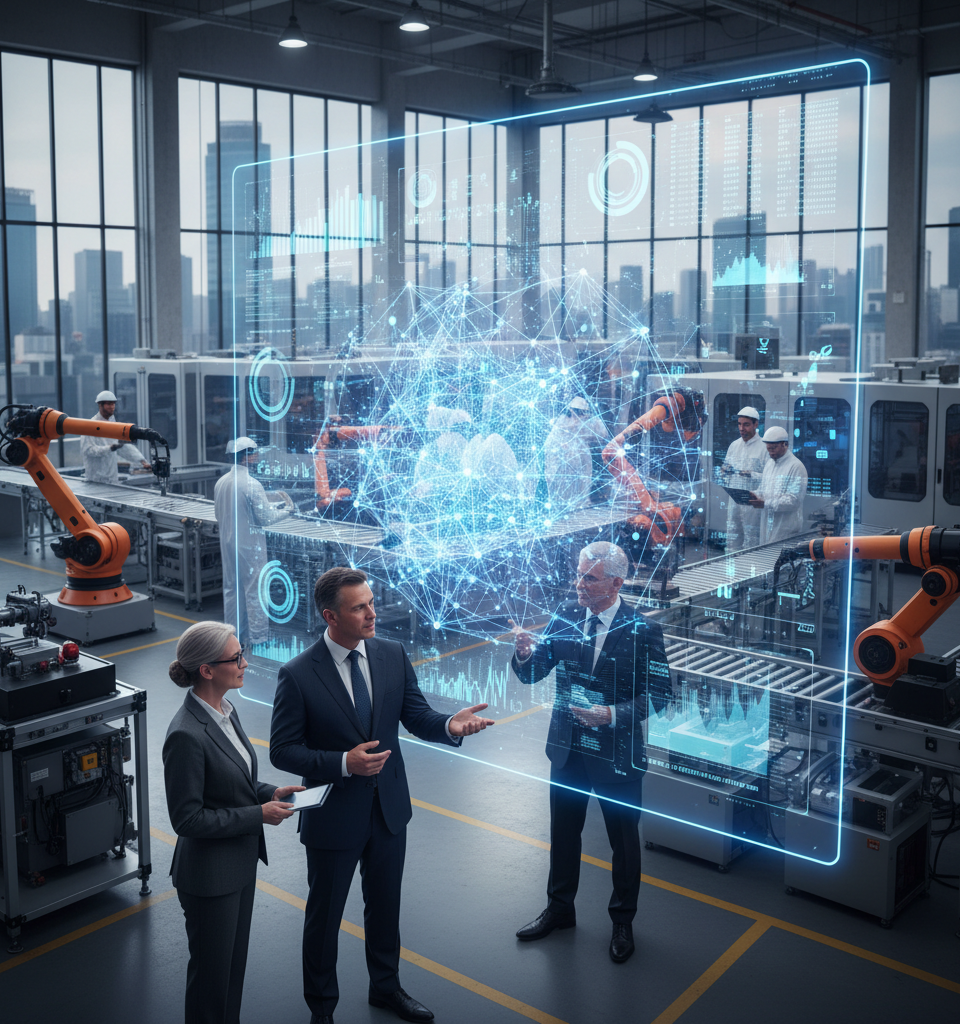
The rapid and continuous evolution of artificial intelligence (AI) is profoundly impacting the methodologies employed by manufacturers for asset management. This significant shift is prompting industry experts to analyze and discuss the far-reaching implications, suggesting a new era for operational efficiency and strategic planning within the manufacturing sector.
The AI Revolution in Manufacturing
Historically, asset management has relied on traditional methods ranging from scheduled maintenance to reactive repairs. These approaches, while effective to a degree, often led to suboptimal performance, increased downtime, and higher operational costs. The advent of sophisticated AI technologies, however, presents an opportunity for a paradigm shift, enabling predictive analytics, enhanced monitoring, and more intelligent decision-making processes.
Shifting Paradigms in Asset Management
AI's influence extends across various facets of asset management. Machine learning algorithms, for instance, are increasingly being deployed to analyze vast datasets from sensors and operational logs, identifying patterns that predate equipment failures. This predictive capability allows manufacturers to transition from time-based or reactive maintenance to condition-based and predictive maintenance, significantly extending asset lifespans and reducing unexpected breakdowns. Furthermore, AI-powered systems can optimize resource allocation, identify bottlenecks, and even suggest improvements to production workflows, contributing to a more agile and responsive manufacturing environment.
Expert Insights on the Transformation
A panel of leading experts has recently weighed in on these developments, providing critical perspectives on the ongoing transformation. While specific quotes were not provided, the consensus among these specialists is that AI is not merely an incremental improvement but a foundational changeagent. Their analysis underscores the importance for manufacturers to embrace these technologies to remain competitive and efficient in an increasingly complex global market. The experts are believed to have highlighted the necessity of strategic investments in AI infrastructure and the upskilling of the workforce to manage these advanced systems effectively.
Broader Industry Implications
The ripple effects of AI in asset management are expected to resonate throughout the industrial landscape. Companies that successfully integrate AI will likely gain a significant competitive edge through improved operational uptime, lower maintenance costs, and enhanced product quality. This could lead to a divergence between early adopters and those slow to adapt, potentially reshaping market leadership. Furthermore, the demand for AI-literate professionals in manufacturing and related service industries is projected to surge, necessitating a focus on education and training programs tailored to these emerging needs.
The Road Ahead for Manufacturers
The future implications of AI in asset management suggest continued innovation and integration. Manufacturers are expected to explore more advanced AI applications, such as generative AI for optimizing design and simulation, and autonomous systems for maintenance and inspection. The ongoing miniaturization of sensors and the proliferation of the Industrial Internet of Things (IIoT) will provide even richer data streams for AI algorithms to process, facilitating ever more precise and intelligent asset management strategies.
The emphasis will inevitably shift towards fully integrated, self-optimizing manufacturing ecosystems, where AI plays a central, orchestrating role in ensuring peak performance and sustainability. The discussion among experts indicates a sustained period of technological advancement and strategic re-evaluation for the manufacturing sector as it navigates the ongoing AI revolution.