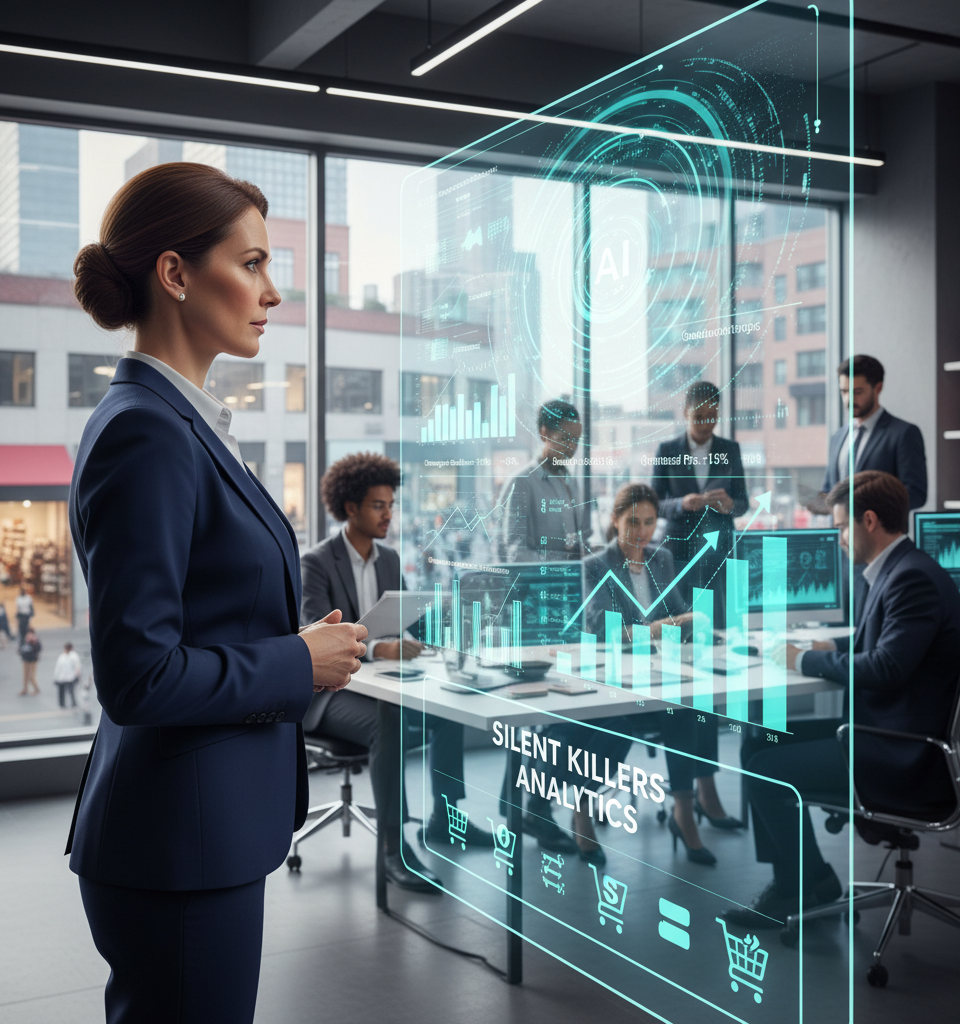
**London, UK – ** – A burgeoning ecosystem of artificial intelligence start-ups is deploying sophisticated generative AI tools to combat what industry insiders term the retail sector's 'silent killers' – inefficiencies and missed opportunities that subtly undermine profitability. This technological surge marks a pivotal moment where AI applications have matured sufficiently to deliver meaningful, measurable impacts on retailers' bottom lines, revolutionizing operations from inventory management to customer engagement and supply chain optimization across the globe.
For decades, retailers have grappled with complex challenges such as accurately forecasting demand, managing returns, optimizing pricing, and personalizing customer experiences at scale. These issues, while often treated as operational friction, collectively represent significant drains on revenue and profit. Historically, attempts to address these through traditional analytics or rule-based systems often fell short due to data complexity and the sheer volume of variables involved. The exponential evolution of generative AI, particularly in its ability to process vast unstructured datasets and generate nuanced insights or content, has finally provided the technological leverage needed to solve these endemic problems effectively.
Leading this charge are innovative start-ups integrating AI across various retail functions. For instance, Predictive Returns AI (PRAI), a London-based firm, claims to reduce return rates by up to 15% for its clients through predictive analytics that identifies high-risk products and customers, allowing for proactive interventions like enhanced product descriptions or targeted customer service. Similarly, OptimalPrice Solutions (OPS), headquartered in Seattle, utilizes generative AI to dynamically adjust pricing strategies in real-time, reportedly boosting average revenue per item by 3-7% while minimizing markdown losses. These platforms analyze vast datasets including historical sales, competitor pricing, social media sentiment, and even weather patterns to create highly granular and responsive strategies. Industry data suggests that retailers collectively lose hundreds of billions annually due to suboptimal pricing and returns, underscoring the immense potential for AI-driven financial recovery.
This embrace of AI is not merely an incremental improvement; it represents a paradigm shift for the broader retail landscape. By automating and optimizing previously labor-intensive or guesswork-driven processes, retailers can reallocate human capital to more strategic initiatives like brand building or innovative store experiences. The competitive advantage gained by early adopters is significant, potentially widening the gap between technologically advanced retailers and those slower to integrate these solutions. Moreover, the enhanced efficiency in supply chains, enabled by AI-powered demand forecasting and inventory management, contributes to greater sustainability by reducing waste and optimizing logistics.
"The 'silent killers' of retail have always been about lack of perfect information and operational agility," explains Dr. Anya Sharma, a principal analyst at RetailTech Insights. "Generative AI’s ability to synthesise disparate data points into actionable insights, and even generate personalized content at scale, is a game-changer. We're moving beyond simple automation to genuine intelligent optimization that directly impacts the bottom line. Companies not investing in this will quickly find themselves outmaneuvered." Dr. Sharma highlighted that initial deployment costs, while notable, are often recouped within 12-18 months due to significant efficiency gains and revenue uplift.
Looking ahead, the integration of generative AI into retail is poised for rapid expansion. Upcoming developments include AI-powered hyper-personalization engines that can create unique product recommendations and marketing messages for individual customers in real-time, blurring the lines between online and in-store experiences. We can also anticipate AI assisting in ethical sourcing verification, dynamic store layouts optimization based on foot traffic flow, and even AI-driven human resources management for retail staff. The next five years are expected to see a fundamental restructuring of retail operations, with AI becoming an indispensable core component rather than just a supplementary tool. Retailers who embrace this transformation strategically stand to dominate an increasingly competitive market fueled by intelligence and efficiency.