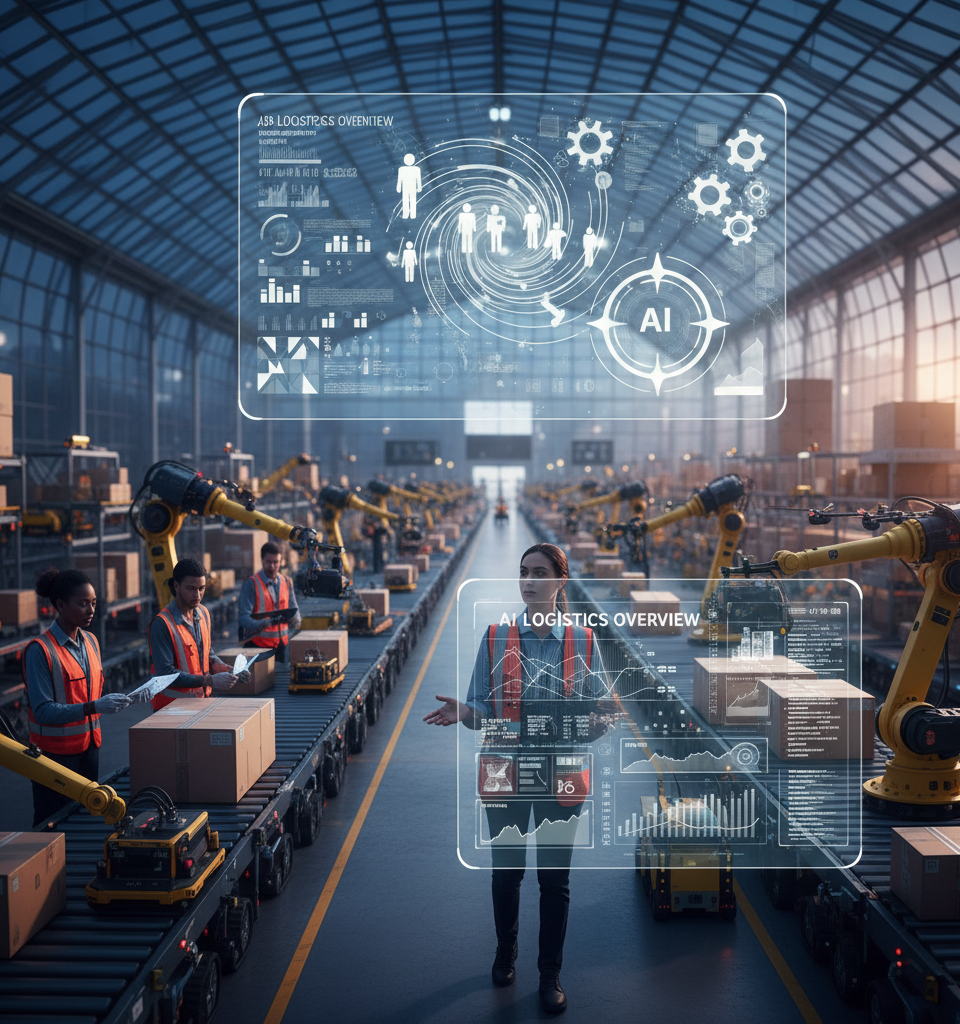
As artificial intelligence continues its rapid integration across industries, the logistics sector stands at a critical juncture, prompting discussions around its potential to revolutionize operations while also sparking anxieties about workforce displacement. Jonah McIntire, Chief Platform Officer at Trimble, is actively engaging with this evolving landscape, offering insights into AI’s multifaceted influence on global supply chains and directly confronting the narrative of a looming 'job apocalypse.'
The AI Evolution in Supply Chain
The discussion around AI in logistics is not merely about adopting cutting-edge technology; it's fundamentally about unlocking deeper value from existing infrastructure and vast datasets. McIntire emphasizes that while visible advancements often capture headlines, a significant portion of AI's impact will derive from its ability to enhance legacy systems and make previously inaccessible data actionable. This granular optimization promises to drive efficiencies that were previously unattainable, reshaping how logistics operations are planned, executed, and managed.
Reframing the 'Job Apocalypse' Debate
Contrary to fears of mass unemployment, McIntire frames AI's role not as a destroyer of jobs, but as a catalyst for professional evolution. The integration of AI, he suggests, will redefine existing roles, shifting focus from repetitive, manual tasks to more complex, analytical, and strategic responsibilities. This transformation is expected to empower the workforce with enhanced tools and insights, creating new opportunities and demanding a re-skilling of the labor force rather than its wholesale replacement.
Impact on Software Development and M&A
Beyond operational changes, AI is already demonstrating a profound influence on internal processes, particularly in software development and merger and acquisition (M&A) integrations. In software, AI is streamlining development cycles, automating coding processes, and enhancing debugging, leading to faster innovation and more robust applications. For M&A activities, AI tools are proving invaluable in evaluating potential synergies, integrating disparate systems, and harmonizing data from acquired entities, thereby accelerating post-merger integration and value realization.
Unlocking Deeper Value from Legacy Systems
A pivotal aspect of AI's application in logistics, according to McIntire, lies in its capacity to extract hidden value from long-standing, often underutilized, legacy systems. Instead of wholesale replacement, AI offers a pathway to modernize and optimize these systems, prolonging their utility and leveraging years of accumulated data. This approach is more cost-effective and less disruptive than traditional IT overhauls, allowing companies to build upon existing investments rather than starting from scratch. This strategy is particularly relevant in capital-intensive industries like logistics, where infrastructure lifecycles are typically long.
Empowering New Business Models
Looking ahead, the pervasive integration of AI is not only set to refine current logistical practices but also to fundamentally empower entirely new business models. By enabling predictive analytics, autonomous operations, and highly optimized routing, AI facilitates innovations such as hyper-personalized delivery services, dynamic pricing models, and more resilient supply chains capable of adapting in real-time to disruptions. These advancements are expected to foster a more agile and responsive logistics ecosystem, driving competitive advantage and creating new market opportunities.
Future Implications for the Workforce
The ongoing shift implies a critical need for continuous learning and adaptation within the logistics workforce. While some roles may diminish, the demand for professionals skilled in AI implementation, data analysis, and algorithm management is anticipated to surge. Organizations that invest in upskilling their employees will be better positioned to harness the full benefits of AI, navigating the transition smoothly and transforming potential challenges into strategic advantages. This proactive approach will be key to managing the perception and reality of job evolution in the AI era.
Trimble's perspective suggests that while AI's impact on logistics will be transformative, it is more likely to usher in an era of enhanced efficiency and new opportunities rather than widespread job displacement. The focus remains on strategic adaptation and leveraging AI to extend capabilities across the supply chain.