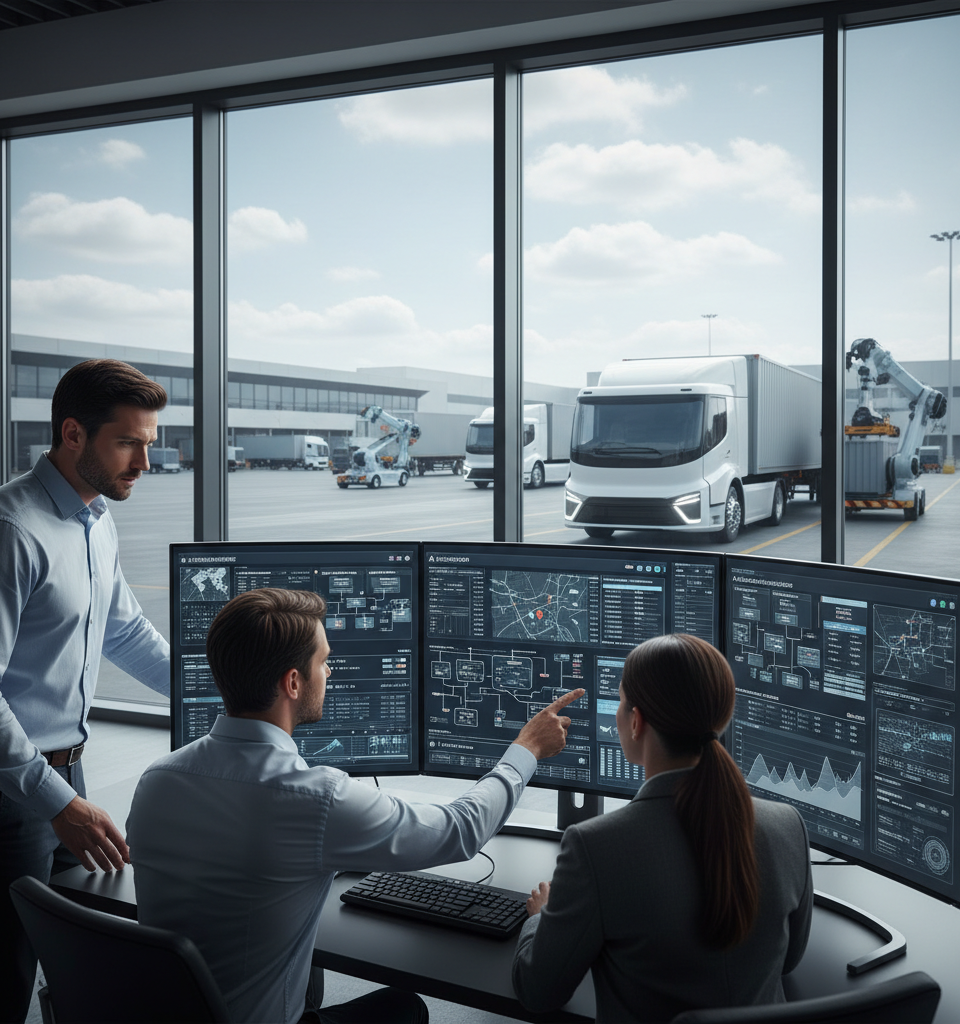
CHICAGO, IL – March 15, 2024 – Artificial intelligence (AI) is rapidly transitioning from a supportive, back-office function to a fundamental, operational driver within the trucking industry, promising a significant overhaul of traditional roles and potentially unlocking unprecedented productivity. This strategic pivot, observed across major logistic hubs and discussed by industry leaders at recent FreightWaves conferences, signifies a watershed moment where AI moves beyond data analysis to actively influencing route optimization, fleet management, and even predictive maintenance, fundamentally reshaping how goods are transported.
Historically, AI's foray into trucking focused on automating administrative tasks like invoicing, compliance checks, and basic data entry, offering incremental efficiency gains. However, the current evolution sees AI integrated into core operational processes, driven by advancements in machine learning, massive datasets, and cloud computing. The escalating demand for transparent, agile, and cost-effective supply chains, exacerbated by global disruptions such as the COVID-19 pandemic and recent geopolitical events, has accelerated this adoption, pushing trucking firms to leverage technology for competitive advantage.
Experts emphasize that AI's deeper integration is enabling a dramatic redefinition of job functions. "We're seeing AI take on the heavy lifting of route planning, considering real-time traffic, weather conditions, and even driver hours-of-service regulations simultaneously," states Dr. Evelyn Reed, a logistics technology consultant. "This frees up dispatchers to focus on complex problem-solving, customer relations, and strategic oversight, rather than sifting through endless data points." Companies report early successes, with some pilot programs indicating a potential 15-20% improvement in fuel efficiency through AI-optimized routes and a reduction in delivery delays by an average of 10%.
The broader industry impact is profound. Small to medium-sized trucking companies, once lagging in technological adoption, are now exploring accessible AI-as-a-service solutions to level the playing field against larger enterprises. This democratization of advanced analytics could lead to a more fragmented yet highly efficient market. Furthermore, the integration of AI with IoT devices in trucks is creating 'smart fleets,' capable of predictive maintenance, autonomous scheduling, and real-time cargo monitoring, significantly reducing downtime and improving security. The global freight logistics market, currently valued at over $12 trillion, stands to gain potentially hundreds of billions in annual savings through widespread AI implementation.
Financial analysts and logistics prognosticators concur that the shift is inevitable and transformative. "The economic argument for AI in trucking is becoming irrefutable," notes Mark Thompson, an analyst with Transport Market Insights. "Beyond labor cost savings, the ability to make data-driven decisions that impact fuel, maintenance, and customer satisfaction provides a significant return on investment. We anticipate a compound annual growth rate of over 20% for AI applications in logistics over the next five years, reaching an estimated market size of $18 billion by 2028." Concerns about job displacement are countered by the creation of new, higher-skilled roles in AI management, data analysis, and technical support, requiring retraining and upskilling initiatives.
Looking ahead, the next phase of AI integration in trucking will likely involve even more sophisticated predictive analytics for demand forecasting, dynamic pricing models, and the accelerated development of fully autonomous trucking platoons. Regulatory frameworks will need to evolve rapidly to keep pace with these technological advancements, particularly concerning liability, ethics, and data privacy. Companies that proactively invest in AI infrastructure and robust cybersecurity will be best positioned to thrive, cementing AI's role not just as a tool, but as a strategic co-pilot in the future of freight transportation.
The industry anticipates continued collaboration between technology providers, logistics companies, and governmental bodies to establish best practices and standards, ensuring a smooth and beneficial transition. The ultimate goal is a hyper-efficient, resilient supply chain that can adapt instantaneously to dynamic market conditions. The driver's seat of trucking operations is indeed evolving, with AI poised to become an indispensable partner in navigating the complex roads ahead.