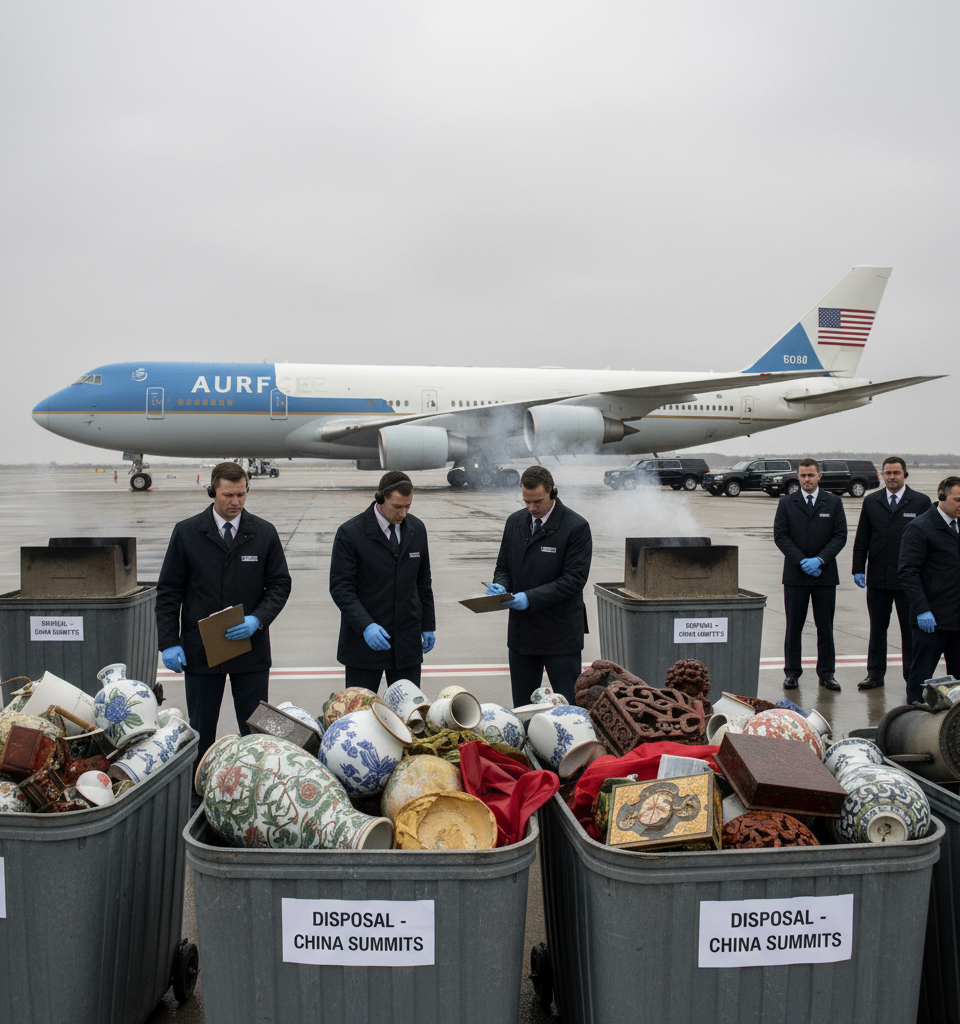
Following a recent high-stakes summit between the United States and China in Beijing, an unprecedented security directive was issued to all travelers preparing to board Air Force One. Members of the delegation and accompanying staff were reportedly instructed to dispose of any gifts, promotional items, and even personal 'burner' phones acquired during their time in the Chinese capital. This extraordinary measure, widely interpreted as a preventative step against potential intelligence gathering or cyber intrusions, marked a clear escalation in the security protocols surrounding high-level diplomatic engagements with geopolitical rivals.
Context of Diplomatic Tensions
The move comes at a time of exceptionally strained relations between Washington and Beijing, characterized by ongoing disputes over trade imbalances, intellectual property theft, human rights, and technological supremacy. The deployment of such rigorous security measures underscores a deep-seated distrust between the two global powers, particularly in the realm of cybersecurity. US intelligence agencies have repeatedly warned about sophisticated Chinese state-sponsored espionage efforts, targeting government officials, corporations, and critical infrastructure. This directive signals a proactive approach to mitigating those perceived threats, moving beyond traditional security briefings to enforce physical disposal of potentially compromised items.
Specifics of the Directive
Sources close to the delegation, who requested anonymity due to the sensitive nature of the instruction, described a thorough process. Before boarding the presidential aircraft, individuals were required to surrender all items that originated from their visit, irrespective of apparent innocuousness. This included seemingly harmless souvenirs, commemorative pins, and even temporary communication devices such as prepaid mobile phones, often referred to as burner phones, which some travelers might acquire for local use.
While no official statement has been released explicitly detailing the rationale, the universally accepted interpretation points to safeguarding against embedded tracking devices, micro-surveillance equipment, or compromised software on electronics that could exfiltrate sensitive data or provide backdoors into secure networks. The sheer breadth of items targeted suggests a 'better safe than sorry' approach to national security.
Implications for Geopolitical Engagements
This incident is indicative of a broader trend in international diplomacy, where technological security has become as critical as physical security. For other nations engaging with technologically advanced adversaries, this sets a precedent for enhanced vigilance. It highlights the elevated risks associated with receiving gifts or using local technology in environments deemed hostile or high-risk. The economic implications are also noteworthy; the incident indirectly underscores the continuous investment required in counter-intelligence and cybersecurity infrastructure for both governments and multinational corporations operating in sensitive regions. The focus shifts from merely securing data networks to securing the physical objects and individuals interacting with them.
Expert Analysis on Espionage Risks
Cybersecurity experts and former intelligence officials have weighed in, largely validating the prudence behind such a stringent protocol. "In today's interconnected world, anything that enters a secure environment, especially one as sensitive as Air Force One, carries potential risks," stated Dr. Evelyn Thorne, a senior fellow at the Center for Strategic and International Studies. "Micro-technology is so advanced that a seemingly benign gift could contain sophisticated listening devices or data-exfiltration tools. The 'burner phone' directive is particularly telling, as these devices, if supplied by a foreign entity, could be pre-loaded with spyware or function as tracking beacons, even when powered off." This sentiment is echoed by others who emphasize the need for continuous adaptation in the face of evolving cyber threats.
Future of Diplomatic Security
Looking ahead, these enhanced security measures are likely to become standard operating procedure for high-level US delegations traveling to nations identified as potential intelligence threats. This could lead to a re-evaluation of diplomatic protocols surrounding gift exchanges and the use of personal electronic devices in foreign environments. It may also spur innovation in anti-espionage technologies and more robust training for diplomatic personnel. The incident serves as a stark reminder that in the complex arena of international relations, every interaction, and every object exchanged, can be a vector for geopolitical maneuvering and potential compromise. This heightened awareness will undoubtedly shape future state visits and international summits, reinforcing a posture of constant vigilance in a world where digital and physical security converge.