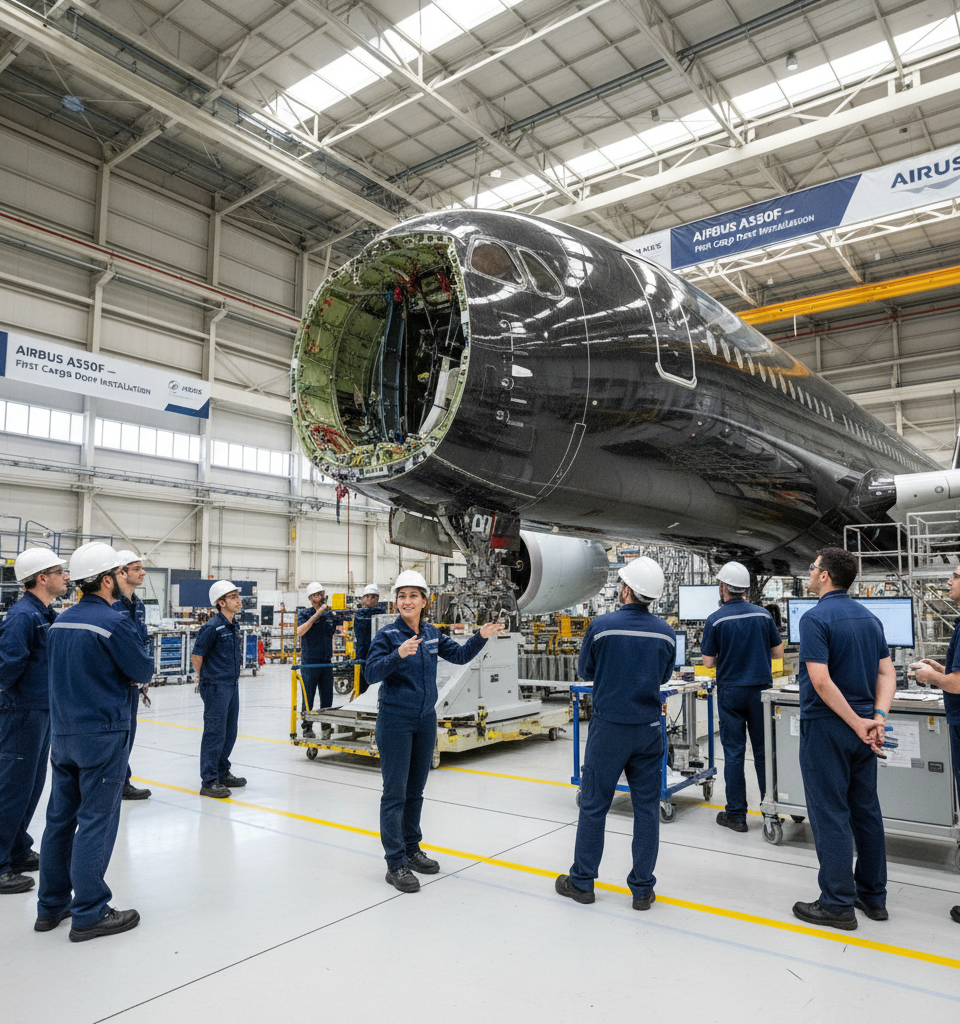
Airbus has reached a significant production milestone with the successful installation of the first large cargo door on the prototype for its highly anticipated A350 freighter. This critical development, confirmed by the aerospace giant, marks a tangible leap forward in the aircraft's assembly process, bringing the advanced cargo jet closer to its targeted entry into service. The robust door, essential for efficient freight loading and unloading, has been integrated into the airframe, symbolizing the program's transition from design to tangible construction.
Context and Strategic Importance The
A350F program was officially launched in July 2021, driven by a surging demand for modern, fuel-efficient air cargo capacity and a strategic push by Airbus to enter the large freighter market more aggressively. The air cargo industry has experienced unprecedented growth, particularly during the COVID-19 pandemic, highlighting the need for efficient and environmentally conscious freight solutions. This new freighter is designed to replace aging cargo aircraft, including Boeing's 747 freighters and older MD-11Fs, offering significant operational cost savings and reduced environmental impact. The installation of the cargo door is not just a manufacturing step; it’s a clear signal to the market that Airbus is on track to deliver its promises against fierce competition.
Key Technical and Program Details
The large cargo door in question is a sophisticated piece of engineering, designed to allow for the loading of oversized freight, including standard pallets and special cargo containers, through the forward fuselage. This design choice optimizes cargo volume and weight distribution, crucial for the aircraft's impressive payload capacity, which is expected to be around 92 tonnes (203,000 lbs). The A350F leverages the advanced technology and efficiencies of the A350 passenger aircraft, including its extensive use of lightweight carbon fiber composites, which make up over 70% of the airframe. This material composition contributes to a significant reduction in fuel burn – up to 20% less compared to older-generation freighters – and lower CO2 emissions, aligning with global sustainability goals. The prototype's assembly is progressing at Airbus's final assembly line, with various structural components now integrated.
Industry and Market Impact
This development sends ripples across the air cargo industry, intensifying the competition between Airbus and Boeing in the dedicated freighter segment. Boeing has long dominated this market with its 747 and 777 freighters. However, the A350F's superior fuel efficiency, lower operating costs, and reduced environmental footprint present a compelling alternative for airlines and cargo operators. The freighter market is projected to continue its robust growth, with a recent report by IATA indicating air cargo demand was up 18.4% year-over-year in April 2024. Airlines are increasingly looking for solutions that combine high capacity with reduced operational expenditure and environmental compliance, positioning the A350F as a strong contender to capture a significant market share. Major customers such as Air Lease Corporation, CMA CGM, and Singapore Airlines have already placed significant orders, signaling strong market confidence.
Expert Perspectives Industry analysts view the
A350F program as a crucial strategic move for Airbus. "The A350F is not just a new aircraft; it's a testament to Airbus's commitment to challenging Boeing's long-held dominance in dedicated large freighters," commented Dr. Andreas Müller, an aviation industry consultant. "The fuel efficiency and environmental credentials are particularly attractive in today's landscape of escalating fuel prices and stringent emissions regulations. This cargo door installation confirms that Airbus is making tangible progress and maintaining its production timeline, which will be reassuring for its launch customers." Others highlight the operational commonality with the A350 passenger variant, which offers significant benefits for airlines already operating the type, reducing training overheads and maintenance costs.
The Road Ahead: Testing and Entry into Service With the first cargo door now integrated, the
A350F prototype will continue through its assembly phase, followed by ground testing, engine installation, and ultimately, its maiden flight. Airbus aims for the A350F to enter service by 2026. The flight test campaign will be extensive, focusing on validating the aircraft's performance, cargo handling systems, and overall reliability under various operational conditions. Further orders are anticipated as the program matures and more airlines seek to modernize their freighter fleets. The successful delivery and performance of this prototype will be instrumental in securing future sales and solidifying Airbus's position as a formidable player in the global air cargo market.