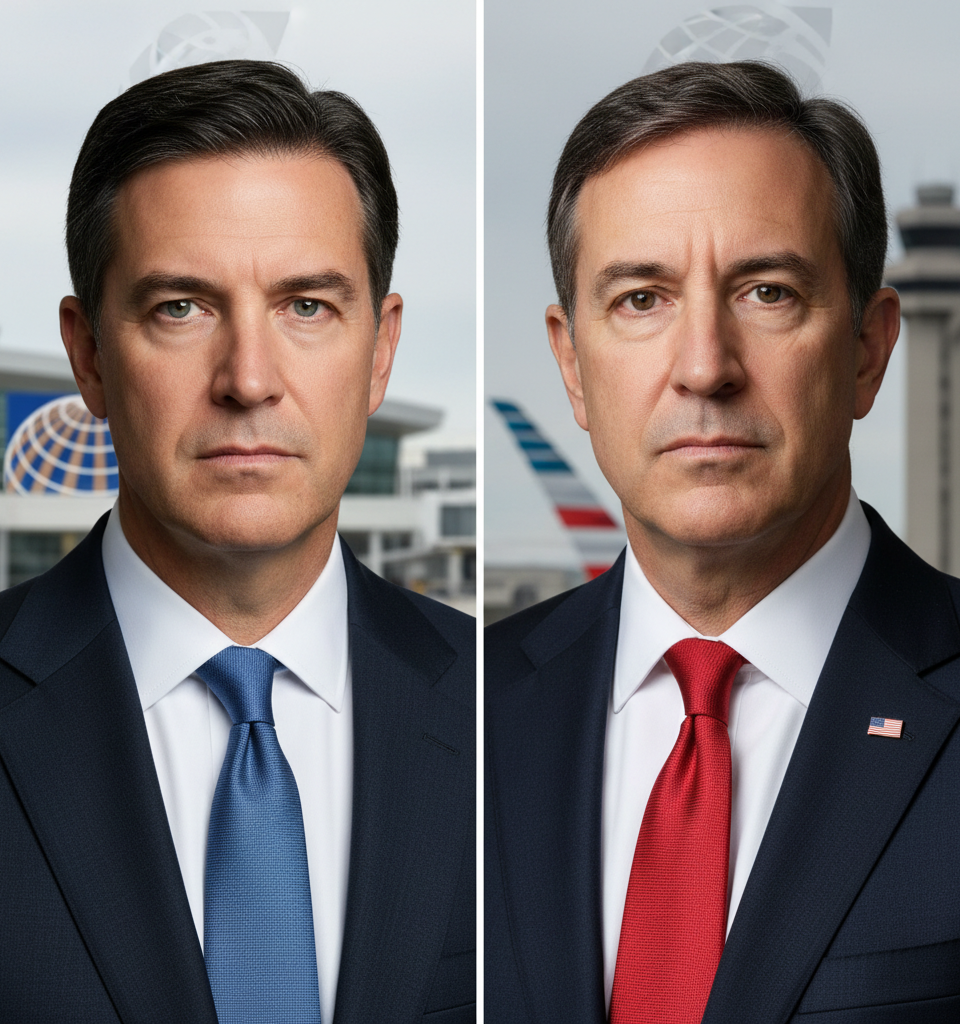
In a move that has sent tremors throughout the global aviation sector, United Airlines CEO Scott Kirby has reportedly signaled an interest in acquiring American Airlines, led by his former colleague and sometimes rival, Robert Isom. This audacious proposition positions two of the industry's most influential figures, once hailed as a 'dream team' at US Airways and American, on a potential collision course that could redefine the competitive landscape of air travel. The development underscores a strategic ambition by United to consolidate market power and fundamentally reshape the 'Big Four' airline structure.
A Shared History, A Fractured Future
This potential consolidation is not merely a corporate maneuver; it's a narrative steeped in personal history. Kirby and Isom's professional relationship dates back to the early 2000s, where their collaborative efforts at US Airways, particularly in revenue management and network planning, earned them widespread acclaim for their innovative strategies in a challenging post-9/11 airline environment. Their partnership continued through the merger of US Airways and American Airlines, where they played pivotal roles in integrating the two carriers. However, their paths diverged, with Kirby eventually taking the helm at United in 2020 and Isom ascending to CEO of American in 2022. This shared past adds a layer of intricate personal dynamic to what would already be one of the largest airline mergers in history, pitting former allies against each other in a high-stakes battle for industry supremacy.
Strategic Rationale and Market Implications
While details of any formal bid remain speculative, the strategic rationale for such an acquisition from United's perspective is clear: significant market share consolidation, route network optimization, and potentially massive cost synergies. Combining two of the largest carriers would create an unparalleled domestic and international network, offering United dominant positions in key hubs like Dallas/Fort Worth, Charlotte, and Miami, in addition to its existing strongholds. Such a merger would inevitably lead to substantial fleet rationalization and a re-evaluation of labor contracts, promising billions in potential savings, albeit at a complex operational and regulatory cost. The combined entity would control an even larger percentage of U.S. air travel, dwarfing competitors like Delta Air Lines and Southwest Airlines.
Industry Fallout and Consumer Concerns
An acquisition of American by United would undoubtedly trigger intense scrutiny from antitrust regulators, including the U.S. Department of Justice (DOJ), which has demonstrated an increasingly aggressive stance against airline consolidation. Historically, the DOJ has focused on maintaining competition to protect consumer interests, particularly regarding fares and service options. A combined United-American would likely face significant divestiture demands in markets where their routes overlap heavily, similar to the challenges faced by the JetBlue-Spirit merger attempt and the dissolution of the Northeast Alliance between American and JetBlue. Critics argue that further consolidation could lead to higher fares, fewer choices, and diminished service quality for passengers, given the already concentrated nature of the U.S. airline market where the top four carriers control roughly 80% of domestic capacity.
Expert Analysis on Regulatory Hurdles
Aviation industry analysts are largely skeptical about the immediate feasibility of such a merger due to the formidable regulatory hurdles. John Smith, a senior analyst at AeroInsights Group, commented, "Given the current political climate and the DOJ's recent actions, any attempt at a mega-merger between two of the 'Big Four' would face an exceptionally difficult path. The bar for proving public benefit would be extraordinarily high, and the divestiture demands could be so onerous as to negate the primary motivations for the merger itself." He further noted that the financial leverage of both companies, particularly American's substantial debt load nearing $30 billion, would add another layer of complexity to any potential deal structure and shareholder approval.
The Road Ahead: Speculation and Strategy
While neither airline has officially confirmed active merger talks, the mere notion of Kirby's interest has set the stage for a period of intense speculation and strategic maneuvering. American Airlines, under Isom, has been focused on improving operational reliability and profitability. A hostile or even friendly overture from United would force American to articulate its standalone value proposition more forcefully. For Kirby, this move could be a visionary bid for industry dominance or a calculated strategy to destabilize a primary competitor. The coming months will likely see subtle shifts in competitive strategy, public pronouncements, and perhaps even early regulatory soundings as both executives navigate this unprecedented chapter in their intertwined careers.
The prospect of a United-American merger represents a pivotal moment for U.S. aviation. Beyond the immediate financial and operational considerations, it challenges the very definition of competition within a critical industry. As Kirby and Isom, once 'dream team' colleagues, now face off across a potential corporate battlefield, the outcome will shape not only their legacies but also the future of air travel for millions.