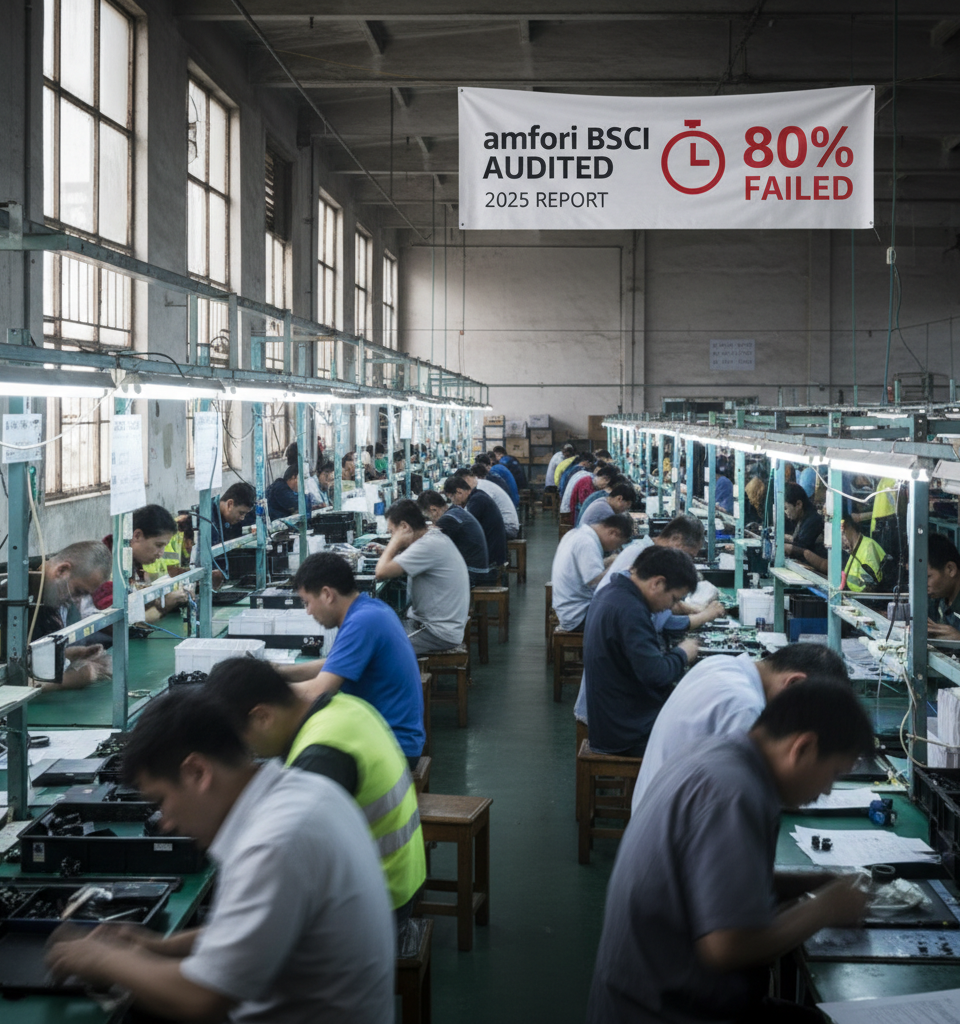
In 2025, a critical assessment revealed that an alarming 80% of factories subjected to audits under the amfori Business Social Compliance Initiative (BSCI) framework reportedly failed to meet established standards concerning working hours. This pervasive issue across global supply chains highlights a persistent challenge for companies striving for ethical sourcing and sustainable business practices, exposing them to intensified reputational damage and significant financial liabilities.
Context and Background
The amfori BSCI is a leading supply chain management system that supports companies to drive social compliance and improvements within their global supply chains. Adherence to its Code of Conduct, which includes stringent requirements on working hours, is a fundamental expectation for participating businesses. The consistent failure of such a high percentage of audited factories to comply with working hour regulations indicates systemic issues that extend beyond individual factory practices, suggesting broader industry pressures and potentially inadequate oversight. This situation underscores the enduring struggle to balance production demands with worker welfare, a dynamic that has long been a focal point for labor rights advocates and responsible business initiatives.
Key Details and Implications
The reported non-compliance primarily revolves around excessive overtime, a common problem in industries characterized by tight deadlines and fluctuating demand. Such practices often lead to worker fatigue, decreased productivity, increased accident rates, and violations of local labor laws. For businesses, the direct consequences include potential penalties, fines, and legal challenges. More broadly, the reputational fallout from association with exploitative labor practices can be severe, impacting consumer trust, brand loyalty, and investor confidence. In an era where supply chain transparency and ethical conduct are under increasing scrutiny, these compliance failures represent a significant vulnerability.
Industry and Market Impact
The widespread non-compliance regarding working hours within amfori BSCI-audited factories sends a ripple through various industries, particularly those with complex manufacturing processes and extensive global sourcing networks such as apparel, electronics, and toys. Companies operating in these sectors are now under heightened pressure to reassess their supplier relationships and auditing mechanisms. The market impact could manifest in several ways: increased demand for more robust auditing technologies, a push for greater incentives for compliant factories, and potentially a shift towards re-shoring or near-shoring production to regions with more predictable labor law enforcement. Ultimately, it could accelerate the move towards more resilient and ethically sound supply chain models, albeit with potential cost implications for consumers and businesses alike.
What's Next
Looking ahead, stakeholders anticipate intensified efforts from organizations like amfori to strengthen audit protocols and offer enhanced support programs for factories struggling with compliance. Companies will undoubtedly face renewed pressure from consumers, NGOs, and regulatory bodies to demonstrate clear progress in addressing these issues. This could involve implementing advanced monitoring systems, investing in capacity building for suppliers, and establishing clearer accountability frameworks for non-compliance. The spotlight on working hours in 2025 serves as a critical call to action for the entire industry to prioritize human rights and sustainable labor practices, moving beyond mere compliance checklists towards genuine, impactful change in global supply chains.