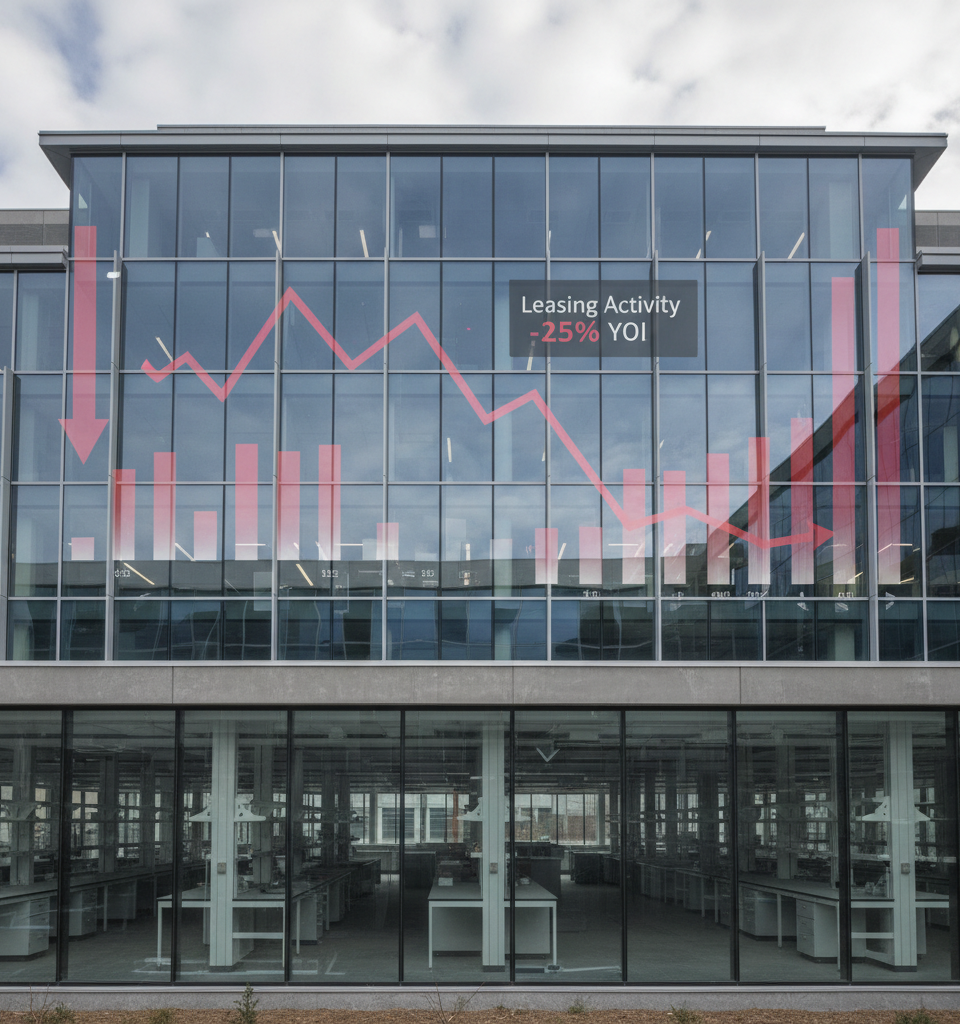
Alexandria Real Estate Equities (NYSE: ARE), the leading real estate investment trust specializing in life science properties, announced on Tuesday its first-quarter earnings, revealing a significant deterioration in financial performance marked by increased losses and decelerating leasing. The report points to a continuing trend of oversupply in the specialized lab space market, creating substantial headwinds for the company's profitability and occupancy rates.
Contextualizing the Downturn
This recent performance by Alexandria is not an isolated event but rather a continuation of challenges that have plagued the life science real estate sector over the past year. Following a period of unprecedented growth fueled by substantial venture capital inflows into biotech and pharmaceutical research, the market has undergone a significant correction. Inflationary pressures, rising interest rates, and a more cautious investment climate have cooled demand, leaving a glut of newly developed or planned lab space in key innovation hubs like Boston, San Francisco, and San Diego. Alexandria's role as the market leader makes its performance a crucial barometer for the health of the entire industry.
Key Financials and Operational Details For the first quarter,
Alexandria reported Funds From Operations (FFO) of $2.22 per share, a decrease compared to analyst expectations and prior periods. The company's net losses expanded to $0.85 per diluted share, a stark contrast to the previous year's performance. Leasing activity remained stubbornly slow, with new and renewal leases totaling only 1.2 million rentable square feet (RSF) for the quarter, significantly below the pace required to absorb existing vacancies. Management highlighted the continued elevated vacancy rates across its core markets, particularly in speculative developments that were initiated during the peak of the market. While specific figures for overall portfolio vacancy were not disclosed in detail, references to a "challenging supply-demand dynamic" suggested an upward trend. The average rental rate for new leases also showed signs of softening, with only modest increases over expiring rents.
Broader Industry and Market Impact
Alexandria's results send a clear signal to the broader life science real estate market: the period of rapid expansion and easy gains is over. Other smaller life science REITs and developers are likely facing similar, if not more acute, pressures. The slowdown in venture capital funding for biotech startups directly impacts the demand for lab space, as these companies are primary tenants. This creates a domino effect, potentially leading to project delays, cancellations of speculative developments, and increased competition for a shrinking pool of tenants. Landlords may be forced to offer more concessions, including longer rent-free periods and higher tenant improvement allowances, further impacting profitability.
Expert Analysis and Outlook
Industry analysts have largely anticipated a challenging period for life science real estate, and Alexandria's report confirms those expectations. "The disconnect between supply and demand is undeniable," commented Dr. Eleanor Vance, a senior real estate analyst at BioMarket Insights. "While the long-term fundamentals of the life science sector remain strong—driven by an aging population and scientific advancements—the near-term oversupply will continue to weigh on REIT performance. We expect to see further pressure on rental growth and occupancy metrics throughout 2024, possibly extending into early 2025." Some experts also point to the rising cost of construction and financing as additional burdens, making new developments less attractive and potentially further consolidating the market among established players.
The Path Forward
Looking ahead, Alexandria's management indicated a strategic shift towards prudent capital allocation and a focus on essential projects. The company plans to moderate its development pipeline, prioritizing build-to-suit projects with established tenants over speculative construction. Efforts to improve occupancy include enhanced marketing initiatives and potentially more flexible lease terms for new tenants. However, given the significant amount of new supply still slated to come online in key markets, a rapid recovery in occupancy and rental growth is unlikely in the immediate future. Investors will be closely watching for signs of stabilizing vacancy rates and sustained improvements in leasing velocity in subsequent quarters as the company navigates this challenging market environment. The resilience of the biotech funding environment will also be a critical factor in determining the speed of recovery for Alexandria and the broader life science real estate sector.