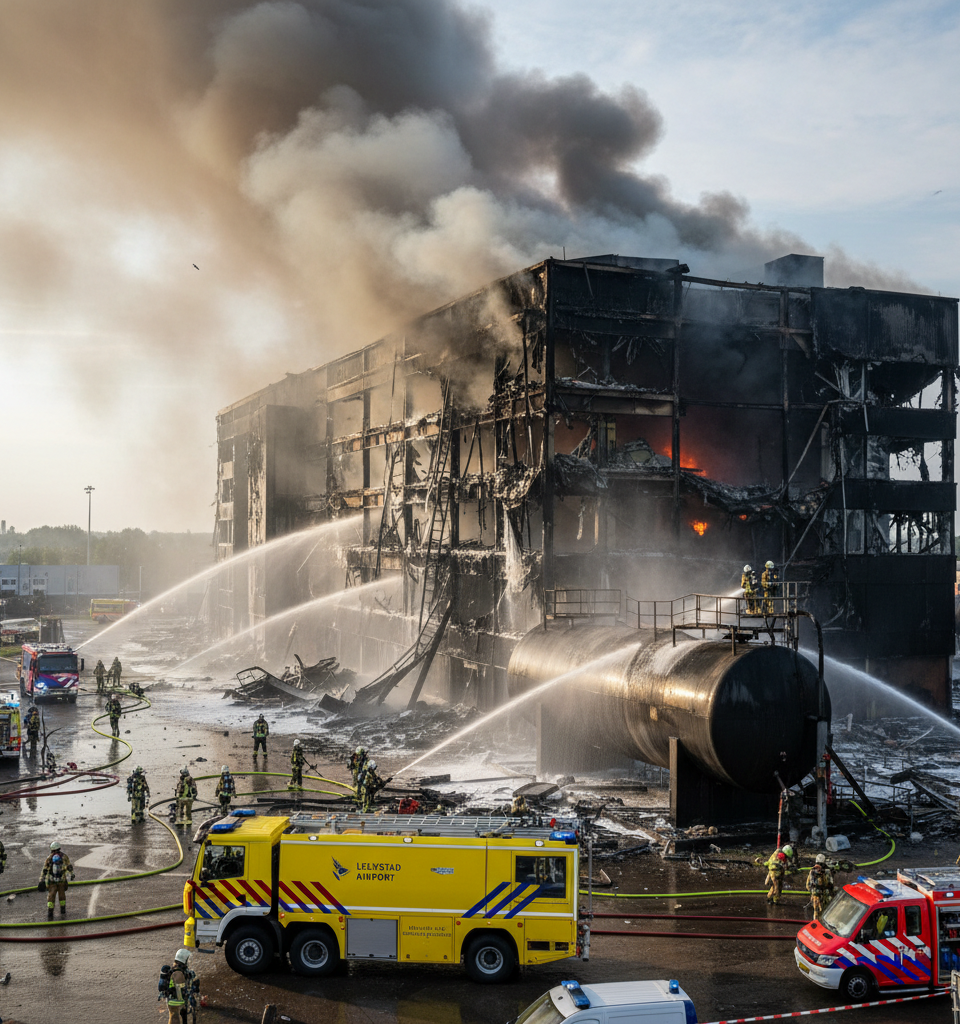
A substantial fire erupted at a data centre in Almere, Netherlands, earlier this week, precipitating a cascade of service failures that underscored the critical vulnerabilities inherent in contemporary digital dependencies. The incident, which occurred on Thursday morning, rapidly escalated, leading to the complete outage of a prominent university's systems, the incapacitation of the emergency communication network for public transport across the entire province of Flevoland, and the issuance of an NL-Alert to local residents, advising them of potential health hazards. The widespread disruption necessitated the deployment of a crash tender from nearby Lelystad Airport, specifically tasked with cooling a volatile diesel storage tank on the data centre site, preventing a potentially catastrophic explosion.
Context and Background
This event serves as a potent reminder that physical infrastructure, often assumed to be robust and reliable, forms the bedrock of our increasingly digital world. The perception that physical IT infrastructure is primarily the responsibility of specialized providers, and thus largely invisible to end-users, has been severely challenged. In recent years, our reliance on centralized data processing and storage has grown exponentially, making such facilities indispensable. Incidents like these, though rare, expose the disproportionate impact that a single point of failure can have on disparate, critical services, from education to emergency response. Historically, major outages have often stemmed from software glitches or cyberattacks; this fire, however, spotlights the persistent threat posed by physical calamities.
Key Details of the Incident
The fire, which reportedly broke out in the early hours, quickly overwhelmed local emergency services. Specific details regarding the precise cause are still under investigation, though initial reports suggest an electrical origin. The impact on Flevoland's transport infrastructure was particularly alarming.
The provincial public transport emergency system, vital for coordinating responses to accidents and managing operational disruptions, was rendered entirely inoperable for several hours. This situation created a significant safety concern for commuters and transport operators alike. Furthermore, the NL-Alert, a nationwide system for informing residents about urgent hazardous situations, was triggered to warn the Flevoland population about potential smoke inhalation risks and to advise staying indoors.
The deployment of a specialized crash tender, typically reserved for aircraft fires, to manage the burning diesel tank highlights the extreme measures required to contain the incident and prevent further disaster.
Industry and Market Impact
The Almere data centre fire is likely to trigger a re-evaluation of disaster recovery protocols and infrastructure resilience within the broader technology sector. Data centre operators globally often tout high availability and redundancy, yet this incident demonstrates that even state-of-the-art facilities can be vulnerable to physical damage. For businesses, public institutions, and critical infrastructure providers, the incident will undoubtedly spark increased inquiry into the geographical distribution of their digital assets, the effectiveness of their failover mechanisms, and the robustness of their supply chain for essential services. Insurance premiums for data centres and associated cyber-physical risks may also see adjustments following such high-profile failures.
Expert Perspective
Industry experts are emphasizing the need for a multi-layered approach to resilience. Dr. Elara Vance, a professor of critical infrastructure studies at Delft University of Technology, commented, "This incident unequivocally demonstrates that digital resilience is inextricably linked to physical security and operational redundancy. Relying solely on virtual failovers without robust physical separation and diverse power sources is a perilous gamble." She added, "Organizations must move beyond simplistic assumptions about 'the cloud' and actively scrutinize the physical architecture underpinning their critical services." Analysts suggest that regulatory bodies might intensify oversight of data centre safety standards, particularly concerning fire suppression, power redundancy, and the physical isolation of critical components.
What's Next
Investigations into the exact cause and full extent of the damage are ongoing, with initial estimates suggesting a significant financial loss and a prolonged restoration period for the affected systems. The university involved is working to restore services, prioritizing critical academic functions, though some disruption is expected to persist for days. For the public transport sector, the focus is on thoroughly reviewing emergency communication backup systems and protocols to prevent similar outages.
Long-term, this event is expected to accelerate investment in geographically diverse data centre footprints and more sophisticated, autonomous failover solutions. Policymakers, spurred by the direct impact on public services and safety, are also expected to explore new guidelines or legislation aimed at enhancing the resilience of critical digital infrastructure against a broader spectrum of threats, including physical incidents.