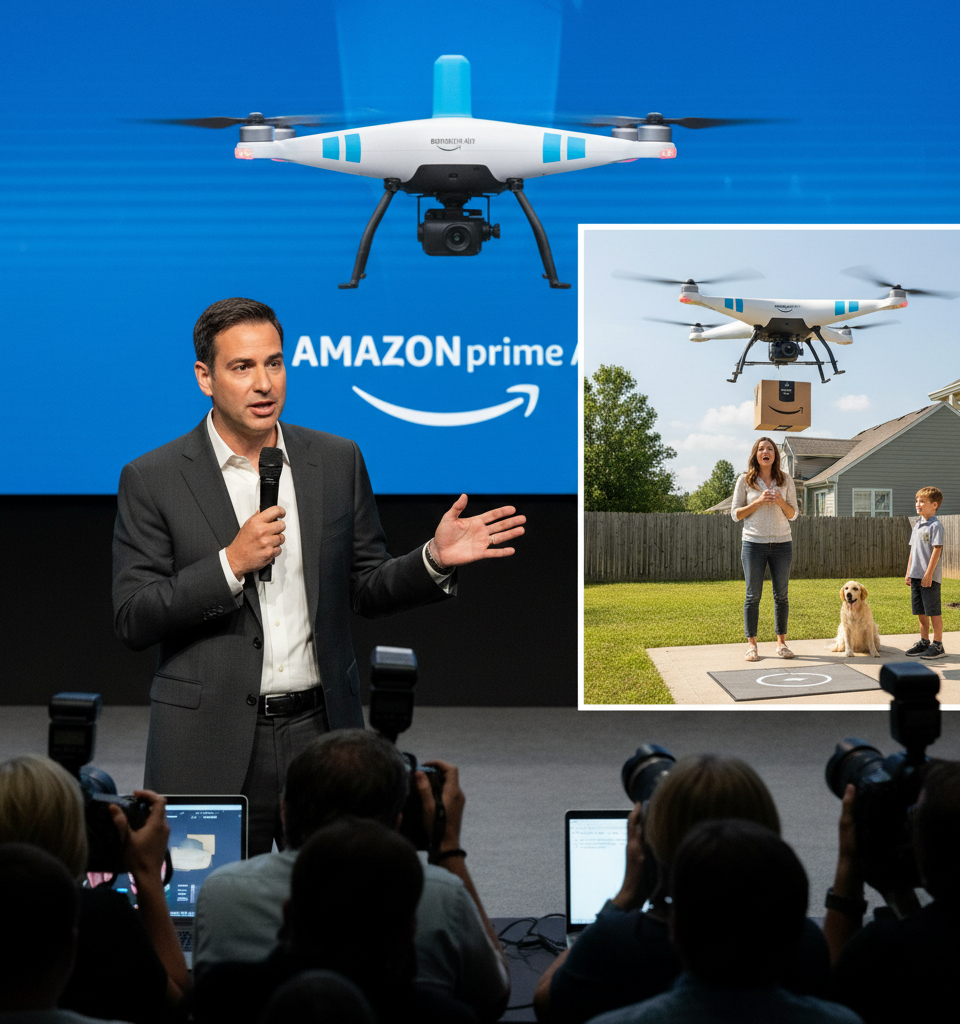
Seattle, WA – Amazon, the global e-commerce behemoth, is on the cusp of a major operational shift, as CEO Andy Jassy confirmed the company's intent to aggressively scale its 30-minute drone delivery services starting in 2025. This declaration signals a critical juncture in Amazon's long-standing endeavor to revolutionize last-mile logistics and consolidate its position as a leader in rapid fulfillment. The strategic initiative is a testament to Amazon's ongoing investment in advanced delivery technologies, aiming to deliver packages quicker and more efficiently than ever before.
This renewed commitment to drone delivery arrives crucial time, as e-commerce penetration continues its upward trajectory globally. Amazon has been at the forefront of exploring autonomous delivery solutions for over a decade, with its 'Prime Air' program first unveiled in 2013. The current push to scale up reflects years of research, development, and regulatory navigation, culminating in a readiness to deploy this futuristic delivery method on a potentially widespread basis. This move is not merely about novelty but about achieving unprecedented operational efficiencies and customer convenience in an increasingly competitive landscape where delivery speed is paramount.
While specific regions for the 2025 rollout remain undisclosed, Amazon has been conducting trials in select locations, including Lockeford, California, and College Station, Texas. These pilot programs have provided invaluable data on operational feasibility, safety protocols, and public acceptance. The company’s drone, the MK30, is designed for increased range, quieter operation, and enhanced resilience to varying weather conditions, capable of delivering packages up to five pounds within 30 minutes. The scaling effort will likely involve significant capital expenditure in drone manufacturing, operational infrastructure, and a robust network of localized fulfillment centers capable of integrating drone take-off and landing operations.
The broader logistics and retail industries are keenly observing Amazon's drone initiatives. Should Amazon successfully implement widespread drone delivery, it would set a new benchmark for delivery speed, forcing competitors to re-evaluate their own last-mile strategies. Traditional package delivery services, grappling with rising fuel costs and labor shortages, could face immense pressure to innovate or risk losing market share. This could spur a fresh wave of investment in autonomous delivery systems across the industry and accelerate regulatory frameworks for drone operations in urban and suburban environments. The impact on urban planning, local employment, and environmental considerations also remains a significant point of discussion.
Industry analysts view Amazon's announcement with a mix of optimism and cautious realism. "While the technical capabilities for drone delivery are largely proven, the challenges of regulatory approval, airspace management, and public perception at scale are formidable," notes Dr. Elaine Chen, a logistics technology expert at Global Supply Chain Insights. "Amazon's sheer financial muscle and lobbying power give it a distinct advantage, but widespread adoption won't happen overnight. We'll likely see a phased approach, perhaps starting with lower population density areas before tackling more complex urban environments." Others emphasize the cost-saving potential, estimating that automated drone deliveries could significantly reduce per-package delivery costs compared to traditional methods, especially in areas with dispersed populations.
Looking ahead, the success of Amazon's 2025 drone delivery scale-up will hinge on several critical factors: the continuous refinement of drone technology, proactive engagement with aviation authorities to streamline regulations, and effective communication with local communities to ensure public acceptance. Furthermore, the integration of drone operations with Amazon's existing vast logistics network will be a monumental task, demanding sophisticated AI and machine learning to optimize flight paths, package handling, and maintenance schedules. The coming years will undoubtedly witness Amazon pushing the boundaries of what is possible in e-commerce fulfillment, potentially reshaping consumer expectations for delivery speed and convenience across the globe.
Beyond 2025, the implications extend to the types of goods deliverable by drone, potentially expanding beyond small packages to include groceries and other urgent items, further blurring the lines between traditional retail and instant e-commerce. The drone delivery ecosystem may also give rise to new service industries, such as drone maintenance, ground support, and specialized security, creating new economic opportunities while simultaneously disrupting established sectors. This strategic move by Amazon is not merely an enhancement; it heralds a potential paradigm shift in how goods are transported and consumed.