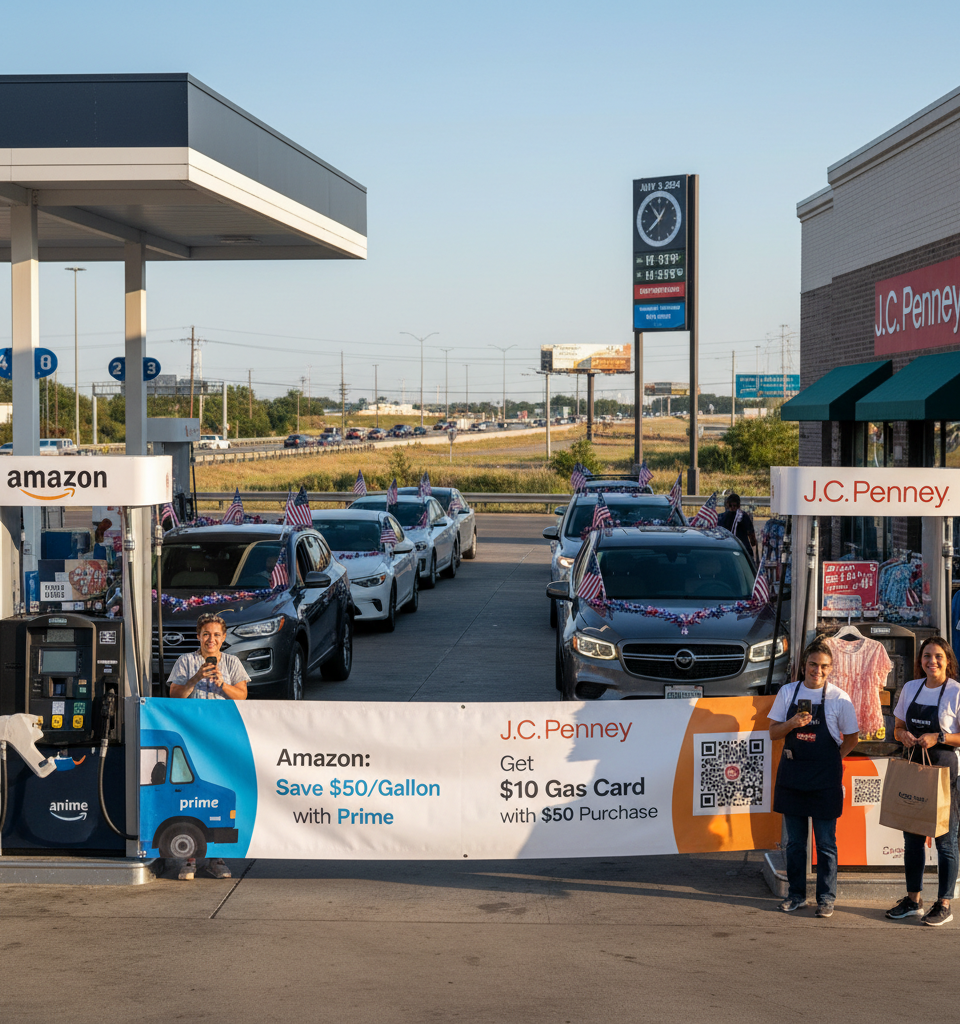
Ahead of the bustling July 4 holiday weekend, major retailers Amazon and J.C. Penney are implementing strategies designed to attract consumers, specifically leveraging the prevalent cost of gasoline. Amazon is extending special savings related to gas, available exclusively to its Prime subscribers, while J.C. Penney is introducing a program where customers can exchange a gas receipt for a $10 discount on purchases. These initiatives reflect a broader retail trend of integrating external economic factors, such as fuel prices, into promotional strategies to drive sales during peak shopping periods.
Context and Background
The timing of these deals is particularly significant as the July 4 holiday is traditionally one of the busiest travel periods in the United States, leading to increased demand for gasoline. With transportation costs often a concern for holiday travelers, retailers are stepping in to offer subtle forms of relief or incentive. This approach not only aims to alleviate a portion of the travel burden but also serves as a potent marketing tool, drawing customers into their ecosystems. Historically, retailers have adapted to economic shifts by offering tailored promotions, and linking discounts to gas purchases or general travel expenses is a contemporary iteration of this strategy, especially pertinent in an era where fuel prices can significantly impact household budgets.
Key Details of Current Promotions
Amazon's offering, while specific details regarding its nature remain undisclosed in the initial announcement, is explicitly an exclusive benefit for Prime members. This aligns with Amazon's long-standing strategy of enhancing the value proposition of its subscription service, which already includes expedited shipping, streaming services, and various other discounts. By tying gas-related savings to Prime membership, Amazon further incentivizes new sign-ups and reinforces loyalty among existing members.
C. Penney, the promotion is more direct: customers who bring in a gas receipt can receive $10 off their purchase. This tangible discount provides an immediate benefit and encourages physical store visits, a crucial objective for traditional department stores in the current retail landscape.
The simplicity and universality of the gas receipt mechanism make it an accessible offer for a wide range of consumers.
Industry and Market Impact
The introduction of these gas-related deals by two retail giants could signal a growing trend within the broader retail sector. As consumer spending patterns become increasingly sensitive to energy costs, other retailers may follow suit, exploring creative ways to integrate fuel-related incentives into their promotional calendars. This competitive environment could lead to a proliferation of similar offers, ultimately benefiting consumers. For e-commerce platforms like Amazon, such deals reinforce the value of digital subscriptions and customer loyalty programs. For brick-and-mortar stores like J.C. Penney, these promotions are critical for driving foot traffic and differentiating themselves in a competitive market, potentially converting a necessity (buying gas) into an opportunity for discretionary spending.
What's Next
Looking beyond the immediate July 4 holiday, the success of these promotions will likely be closely monitored by industry analysts. If these gas-related incentives prove effective in driving increased sales and customer engagement, it's plausible that retailers could incorporate them into future holiday strategies or even as ongoing loyalty perks. The evolution of fuel prices and consumer sentiment around travel costs will undoubtedly play a significant role in determining the longevity and widespread adoption of such retail strategies. The current initiatives by Amazon and J.C. Penney serve as a crucial test case for how retailers can effectively respond to and leverage external economic factors to capture consumer attention and market share.