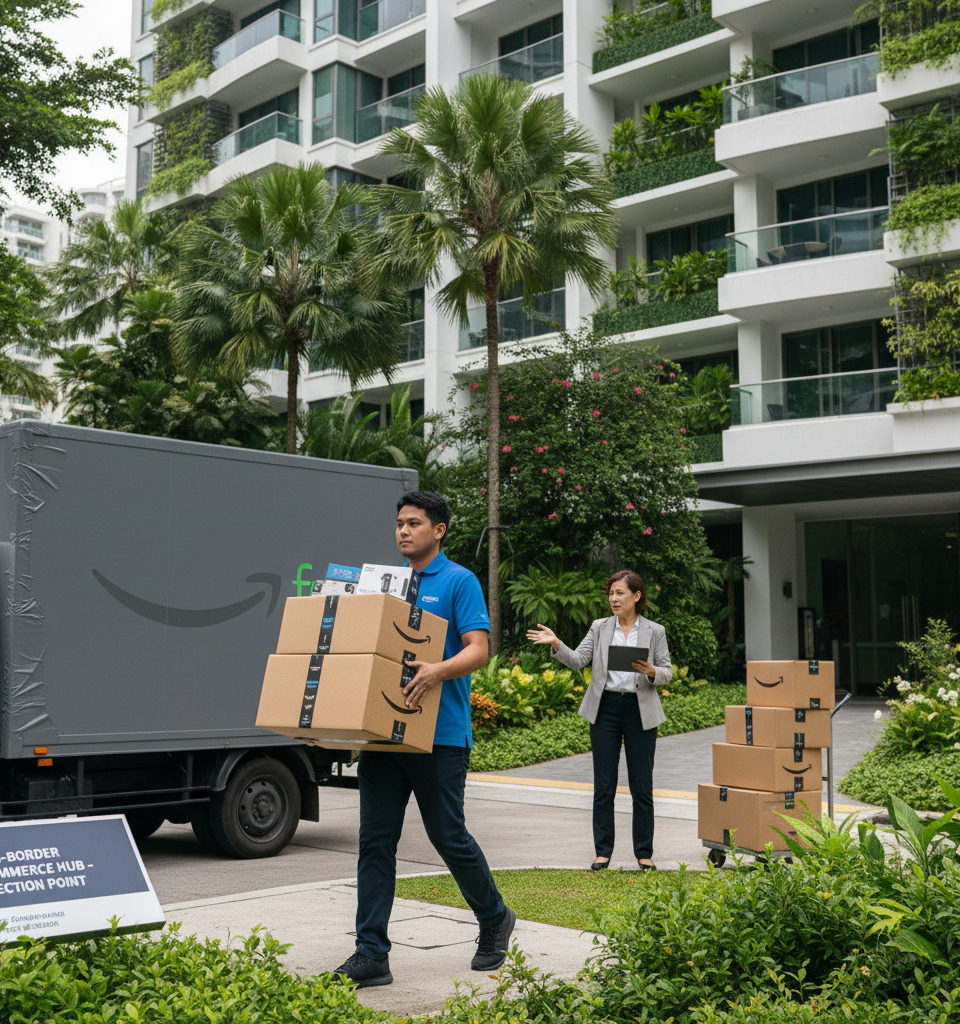
Amazon has announced the cessation of its Amazon Fresh grocery delivery service and associated local fulfillment network in Singapore, with operations concluding on July 6. This strategic recalibration marks a significant departure from Amazon's previous attempts to capture a share of the high-growth online grocery market in the city-state. The move, which will result in a small number of specific roles being eliminated, underscores Amazon's renewed focus on its established e-commerce retail, Global Selling, and Amazon Web Services (AWS) segments, particularly emphasizing the burgeoning appetite among Singaporean consumers for international product catalogues from regions like the U.S., Japan, and Germany.
Contextualizing Amazon's Singapore Strategy
This decision arrives after several years of Amazon's fluctuating engagement with the Singaporean retail landscape. Initially entering the market with much fanfare, Amazon Fresh was seen as a direct competitor to existing local and regional players in the online grocery space. The hyper-competitive nature of Singapore’s e-commerce market, characterized by densely populated urban areas and a proliferation of established delivery services, has proven challenging for many international entrants. The shift away from local grocery fulfilment suggests that Amazon is reprioritizing its resources towards areas where it perceives a stronger competitive advantage and higher growth potential, specifically in facilitating access to its vast international product offerings through cross-border logistics.
Operational Details and Resource Reallocation
Sources close to the operation indicate that the closure of Amazon Fresh involves the winding down of dedicated warehousing and delivery infrastructure built specifically for perishable and fast-moving consumer goods. While the exact number of impacted roles was not disclosed, Amazon affirmed that it would be a "small number of specific roles" within the Singapore operations, with efforts made to redeploy affected employees where possible. sg retail site, the Global Selling program (which enables Singaporean businesses to sell globally), and the robust Amazon Web Services (AWS) cloud computing division, remains fully operational and vital to its Asia-Pacific strategy.
This reallocation of resources highlights a measured approach to market penetration, focusing on proven revenue streams and leveraging existing global supply chains.
Broader Market Implications for Singapore
The withdrawal of Amazon Fresh simplifies the competitive landscape for remaining online grocery providers in Singapore, including local giants like FairPrice Online, RedMart (Lazada), and Pandamart (Foodpanda), as well as specialized players focused on niche markets. While Amazon Fresh held a significant brand presence, its market share in groceries faced intense pressure amidst aggressive pricing, extensive product assortments, and rapid delivery services offered by rivals. This exit may lead to a slight consolidation of demand among the remaining providers, potentially intensifying competition in other areas like delivery speed and product freshness, rather than overall market growth.
Expert Perspectives on the Strategic Pivot
Industry analysts view Amazon's move as a pragmatic one, acknowledging the challenges of replicating its U.S. or European grocery success in a unique market like Singapore. "The economics of last-mile grocery delivery in densely urbanized Southeast Asia are notoriously thin, requiring immense scale and hyper-localization," commented a senior e-commerce consultant who declined to be named. "Amazon likely recognized that its resources could generate a higher return by focusing on cross-border logistics, leveraging its global catalogue and robust shipping networks, rather than battling local players on their home turf for perishable goods." This strategy aligns with a growing trend among global e-commerce players to identify their core competencies and double down on distinct competitive advantages in diverse international markets.
The Future of Amazon in Singapore and Beyond
Looking ahead, Amazon's future in Singapore will be anchored by its established strengths in broader e-commerce retail and cloud services. The company's enhanced focus on enabling access to international marketplaces signifies a belief in the strong purchasing power and sophisticated consumer preferences of Singaporean shoppers who seek variety beyond local offerings. Investments are expected to continue in improving cross-border logistics, payment solutions, and customer service for international orders. While the departure from local groceries marks the end of one chapter, it opens another, potentially more profitable, one focused on integrating Singapore further into Amazon's global supply chain and digital ecosystem, indicating a long-term commitment to the market, albeit with a refined strategy.
This strategic adjustment by such a prominent global player also sends a signal to other international entrants regarding the complexities and unique demands of the Southeast Asian e-commerce landscape. Companies must carefully weigh the costs and benefits of directly competing with entrenched local services versus capitalizing on specialized niches or cross-border opportunities. Amazon's refined approach in Singapore exemplifies a continuous evolution in its international market strategy, prioritizing efficiency and alignment with global strengths over generalized expansion.