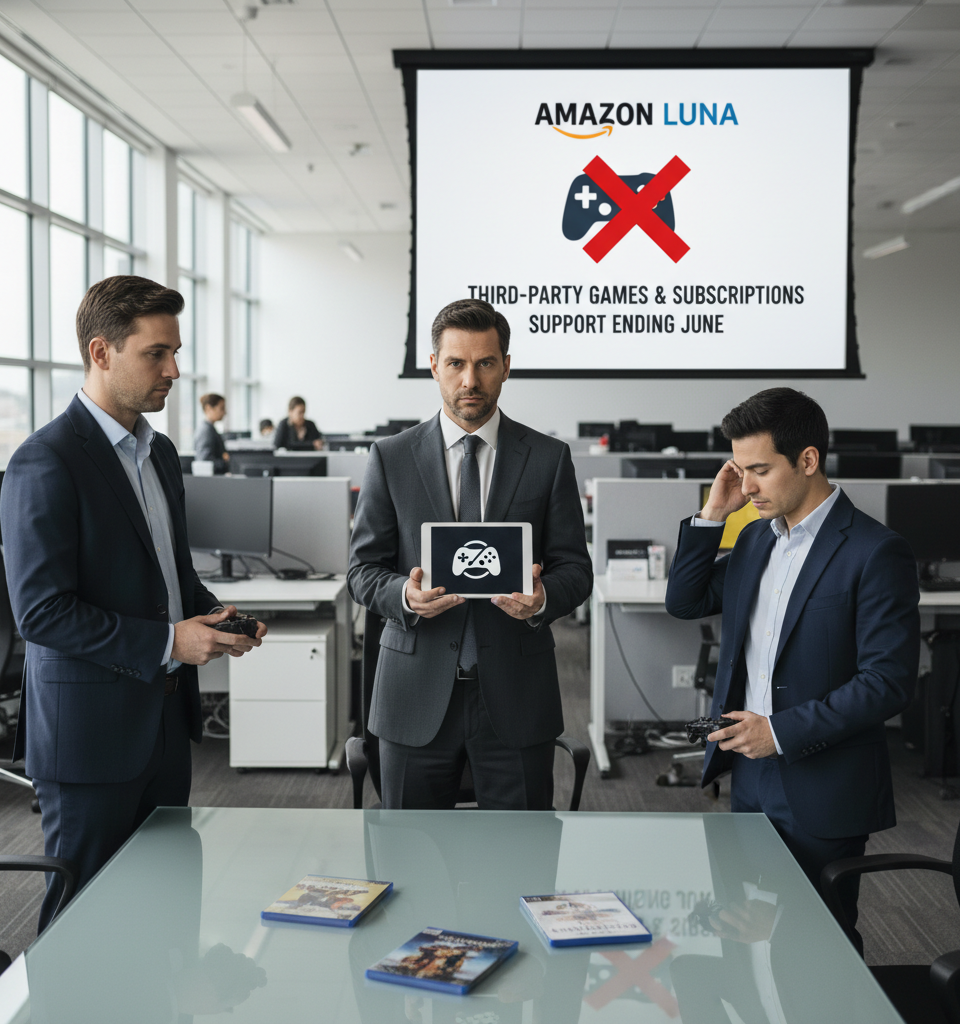
Amazon Luna, the retail giant's ambitious foray into cloud gaming, is preparing for a significant operational overhaul, with plans to cease all support for third-party games and their associated subscriptions, effective June 2026. This strategic recalibration underscores Amazon's continued efforts to refine and redefine Luna's value proposition in the competitive cloud gaming landscape, acknowledging its current standing as a service struggling to resonate broadly with gamers.
The impending changes represent a pivotal moment for Luna, which launched with the promise of offering a diverse library of games accessible across multiple devices without the need for expensive hardware. The initial model included channels from various publishers, allowing subscribers to access curated selections of games. The decision to cut third-party content suggests a fundamental shift in Amazon's approach, potentially signaling a move towards a more first-party-centric or internally curated content strategy, similar to what some competitors have adopted.
The Evolving Cloud Gaming Arena
This move comes at a time when the cloud gaming market, while growing, remains highly fragmented and challenging. Companies like Microsoft with Xbox Cloud Gaming, Nvidia with GeForce Now, and Sony with PlayStation Plus Premium have all been vying for market share, each employing distinct strategies. Amazon's initial strategy of leveraging a broad catalog through third-party partnerships appears to be undergoing a deep re-evaluation, possibly due to licensing complexities, user engagement metrics, or the high costs associated with maintaining a diverse third-party library.
The discontinuation of third-party support will inevitably affect current Luna subscribers who rely on these offerings. Users who have invested in subscriptions tied to these third-party game channels will need to assess the remaining value of their Luna service. Amazon has yet to fully detail the implications for existing subscribers, such as potential refunds or alternative content offerings, which will be crucial for retaining user trust during this transition. This change indicates Amazon's acknowledgment that its initial strategy for Luna has not delivered the desired market penetration or user base growth.
Potential Strategic Reorientation
Industry analysts suggest that this strategic pivot could allow Amazon to streamline Luna's operations, focusing resources on areas where they can exert more direct control or leverage existing Amazon IP. This could include a stronger emphasis on games developed by Amazon Games studios or exclusive content partnerships that are more strategically aligned with the broader Amazon ecosystem. Such a move would aim to differentiate Luna in a crowded market where content is king.
The withdrawal from third-party content also raises questions about Amazon's long-term commitment and vision for Luna. While it could be interpreted as a retrenchment, it could also be seen as a necessary pruning to cultivate a more sustainable and distinct model. For a company of Amazon's scale, investing in proprietary content and experiences could be a more viable path to establishing a unique position in the burgeoning cloud gaming sector, rather than competing solely on the breadth of a licensed library that many other services also offer.
Market Impact and Future Outlook
The broader market impact of Luna's restructuring remains to be seen. Competitors may view this as either an opportunity to attract disaffected Luna users or as a cautionary tale regarding the intricacies of cloud gaming content licensing. For game developers and publishers, it signals the inherent risks and shifting landscapes when partnering with cloud gaming platforms, necessitating careful consideration of distribution channels and revenue models.
Looking ahead, the success of Luna post-June will heavily depend on Amazon's subsequent announcements regarding new content, pricing structures, and unique features. The company will need to articulate a compelling new vision for Luna that clearly defines its target audience and value proposition. Without a robust and appealing first-party or exclusive content line-up, the service risks further marginalization in a market that continues to demand fresh and engaging gaming experiences. The coming months will be critical in shaping the future trajectory of Amazon's cloud gaming ambitions.