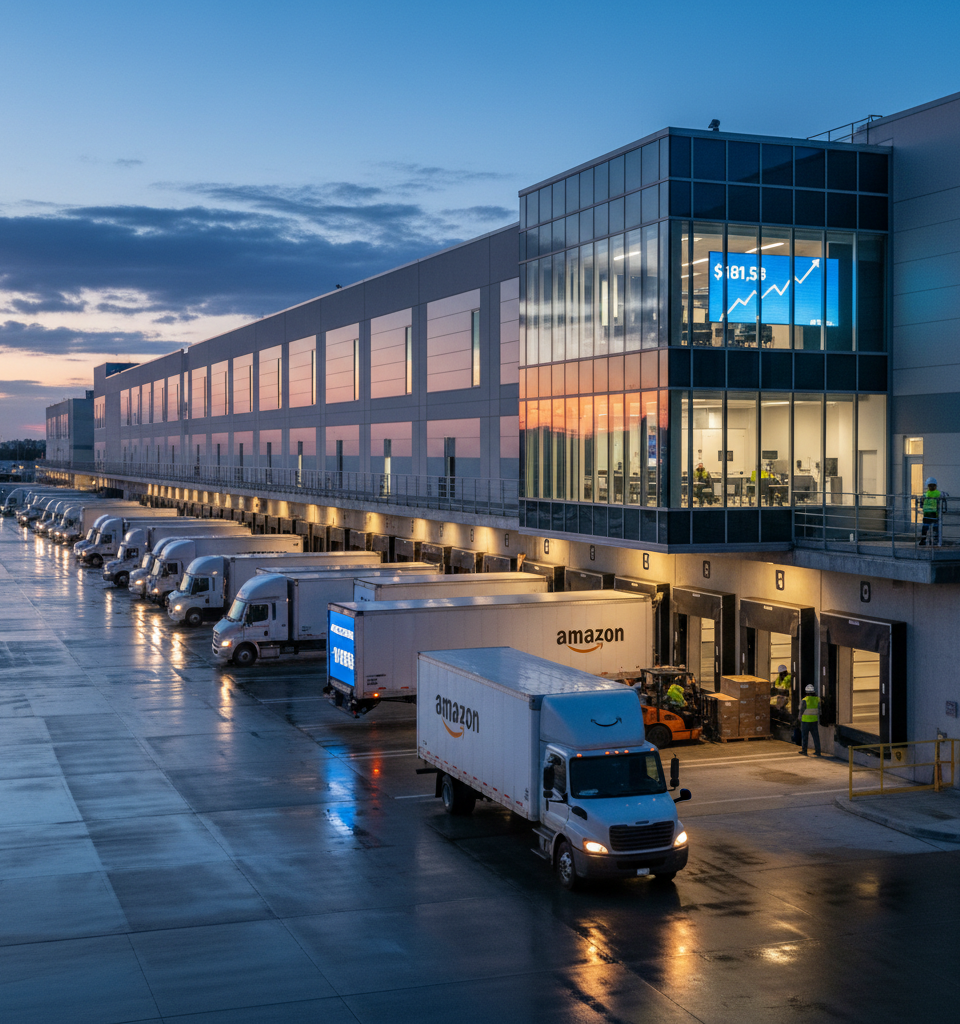
Amazon announced a significant financial milestone for the first quarter of the year, with total revenue climbing to $181.5 billion. This substantial 17% year-over-year increase was primarily fueled by strong e-commerce performance in its North American and European segments. The Seattle-based company indicated that its strategic focus on enhancing and accelerating delivery capabilities played a crucial role in these positive results, underscoring a renewed commitment to its core retail operations.
Context and Background
This robust growth comes at a critical juncture for Amazon, following a period where accelerated delivery speeds were temporarily deprioritized amidst the unprecedented demands of the pandemic era. Supply chain disruptions and labor shortages forced many e-commerce players, including Amazon, to extend delivery timelines. However, as global supply chains stabilize and consumer expectations for immediate gratification reassert themselves, Amazon's pivot back to speed highlights a tactical shift to recapture market share and customer goodwill. The company's persistent investment in fulfillment infrastructure, including thousands of warehouses and a sophisticated logistics network, provides the foundation for this renewed emphasis on rapid order fulfillment.
Key Details and Figures
Digging into the specifics, Amazon's North American sales segment experienced a particularly strong quarter, contributing significantly to the overall revenue jump. While exact regional breakdowns for e-commerce were not fully detailed in the preliminary reports, the aggregate retail sales performance across both continents was a primary driver. Executives on the earnings call emphasized that investments in technology, warehouse automation, and last-mile delivery solutions were instrumental in not only managing increased order volumes but also in improving delivery efficiency. The company also hinted at continued optimization of its delivery network, including experimenting with new routing algorithms and expanding its delivery fleet.
Industry and Market Impact
Amazon's renewed focus on delivery speed sends a strong signal across the entire retail and logistics landscape. Competitors, from traditional brick-and-mortar stores expanding their online presence to other pure-play e-commerce platforms, will likely feel pressure to match or exceed Amazon’s expedited delivery promises. This could trigger a new wave of investment in logistics infrastructure, last-mile solutions, and potentially even partnerships with third-party logistics providers. For consumers, the outcome is overwhelmingly positive, promising faster and more reliable access to goods. However, it also raises questions about the environmental impact of such accelerated operations, particularly concerning increased transportation and packaging.
Expert Perspective
Industry analysts are largely optimistic about Amazon's strategy. "Amazon's return to prioritizing delivery speed is a smart move," states retail analyst Dr. Eleanor Vance from Global Insights Group. "In a post-pandemic world, convenience is king, and rapid delivery has become a baseline expectation for consumers. This isn't just about customer satisfaction; it's about competitive differentiation and sustained market leadership." Other experts point to the potential for increased operational costs, but suggest that Amazon's scale and technological prowess allow it to absorb these more effectively than smaller rivals. The efficiency gains from automation and optimized routing are expected to mitigate some of these expenses.
What's Next
Looking ahead, Amazon is expected to continue refining its delivery network, potentially integrating more sophisticated AI-driven logistics management and exploring emerging technologies like drone delivery in more widespread applications. The company’s continued investment in its fulfillment centers, including the expansion of sorting and consolidation hubs, will be crucial. Furthermore, the push for faster delivery could also see Amazon leveraging its Prime membership program even more aggressively, tying expedited shipping directly to membership benefits to further enhance customer loyalty and recurring revenue. The trajectory suggests an ongoing battle for speed and efficiency that will redefine expectations across the e-commerce sector.