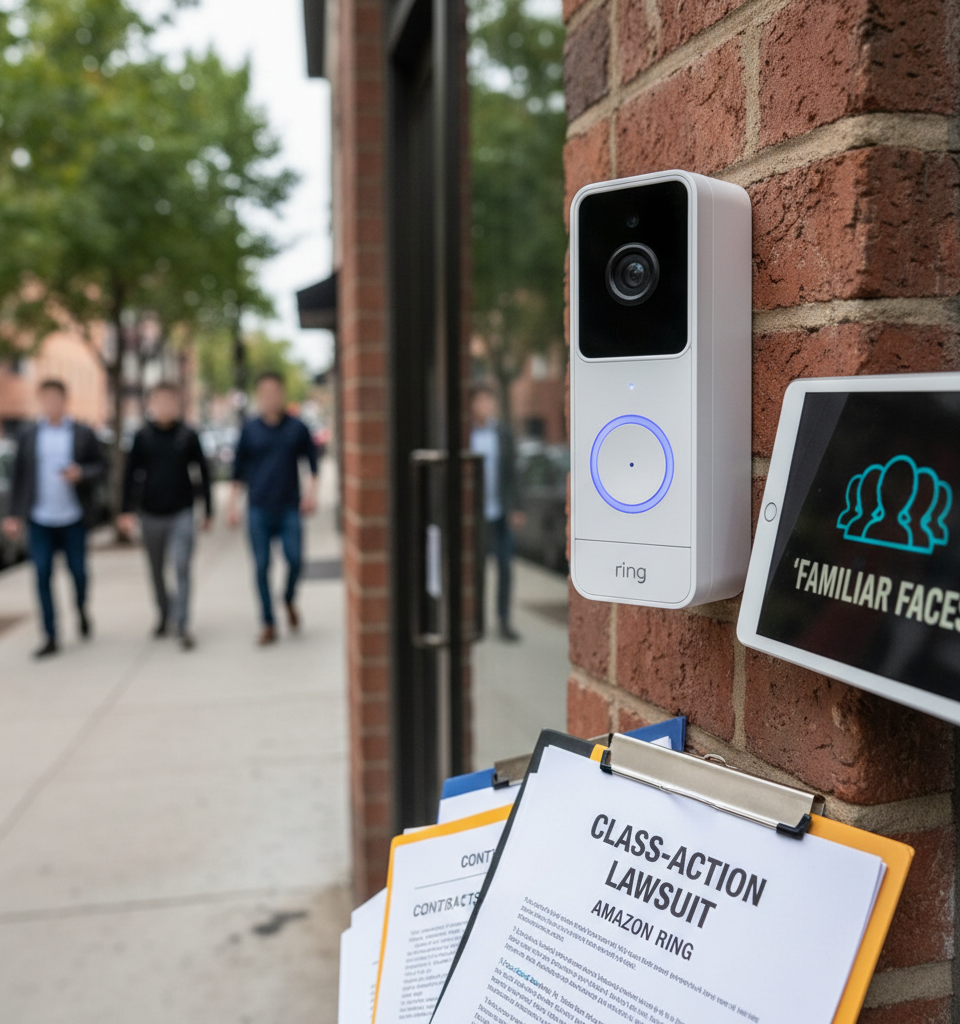
Amazon's smart home security subsidiary, Ring, is facing a legal challenge over its recently introduced 'Familiar Faces' facial recognition feature. A proposed class-action lawsuit was filed in federal court this Monday, targeting the technology embedded in Ring doorbells. The complaint, brought by Virginia resident Charles Sigwalt, underscores a prevalent legal and ethical asymmetry: while the device owner consents to its use, individuals merely passing by the camera do not.
This legal action could set a significant precedent for video surveillance technologies in residential settings and beyond, reigniting debates over individual privacy rights in an increasingly monitored public sphere. The lawsuit signals a potential broadening of the legal challenges faced by companies deploying advanced surveillance systems, particularly those incorporating biometric data. The case could illuminate the extent to which existing privacy laws can address the rapid proliferation of artificial intelligence-powered monitoring tools in private hands.
The core of the complaint appears to center on the contention that Ring's facial recognition capabilities infringe upon the privacy of non-consenting individuals whose biometric data might be captured and processed. This raises key questions about data ownership, retention, and the implicit right to privacy in public or semi-public spaces. The outcome of this lawsuit could significantly influence future product development and deployment strategies for smart home technology companies, particularly those integrating advanced AI features that touch upon biometric data.
The legal battle is likely to scrutinize the terms of service that users agree to and how these terms interact with the rights of third parties who are not directly users of the product but are invariably affected by its operation. The broader implications extend to other companies developing similar facial recognition or biometric authentication features for consumer-grade devices. Should the class action prove successful, it could trigger a wave of similar lawsuits and potentially lead to new legislative efforts to regulate the use of AI in personal surveillance.
This case serves as a poignant reminder of the ongoing tension between technological advancement and the imperative to safeguard individual privacy in the digital age. It emphasizes the need for clearer regulations and ethical guidelines regarding the collection and processing of biometric data by private entities. As the legal proceedings unfold, the focus will remain on how courts interpret and apply existing privacy frameworks to novel technological challenges.
The resolution of Sigwalt v. Amazon/Ring could redefine the legal landscape for biometric surveillance, shaping how companies design and market their products and, crucially, how individuals' privacy expectations are to be protected in an increasingly camera-dense environment.