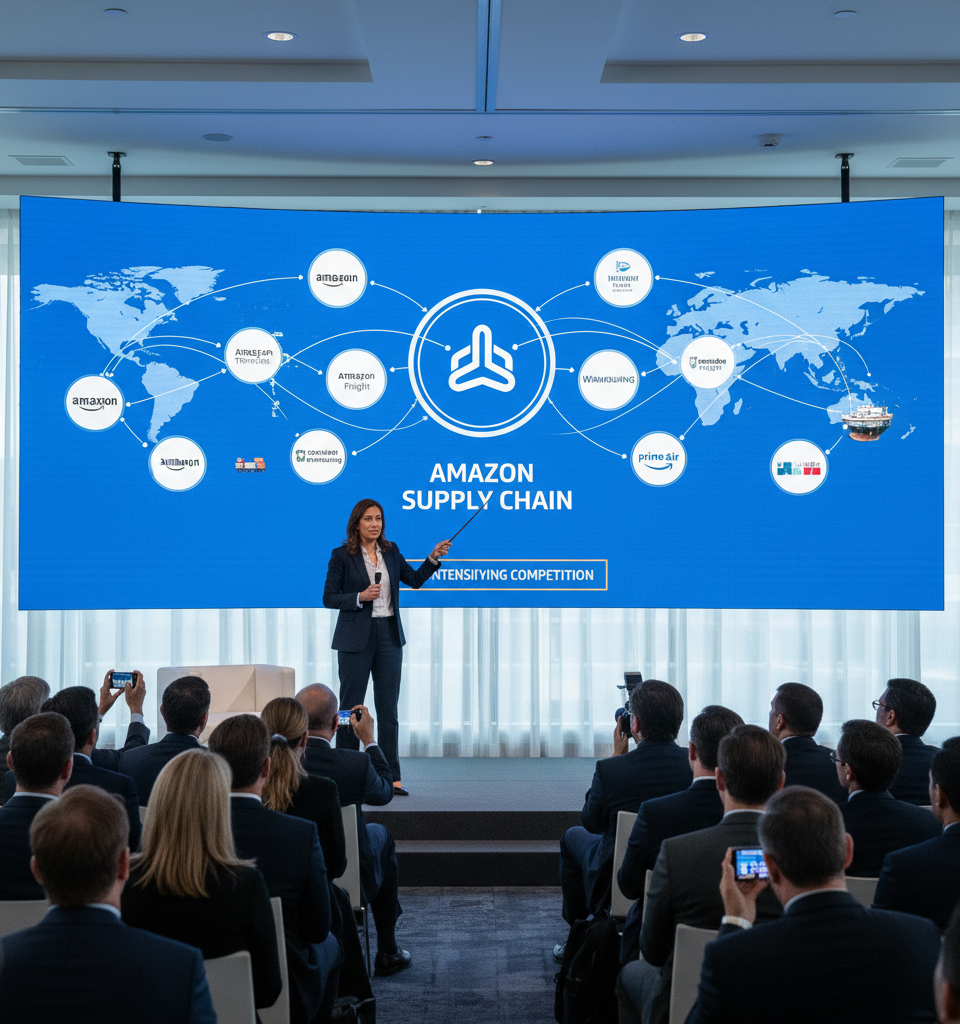
SEATTLE, WA – This week, Amazon announced the formal integration of its various third-party logistics (3PL) operations and services under a single, cohesive brand designed to offer manufacturers and retailers a comprehensive, unified supply chain solution. The initiative, aimed at streamlining the movement and distribution of heavy freight and parcels, marks a pivotal moment in Amazon’s expansion beyond traditional e-commerce, signaling its intent to become a dominant force in global logistics. This strategic pivot leverages Amazon's vast infrastructure and technological prowess to provide an end-to-end fulfillment network, from factory to customer, globally.
Contextualizing Amazon's Logistics Evolution
Amazon's foray into logistics began years ago, initially to support its burgeoning e-commerce business and reduce reliance on external carriers. Over time, it developed a sophisticated network encompassing warehousing, transportation, and last-mile delivery. Pieces of this infrastructure were gradually opened to third parties, including Fulfillment by Amazon (FBA) for sellers on its marketplace and Amazon Shipping for direct-to-consumer businesses. The current rebranding and unification represent the culmination of these fragmented efforts, positioning Amazon not just as a retailer or marketplace, but as a full-spectrum logistics provider. This move is a natural progression for a company that has invested billions into its logistics capabilities, including acquiring a fleet of planes, building regional fulfillment centers, and developing advanced robotics and AI for warehouse management.
Key Details of the Unified Offering
The newly unified service aims to simplify complex supply chain operations for businesses of all sizes. It promises enhanced visibility, efficiency, and cost-effectiveness by leveraging Amazon’s global reach and advanced technological infrastructure. Specific offerings include international freight forwarding, warehousing, inventory management, cross-docking, and last-mile delivery for both parcels and heavier goods. Although specific pricing structures were not immediately detailed, the value proposition hinges on Amazon's ability to offer competitive rates and faster delivery times due to its massive scale and integrated network. The goal is to provide a single point of contact and a unified platform for managing all logistics needs, from the factory floor to the customer's doorstep, irrespective of geographical borders.
Industry Impact and Competitive Landscape
This announcement sends ripples across the entire logistics and freight management industry. Traditional freight forwarders, 3PL providers, and parcel carriers like FedEx, UPS, and DHL are now facing a formidable new competitor backed by Amazon’s deep pockets and cutting-edge technology. The integration of Amazon's vast resources could lead to increased price competition and force existing players to innovate more rapidly to retain market share. Analysts predict that smaller and less technologically advanced logistics companies may struggle to compete, potentially leading to consolidation within the sector. Furthermore, retailers currently relying on multiple vendors for different stages of their supply chain might find Amazon's integrated solution appealing, leading to a shift in client relationships.
Expert Perspectives on the Strategic Move
Industry analysts view this as a shrewd strategic move by Amazon. “This isn’t just about offering a new service; it’s about Amazon monetizing its unparalleled logistics infrastructure and becoming an indispensable partner for businesses worldwide,” stated a leading supply chain consultant who requested anonymity due to client conflicts. “They've built a logistics behemoth out of necessity for their own retail operations, and now they are effectively inviting everyone else to leverage it. It's a significant threat to traditional 3PLs and freight carriers who often lack Amazon’s scale and technological integration.” Another expert noted the data advantage Amazon will accrue, using supply chain insights from across its client base to further optimize its own operations and enhance service offerings.
Future Implications and Market Outlook
The long-term implications of Amazon’s unified supply chain service are profound. It is expected to drive further automation and digitalization across the logistics sector as competitors strive to match Amazon's efficiencies. The service could also enable smaller businesses to access sophisticated logistics capabilities previously only available to large corporations, potentially leveling the playing field in e-commerce and international trade. Looking ahead, Amazon is likely to continue investing heavily in autonomous delivery solutions, drone technology, and advanced analytics to further enhance its logistics ecosystem, cementing its position as a global supply chain powerhouse. The coming months will reveal how quickly competitors adapt and how significantly this new offering reshapes the global movement of goods.