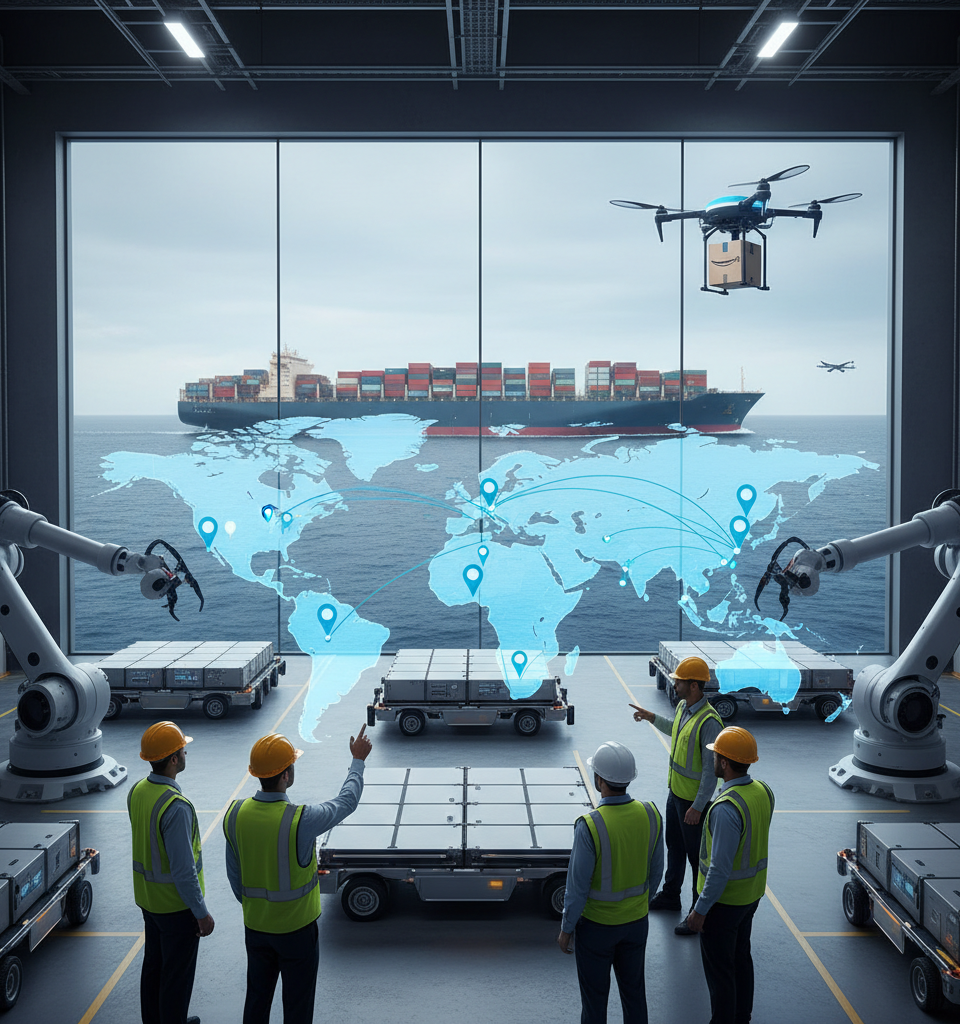
Amazon has officially begun offering its extensive logistics services, previously reserved for its sellers, to all businesses, regardless of their selling platform. This strategic expansion marks a pivotal moment in the global supply chain industry, with major corporations like Procter & Gamble (P&G), 3M, Lands' End, and American Eagle Outfitters already signing on as early adopters. The initiative, dubbed "Supply Chain by Amazon," aims to leverage the company's decade-plus investment in infrastructure, technology, and operational efficiency to provide end-to-end logistics solutions, from factory to customer, including international freight, customs clearance, warehousing, and last-mile delivery.
This foray into broad third-party logistics (3PL) represents a natural progression for Amazon, which has quietly built one of the world's most sophisticated and vertically integrated supply chains. For years, Amazon has managed its own global shipping network, reducing reliance on external carriers and gaining unparalleled control over delivery speeds and costs for its marketplace sellers. The decision to open this system to external clients now commoditizes years of internal development, positioning Amazon to capture a significant share of the lucrative global logistics market, estimated to be worth trillions of dollars annually. This also provides an additional revenue stream for the company beyond its online retail and cloud computing segments.
The service offering is comprehensive, encompassing everything from upstream manufacturing logistics to final customer delivery. Businesses can utilize Amazon's network for international ocean and air freight, port services, customs brokerage, and long-haul transportation. Once goods arrive in the destination country, they are integrated into Amazon's vast fulfillment center network for storage, picking, packing, and last-mile delivery, even for orders originating from non-Amazon storefronts. Early partners like P&G and 3M, major consumer goods companies with complex global distribution needs, underscore the ambition and scale of Amazon's new offering, indicating a direct challenge to incumbents like FedEx, UPS, and DHL.
The implications for the broader logistics and retail landscape are profound. Amazon's entry as a direct 3PL provider for any business could intensify competition, potentially driving down costs and improving efficiency across the sector. Smaller businesses, in particular, may gain access to logistics capabilities that were once exclusive to large corporations, leveling the playing field in e-commerce. However, it also raises questions about data privacy and the potential for Amazon to gain further insights into competitors' supply chains, a concern that has previously been voiced by sellers on its marketplace.
Industry analysts are closely watching this development. Sarah Miller, a logistics consultant at SupplyChain Insights Group, commented, "Amazon is not just selling shipping; they're selling an integrated, optimized supply chain ecosystem. Their massive scale, technological prowess, and existing infrastructure give them an undeniable advantage. This could be a game-changer, especially for companies struggling with the complexities and costs of international shipping and last-mile delivery. The competitive pressure on traditional freight forwarders and 3PLs will be immense." She also noted that the move diversifies Amazon's revenue and strengthens its market position by embedding itself deeper into the operational fabric of other businesses.
Looking ahead, Amazon's success in this new venture will depend on its ability to maintain its high service standards while scaling to accommodate a diverse range of clients with varying needs. Further expansion of its global fulfillment network, investments in automation, and continued refinement of its proprietary logistics software are expected. The eventual impact could be a significant transformation of global trade, as Amazon aims to become the invisible backbone of commerce for businesses worldwide, accelerating delivery times and streamlining supply chains in an increasingly interconnected global economy. More businesses are expected to join the program as Amazon continues to refine and expand its platform's capabilities.
The aggressive move by Amazon into direct 3PL services for all businesses underscores a broader trend towards vertical integration and the blurring of lines between e-commerce platforms and logistics providers. It signifies Amazon's ambition to be more than just a retailer or cloud provider, solidifying its position as an indispensable utility for global commerce. The industry will be monitoring how traditional carriers respond and how this dynamic shift ultimately redefines the logistics landscape for years to come.