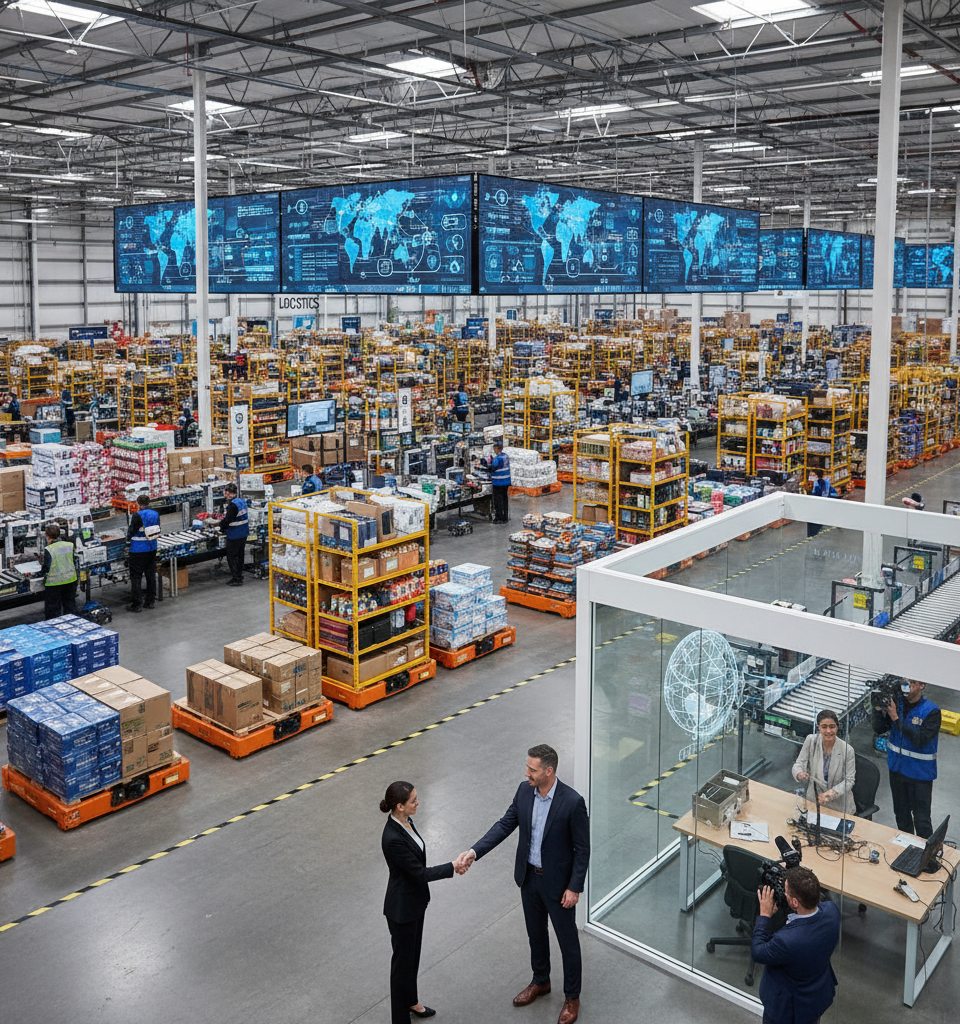
In a significant strategic shift, Amazon is extending its sophisticated global supply chain and logistics infrastructure to all businesses, regardless of their selling relationship with Amazon's marketplace. Announced recently, the new Amazon Supply Chain service encompasses freight forwarding, port services, distribution, fulfillment, and parcel delivery, presenting an integrated, end-to-end logistics solution designed to manage inventory for clients from manufacturing origin directly to the customer's doorstep. This bold expansion marks Amazon's aggressive entry into the broader third-party logistics (3PL) market, leveraging capabilities honed over decades to serve its own massive retail operations.
Context and Strategic Imperative
This initiative comes as businesses worldwide grapple with increasingly complex and fragile supply chains, exacerbated by geopolitical shifts and lingering effects of the pandemic. Amazon, renowned for its efficiency and technological prowess in logistics, is now monetizing capabilities that were once proprietary competitive advantages. The move is a natural evolution for a company that has invested billions into warehouses, transportation networks, and AI-driven optimization algorithms.
By opening this network, Amazon aims to maximize the utilization of its assets, generate new revenue streams, and strengthen its competitive moat against traditional logistics firms like FedEx and UPS, while also competing with newer entrants in the fulfillment space. This strategy echoes Amazon Web Services (AWS), where internal infrastructure was commercialized to become a dominant cloud computing platform.
Key Service Offerings and Early Adopters
The Amazon Supply Chain offering is comprehensive, promising a "hands-off" approach for businesses. It includes Global Freight, consolidating shipments from international manufacturers and managing customs and port processes. Once products arrive, they enter Amazon Distribution, allowing businesses to store inventory closer to customers across Amazon's sprawling network of fulfillment centers.
com orders, but also for sales from other platforms like Shopify, eBay, and even physical retail stores. The final leg, Parcel Delivery, leverages Amazon's extensive last-mile capabilities. Notable early adopters already utilizing parts of this service include major brands such as 3M and Lands' End, signaling confidence from established enterprises in Amazon's operational capabilities and cost-effectiveness., which then handles storage, distribution to other sales channels, and final delivery.
Industry Impact and Competitive Landscape
The entry of Amazon as a full-fledged 3PL provider sends ripples throughout the logistics industry. Traditional freight forwarders, warehouse operators, and parcel carriers face a new, formidable competitor with unparalleled scale, technology, and capital. Amazon’s pricing model, which promises competitive rates and transparent fee structures, will likely put pressure on incumbents to innovate and reduce their own costs.
Small and medium-sized businesses, particularly those engaged in e-commerce, stand to benefit significantly from access to Amazon's infrastructure, potentially lowering their operational overheads and improving delivery speeds. However, there are concerns about data privacy and the potential for Amazon to gain insights into competitors' inventory and sales data, although Amazon guarantees data separation for external clients. The market for global logistics is vast, estimated to be worth over $5 trillion, offering substantial room for Amazon to capture market share.
Expert Analysis and Perspectives
Industry analysts are largely optimistic about the potential disruptive impact of Amazon Supply Chain. "This move is a game-changer," states Sarah Jenkins, a supply chain consultant at Apex Analytics. "Amazon is not just offering a service; it's offering a proven, highly optimized system that has handled billions of packages.
" Others, like Mark Peterson, a logistics economist, caution that while Amazon's technology and network are appealing, the human element of logistics, particularly in complex B2B arrangements, often requires a hands-on approach that Amazon is yet to fully replicate. "The real challenge for Amazon will be adapting their highly automated, retail-centric model to the diverse and often custom needs of industrial and enterprise clients," Peterson commented. There is also a strategic question around whether brands are comfortable entrusting such a critical function to a company that is also a major retailer and competitor.
Future Implications and Market Outlook
The long-term implications of Amazon's foray into comprehensive 3PL services are profound. It will likely accelerate the digital transformation within the logistics sector, forcing competitors to invest more heavily in automation, AI, and integrated platforms. Amazon is expected to continue refining its service offerings, potentially expanding into specialized logistics for different industries or incorporating more advanced predictive analytics for inventory management.
As global supply chains continue to evolve, the ability to rapidly adapt and optimize logistics will be a key differentiator. Amazon's deep pockets and relentless focus on customer experience suggest they are poised to become a dominant force in this expanded market, fundamentally altering how products move from production lines to consumers worldwide. The next several years will see intense competition and innovation as the industry responds to this new titan in the logistics arena.