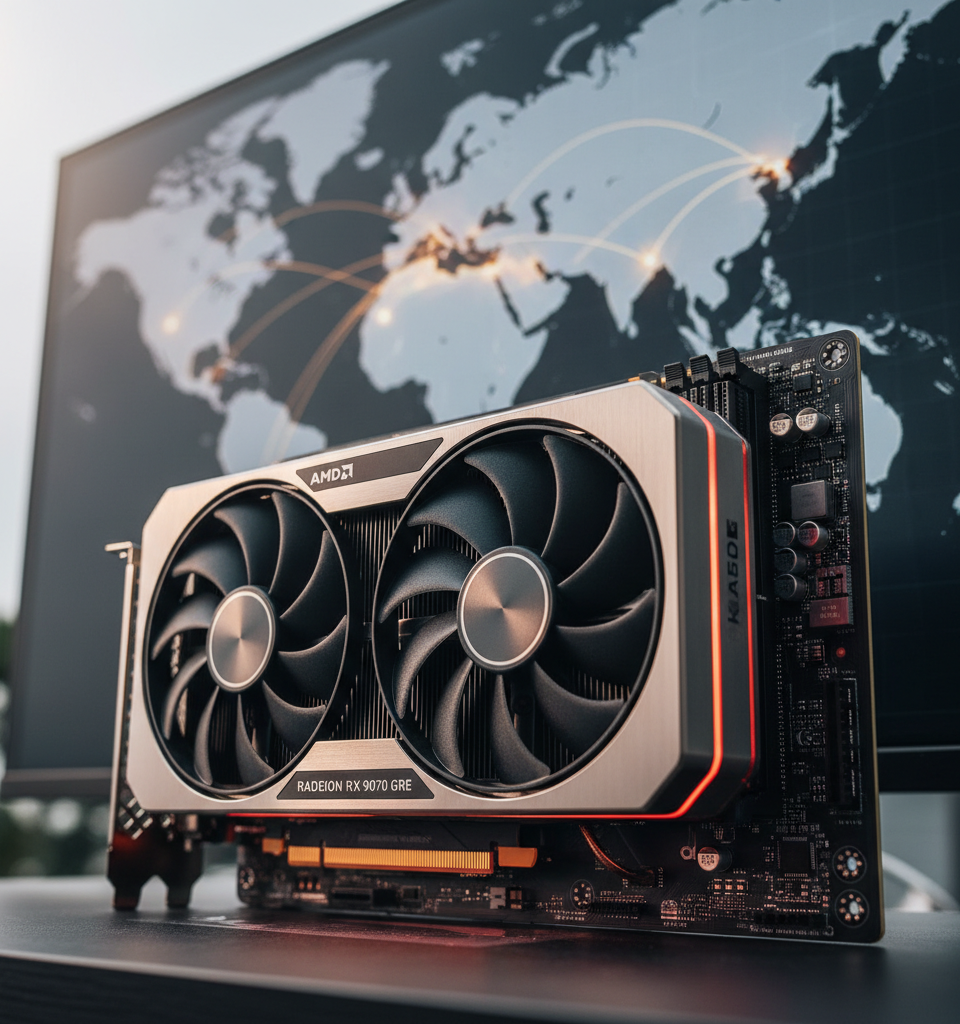
AMD has officially expanded the global availability of its Radeon RX 9070 GRE graphics card, marking a significant entry into a market segment grappling with often prohibitive pricing. Priced at an accessible $549, the GPU is poised to offer a compelling performance-to-cost ratio, potentially reshaping consumer expectations in the mid-to-high-end graphics card landscape. This global rollout signifies AMD's strategic move to capture a wider audience, particularly those seeking powerful yet financially sensible hardware solutions.
Market Context and Significance
The introduction of the Radeon RX 9070 GRE comes at a crucial juncture for the graphics card industry. Over recent years, consumers have faced a sustained period of elevated GPU prices, driven by factors ranging from supply chain disruptions to increased demand from cryptocurrency mining and advanced gaming. This environment has created a void for products that deliver strong performance without an exorbitant price tag. AMD's latest offering directly addresses this market need, appealing to gamers and content creators who require capable hardware but are budget-conscious. Its $549 price point positions it as a direct competitor to other offerings that often command significantly higher costs for comparable or, in some cases, marginally superior performance.
Performance and Value Proposition
The Radeon RX 9070 GRE is being touted as a "solid performer," a claim that underscores its ability to handle contemporary gaming titles and demanding applications effectively. While specific benchmark figures are not detailed in the initial announcement, the general framing suggests it comfortably sits within the performance tier expected at its price point. In an era where flagship GPUs can easily exceed $1,000 or even $2,000, a $549 card that offers solid performance represents substantial value. This strategic pricing could enable a broader demographic of users to access next-generation gaming experiences and accelerated computing tasks without committing to premium-tier investments. The "GRE" designation, often denoting a special edition or region-specific variant, now implies a global standard for this particular performance and price segment.
Industry Impact and Competitive Landscape
AMD's global release of the RX 9070 GRE is expected to intensify competition within the graphics card market. Rival manufacturers, particularly NVIDIA, will likely feel pressure to re-evaluate their pricing strategies and product offerings in directly competing segments. The emphasis on a cheaper GPU for a wildly expensive era suggests AMD is attempting to carve out a definitive niche by focusing on affordability without significant compromise on core capabilities. This move could force a broader market adjustment, potentially leading to more competitive pricing across the industry as other players react to AMD's aggressive stance. The availability of a strong mid-range option could also invigorate upgrades among users still holding onto older, less capable GPUs.
Future Implications
The success or failure of the Radeon RX 9070 GRE in the global market will undoubtedly influence AMD's future product development and pricing strategies. Should it gain significant traction, it might signal a shift in consumer priorities towards value and away from absolute top-tier performance at any cost. This could encourage AMD to continue refining its strategy of offering high-performance-per-dollar products. Conversely, it could also prompt competitors to develop their own aggressively priced alternatives, ultimately benefiting consumers through increased choice and better value across the entire GPU spectrum. Its strong performance for $549 could also set a new baseline expectation for what consumers should anticipate from GPUs in this price bracket moving forward.