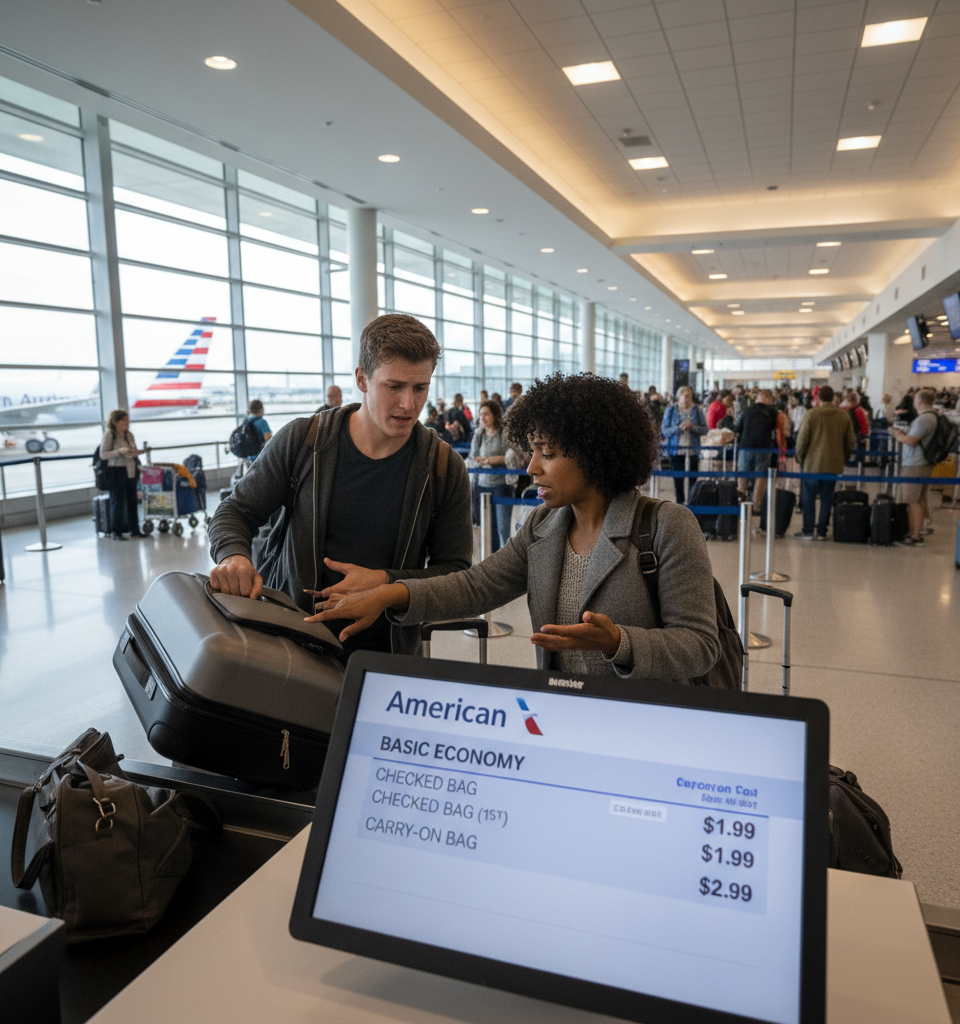
AMERICAN AIRLINES, 2026-05-19 – American Airlines has implemented an increase in its checked baggage fees specifically for Basic Economy tickets, a decision that mirrors recent adjustments by other major U.S. carriers. This strategic pricing shift is a direct response to the ongoing challenge of elevated jet fuel costs, a significant operational expense for airlines globally. The airline's move positions it alongside industry peers such as Delta, United, Southwest, and JetBlue, all of whom have recently revised their checked baggage fee structures to address these economic pressures.
Industry-Wide Response to Economic Headwinds
This adjustment by American Airlines is not an isolated incident but rather indicative of a broader industry-wide response to persistently high jet fuel prices. Fuel remains one of the largest and most volatile expenditures for airlines, directly impacting profitability. By increasing ancillary fees, particularly for services like checked baggage on their most economical fare classes, airlines aim to offset these rising operating costs without necessarily raising base ticket prices across the board. This approach allows carriers to maintain competitive base fares while generating additional revenue from optional services.
The decision to target Basic Economy tickets for these fee increases is particularly notable. Basic Economy fares, designed to offer the lowest possible price point, typically come with more restrictions, including reduced flexibility and often no complimentary checked baggage. The increase in these fees therefore primarily impacts passengers who prioritize cost savings, reinforcing the trade-offs associated with these budget-friendly options. This strategy allows airlines to capture additional revenue from passengers who, despite selecting the lowest fare, still require the service of checking luggage.
Competitive Landscape and Customer Impact
The coordinated movement among major airlines, including Delta, United, Southwest, and JetBlue, suggests a shared understanding of the economic landscape and a common strategy for navigating it. This collective action minimizes the risk of one airline losing significant market share to competitors based solely on baggage fees. For consumers, however, this trend means that checked baggage, already a common ancillary charge, is becoming an even more significant component of the overall travel cost, especially for those opting for Basic Economy fares. Travelers booking these tickets will need to factor in the potentially higher cost of baggage when comparing flight options.
For American Airlines, this fee adjustment is expected to contribute to its revenue stream, providing some insulation against the volatility of fuel markets. While the exact impact on passenger booking behavior remains to be seen, airlines typically anticipate that the convenience of checked luggage, or the necessity of it for longer trips, will outweigh the increased cost for a significant portion of travelers. The transparency around these fees, though increasing, still requires passengers to actively research and factor them into their travel budgets.
Strategic Implications for Airline Operations
The long-term implications of these escalating fees could include a continued shift in passenger behavior, with some travelers potentially opting for carry-on only to avoid charges, or rethinking the necessity of bringing certain items. It also highlights the continuing evolution of airline revenue models, moving further beyond simple ticket prices to a more unbundled, à la carte approach. This model grants airlines greater flexibility in pricing different aspects of the travel experience, allowing them to adjust to market conditions and consumer demand for specific services.
Looking ahead, the airline industry will continue to monitor global oil prices and their impact on jet fuel costs. Should fuel prices stabilize or decrease significantly, there could be a reevaluation of these fee structures, though a rapid reversal of ancillary fees is historically uncommon. For now, American Airlines, along with its competitors, appears committed to utilizing these fee adjustments as a key mechanism for maintaining financial stability in a challenging operational environment. Passengers are advised to carefully review baggage policies and fees before booking, particularly when opting for Basic Economy fares, to ensure a comprehensive understanding of their total travel expenses.