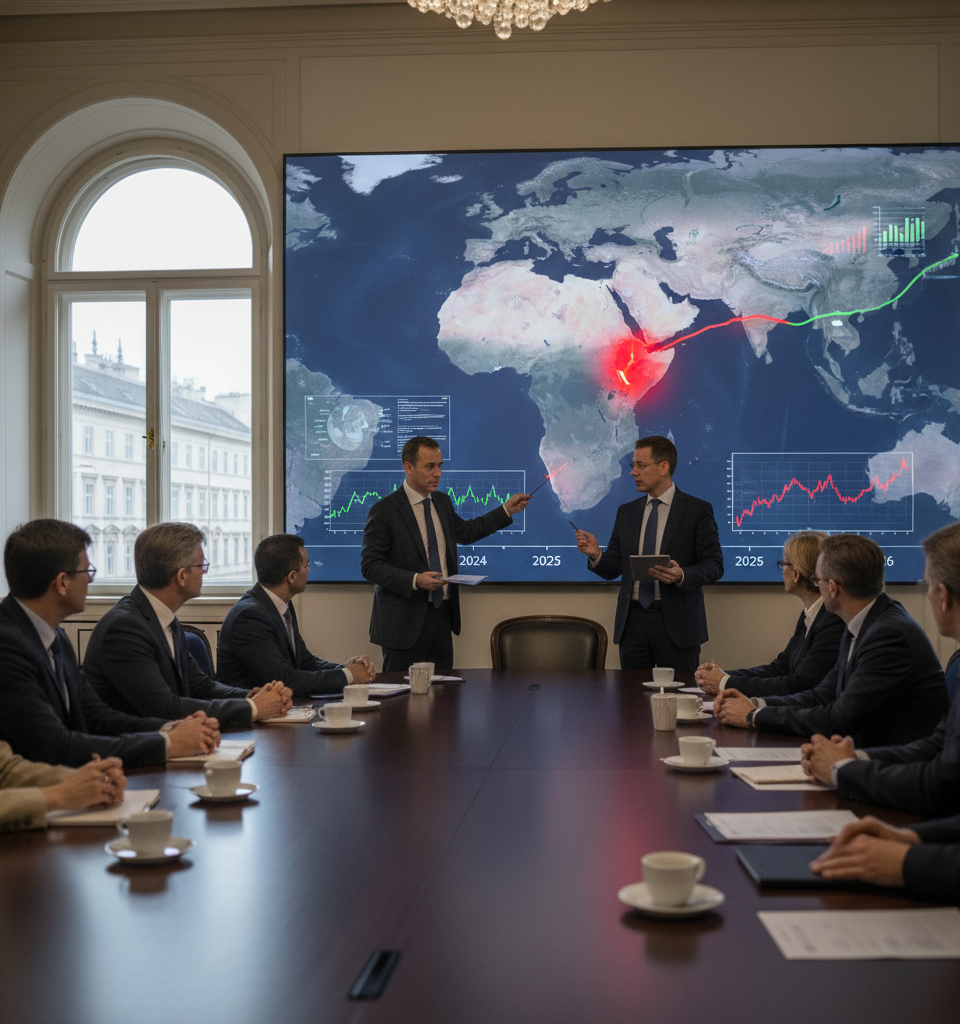
VIENNA – Energy consultants and analysts gathered at the Organization of the Petroleum Exporting Countries (OPEC) headquarters today issued a stark warning to the OPEC+ alliance: the operational disruptions in the Strait of Hormuz stemming from recent conflicts are projected to continue through 2026. Experts indicated that restoring the critical maritime chokepoint to its pre-conflict capacity will be a protracted process, impacting global oil flows for an extended period.
The technical meeting, held on June 1, brought together leading industry minds to assess the current state and future outlook for global energy markets, with a particular focus on the Middle East. The consensus from the expert panel suggests that the complexities involved in resuming full, pre-conflict shipping operations through the Strait of Hormuz — a vital artery for international oil trade — are far greater and more time-consuming than initially speculated.
Geopolitical Nexus and Global Supply Chains
The Strait of Hormuz, linking the Persian Gulf with the Arabian Sea and beyond, is arguably the world's most important oil transit chokepoint. An estimated one-fifth of the world's total oil consumption, and roughly a third of all seaborne crude oil, passes through this narrow waterway daily. The recent disruptions, characterized by heightened security risks, naval engagements, and damage to infrastructure, have thus had immediate and severe repercussions across the global energy supply chain. The continued instability threatens not just crude oil shipments but also refined petroleum products and liquefied natural gas (LNG), creating ripple effects throughout international commodity markets.
The Path to Recovery: A Complex Endeavor
Analysts at the Vienna meeting detailed that the challenges to full recovery extend beyond de-escalation of military activities. They highlighted the need for extensive repairs to damaged port facilities, restoration of secure navigation channels, and the re-establishment of robust insurance and security protocols for shipping. These are not mere technical fixes but require significant diplomatic efforts and a substantial commitment of resources, explaining the extended timeline for normalization. The operational complexities, coupled with lingering geopolitical tensions, mean that any return to the status quo ante will be gradual and fraught with potential setbacks.
Market Implications and Strategic Responses
The prolonged disruption is expected to exert continued upward pressure on global oil prices, potentially leading to increased volatility. Energy importing nations, particularly those heavily reliant on Middle Eastern crude, will likely face higher energy costs and supply uncertainties. For OPEC+ members, this situation presents a double-edged sword: while higher prices could boost revenues, sustained instability could also compel consuming nations to accelerate diversification away from Middle Eastern supplies and invest more heavily in alternative energy sources or non-OPEC production, potentially eroding long-term market share.
Expert Consensus and Future Outlook
Expert consensus from the technical meeting points to a strategic re-evaluation for many global energy players. Companies are already exploring alternative shipping routes, though these often come with increased transit times and higher costs. There's also an anticipated uptick in investment in strategic petroleum reserves by some nations to cushion against future supply shocks. The extended timeline for recovery means that the "temporary" surcharge on insurance premiums for vessels operating in the region may become a semi-permanent fixture, further driving up operational costs.
Looking Ahead: Persistent Headwinds for 2026
As 2026 draws closer, the energy sector will remain under intense scrutiny for any signs of progress in the Strait of Hormuz. The current outlook suggests that stakeholders, from national oil companies to international shippers and energy consumers, must prepare for an environment of persistent challenges. The ongoing situation underscores the critical vulnerability of global trade to regional conflicts and the indispensable role of maritime chokepoints in the world's energy security architecture. Discussions within OPEC+ will undoubtedly continue to center on how best to navigate this prolonged period of instability and its multifaceted consequences for the global oil market.