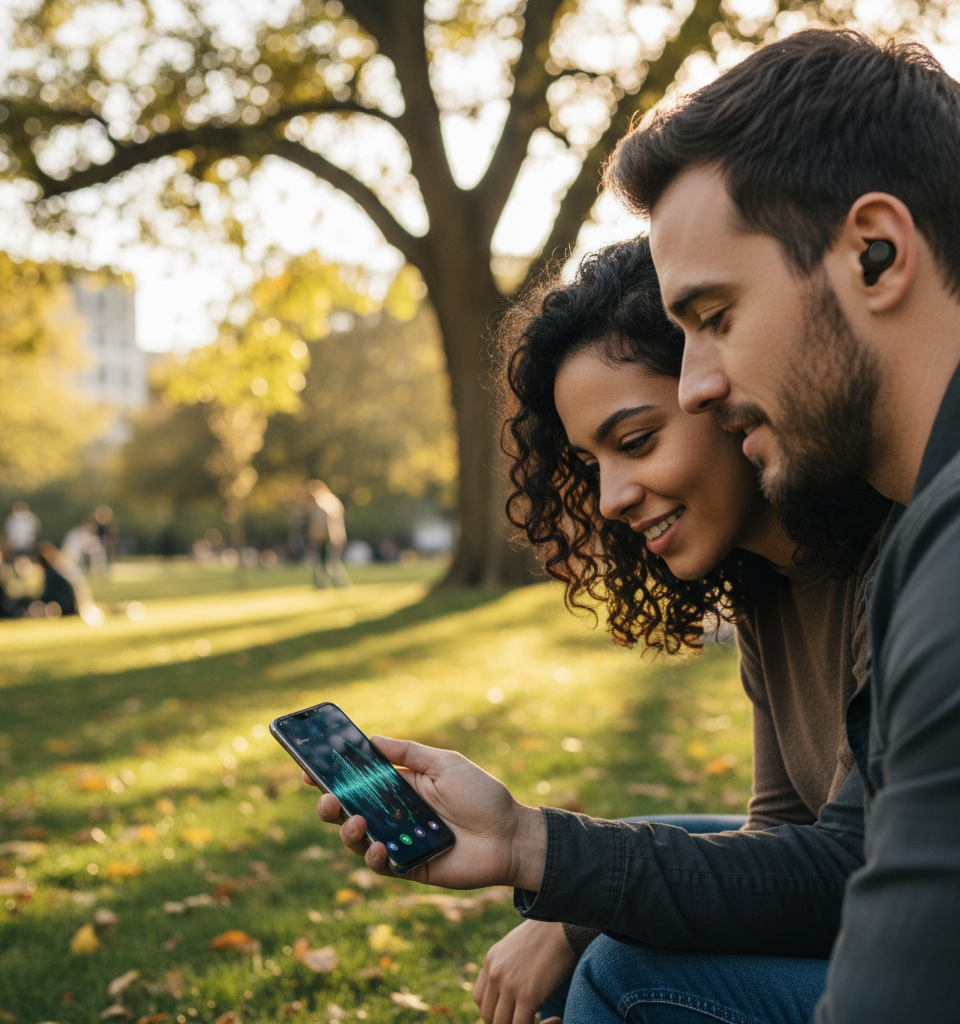
The Evolution of Shared Sound
The ability to share audio from a single source device has long been a pursuit of audio engineers and tech companies, often limited to wired headphone splitters or cumbersome multi-device setups. Historically, Bluetooth technology, while revolutionary for wireless audio, was primarily designed for a one-to-one connection between a source and a single receiving device. Android's Audio Sharing feature, building upon advancements like Bluetooth Low Energy Audio (LE Audio) and specific manufacturer implementations, breaks this barrier. It democratizes the shared audio experience, offering a seamless, wireless solution that prioritizes individual sound profiles without compromising synchronous playback. This move is particularly significant given the global proliferation of true wireless earbuds, with market reports indicating sales exceeding 300 million units globally in 2023, underscoring the demand for enhanced earbud functionality.
Key Features and Compatibility Challenges Android's Audio
Sharing allows a main device, such as a smartphone or tablet, to act as a central hub, broadcasting audio to two or more compatible Bluetooth headphones or earbuds. The key lies in the underlying Bluetooth stack and manufacturer-specific optimizations. While the experience is often seamless on devices leveraging Bluetooth 5.0 or higher with specific chipsets, broader adoption of features like Auracast within LE Audio promises universal compatibility. Users simply navigate to their device's Bluetooth settings, pair multiple compatible earbuds, and initiate the sharing function. Google Pixel phones, Samsung Galaxy devices with features like "Music Share" or "Dual Audio" (which functions similarly to Android's native Audio Sharing but with proprietary enhancements), and a growing number of flagships from other manufacturers are leading the charge in offering this functionality. Compatibility remains the primary hurdle; older devices or those without updated Bluetooth hardware may not support the feature, leading to a fragmented user experience.
Market Impact and Competitive Edge
The introduction and refinement of Audio Sharing capabilities significantly impacts the competitive landscape of consumer electronics. For Android, it represents a substantial value-add, potentially swaying purchase decisions in a highly saturated smartphone market. Apple's AirPods, with their proprietary 'Audio Sharing' feature allowing two sets of AirPods to connect to a single iPhone/iPad, have long held an advantage in this specific niche. Android's more open, if device-dependent, approach broadens access to similar functionalities across a wider range of hardware and price points. This feature differentiates Android devices by enhancing their utility in social and entertainment contexts, potentially driving increased accessory sales for manufacturers embedding this support. It also positions Android as a platform that fosters collaborative use, moving beyond purely individual interaction.
Expert Insights on the Future of Shared Audio
Industry analysts view Android's commitment to robust Audio Sharing as a strategic imperative. "The desire for shared media experiences has always been there, whether it's watching a movie together on a flight or sharing a podcast. Android's Audio Sharing moves this from a niche, often flaky, experience to a core platform feature," states Dr. Anya Sharma, a principal analyst at Tech Insights Group. "As Bluetooth LE Audio, particularly Auracast, becomes more pervasive, we anticipate this feature becoming a standard expectation, not just a premium offering. This could unlock entirely new use cases for public broadcasts, educational settings, and even localized advertising, moving beyond the personal device." The long-term vision includes not just sharing with known individuals, but potentially broadcasting to any compatible device in proximity, transforming public spaces into dynamic audio zones.
The Road Ahead: Universal Compatibility and New Applications
The future of Android's Audio Sharing hinges on two critical factors: universal hardware compatibility and the imaginative development of new applications. As more devices integrate Bluetooth LE Audio with Auracast broadcast capability, the current fragmentation will diminish, making shared audio a seamless experience across virtually all new Android phones and earbuds. Beyond casual use, developers could leverage this capability for innovative applications in areas like adaptive audio for museums, silent disco events, multi-language translation in real-time, or even specialized accessibility tools. The potential for revenue generation through enhanced user engagement, premium experience offerings, and peripheral device sales is significant. As the technology matures, expect to see robust developer APIs that allow third-party apps to fully integrate and innovate around this powerful, shared audio paradigm, firmly embedding it as a cornerstone of the modern mobile experience.