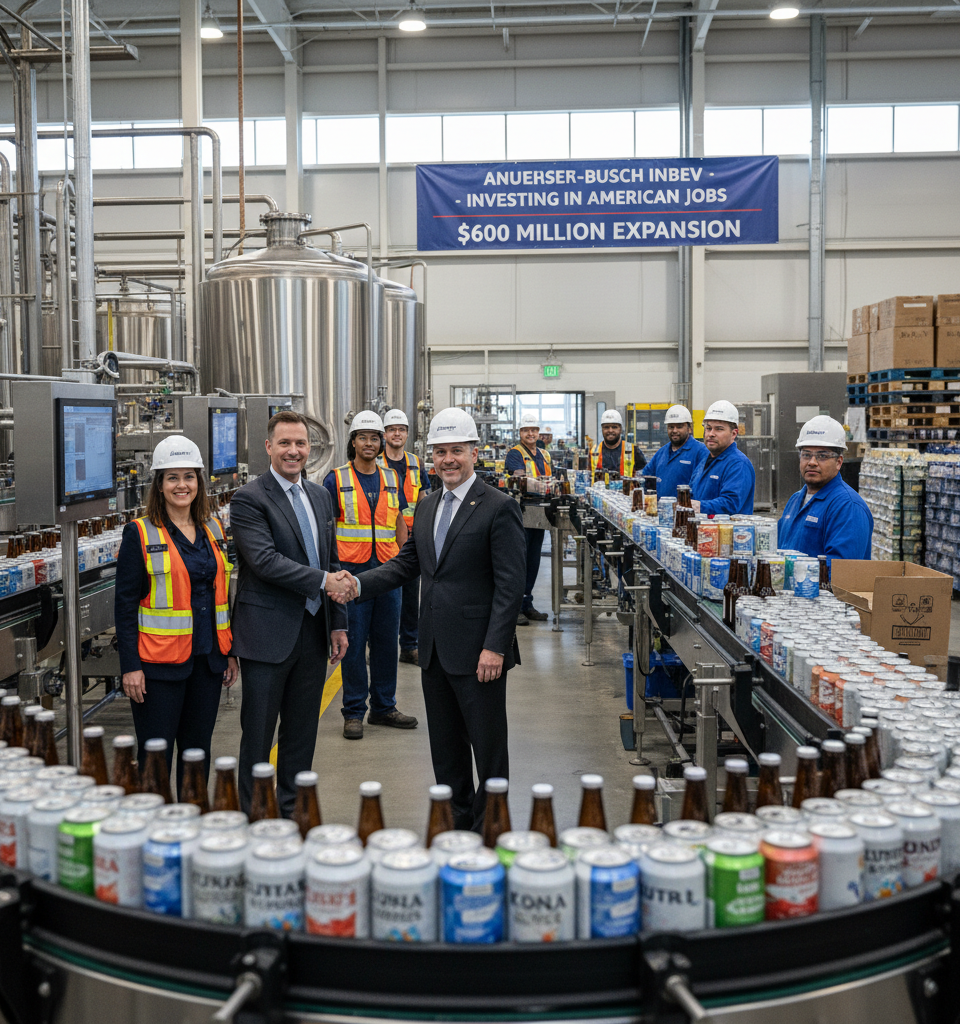
S. operations. This latest investment doubles the company's previously announced capital allocation under its 'Brewing a Future' program, bringing the total sum to $600 million since 2020. The significant financial outlay is earmarked for crucial upgrades to brewing and packaging facilities, sustainability initiatives, and workforce development across its national footprint, signaling a robust dedication to its domestic production capabilities and economic contributions.
S. beverage market, particularly as consumer preferences evolve and supply chain resilience gains paramount importance. The company's prior investments, initiated in the wake of the pandemic, have focused on operational efficiencies and technological advancements. This latest tranche of funding builds upon that foundation, reflecting a long-term vision for its American assets and its workforce.
The move also serves as a visible commitment to the communities where its breweries and distributorships are located, many of which are cornerstone employers in their respective regions. The $300 million additional investment will be distributed across 17 of AB InBev's major breweries and agricultural facilities throughout the country. Key initiatives include the installation of cutting-edge brewing technology to improve efficiency and product quality, upgrades to packaging lines capable of handling diverse product formats, and significant investments in renewable energy infrastructure and water conservation projects.
A notable allocation includes funding for a new seltzer fermentation facility at its St. Louis brewery, reflecting the strong growth in the flavored malt beverage category. S. employees and contribute to economic activity within the agricultural sector, as the company sources a vast amount of its raw materials, such as barley and hops, domestically.
The increased investment is poised to have a ripple effect across the broader beverage industry. In an increasingly competitive landscape, marked by craft brewers, international imports, and the proliferation of non-alcoholic alternatives, AB InBev's move emphasizes the importance of scale and operational excellence. By modernizing its factories and enhancing its production capabilities, the company aims to improve its speed to market for new products, increase supply chain flexibility, and ultimately, bolster its competitive edge against rivals.
This capital expenditure could also set a new standard for investment in domestic manufacturing within the highly consolidated beer sector. Industry analysts view AB InBev's expanded investment as a shrewd strategic play. "This is more than just maintaining operations; it's about future-proofing their business," noted Dr. Eleanor Vance, a lead analyst at Global Beverage Insights. "
In a market where consumers are increasingly demanding variety and sustainability, AB InBev is signaling its intent to lead through innovation and operational efficiency. The emphasis on domestic sourcing and job creation also resonates positively with public sentiment, which can translate into brand loyalty." Vance also highlighted the importance of localized production in mitigating global supply chain disruptions, a lesson learned acutely during recent years.
S. strategy. The company is likely to continue exploring opportunities for technological integration, particularly in automation and data analytics, to further optimize its manufacturing processes. We can also anticipate a continued focus on consumer-driven product innovation, with the modernized facilities providing the necessary infrastructure to quickly bring new beers, seltzers, and other beverages to market.
Furthermore, the commitment to sustainability initiatives is expected to deepen, aligning with broader corporate environmental goals and evolving consumer expectations for eco-conscious brands. The 'Brewing a Future' program, now backed by $600 million, solidifies AB InBev's commitment to its presence in the United States, illustrating a proactive approach to market challenges and opportunities. This significant financial outlay is not merely about maintaining current operations; it's a strategic fortification designed to ensure long-term growth, resilience, and leadership within the American beverage landscape for years to come.
S. economy and its communities.